Every business wants to connect, to make an impact, and to grow. To do so, a brand must be so closely identified with the industry’s defining characteristic that they become known for it.
There is a very precise science to creating a strong brand and maintaining that strength. As humans, we are bombarded with so many stimuli every second that our brain creates a filter – known as sensory gating – to only take in the information that is deemed valuable. This may seem like an exaggerated statement at first, but think about your morning routine today. You most likely turned off the alarm on your phone, scrolled through social media, showered, ate breakfast, and drove to work. In every single one of these steps, despite your brain’s best efforts to block out all the promotional noise, your choices were affected by the power of strong brands.
So how do you ensure that your brand gets through the filter?
5 Basic Branding Barriers
A strong brand must satisfy the needs and wants of the target audience to last through the ages. Consider the list of characteristics below and see how many boxes your brand checks:
Emotive: consumers today are more driven by emotion than necessity, and a brand is the visual conveyance of a feeling that is most closely related to the target audience’s decision-making process.
Memorable: 50 per cent of consumers are more likely to click on a particular brand name if that brand name shows up more than once in a search engine. A strong SEO presence is essential.
Identifiable: a brand should be visually appealing and streamlined across all platforms. A simple yet powerful logo design can help with this.
Accessible: even with a brick and mortar storefront, studies show that 82 per cent of consumers will use their phone to help them make an in-store purchase. Without a digital presence, a brand will suffer.
Results-Driven: consumers will not return to a brand that has let them down in the past. Your clients’ success is your success.
The need to get past these “barriers” is what makes graphic design so important. At Treefrog, we have spent years studying the exact science of what makes or breaks a brand. The business world looks very different today than it did 20 years ago. Before digital marketing was ever an option – or even existed – companies were built on recommendations from friends and family. Now, this word-of-mouth has gone digital, and instead of close relations, consumers can get recommendations from millions of people at the click of a button.
Building Brand Recognition
Consumers are far more likely to choose a brand that they recognize over something unfamiliar, even if they don’t know a great deal about the company at the time. This means that even if a consumer has not made up their mind about a brand – and 90 per cent of searchers fall into this category – they are more likely to use a business simply because they know it. Consider the following benefits that come from a powerful, easily recognized brand:
Customer recognition
Competitive edge in the market
Easy introduction of new products
Customer loyalty and shared values
Enhanced credibility
Business Branding Experts
Are you ready to strengthen your brand and build your business? At Treefrog, we take a top-down approach to helping you develop your brand strategy. Whether it’s logo design, logo maturation, corporate identity or graphic design services, we’re your business branding experts.
Give us a call at 905-836-4442; our team of graphic design and branding experts are ready to help!
It is not uncommon for a company, country, or an individual to have an annual theme. At Treefrog, our CEO has set one for the company each year, and while most often they have remained internal; this year, we’ve decided to launch a marketing theme along with an internal monologue:
“What does Treefrog do?”
While this might seem like a strange question to be asking after nearly 20-years of business, as a digital agency, we have evolved incredibly over the last two decades; from CD burning to website development, creating a content management system (LEAP), to the additions of search ranking and social, to bleeding edge innovation around AI, AR, and IoT. And throughout all of this change, we hold one common theme: innovation and ideation.
But, we are no longer the people in a basement designing websites by day and coding them by night. We’ve grown into a 40+ team. Our clients have matured and grown, just as the small Town of Newmarket has too.
There comes a time in every organization where you need to step back and ask: Based on our growth, are our clients of yesterday still our clients today? And will they be our clients of tomorrow?
At the end of 2018, we set out to answer this very question.
Let us share how we did this:
Our goal was to identify ten words or fewer that would succinctly recognize who our client is. We began by listing out a variety of clients (both past and present), what types of services they offer, and the successes we’ve had with them. This was followed by a lengthy exercise of identifying attributes of these many customers and how we work with our clients.
During the process, we started to notice patterns in the clients and attributes. While some clients were our long-time partners of 15+ years, others had been working with us for less than two years. Some clients were multi-million dollar organizations, with operations around the world, and others were less than five team members and under half million in revenue.
Fascinating similarities in connection for all clients regardless of size, location, industry or income started to emerge. Attributes such as:
Relationship-focused
Growth-Oriented
Collaborative
Curious
Patient
Experts in their field
We then categorized the attributes, in the hopes of boiling our brainstorming session down into one sentence that was evident in all the clients that we selected, both prosperous and less successful (yes we looked at our failures too).
In all cases, we were dealing with the CEO or lead decision-maker; even in the $80-million company, we had a direct line to the CEO.
However, we also realized that in focusing on our clients, what they asked of us was only part of the equation. How we behave, and our values played an essential role in this process too.
As we mingled our values with the attributes of our clients, we landed on something very close to “who” our ideal client is. This included a definition of each client, and a description that would be lasting regardless of the services that we offer or the ways to which we provide support.
“Courageous, aspirational decision-makers concerned about being digitally underdeveloped who want an invested partner.”
It’s not marketing speak. It’s not meant to be pretty. It’s an internal dialogue for whom we define as our partner. Let’s unpack this definition:
Courageous
Courage defined as ‘being afraid of something and doing it anyway.’
Starting a company, inheriting a company, or gaining the position of leader in an organization is an act of courage. Sometimes it’s the only act of courage a leader makes (that’s an article for another time). But, taking on that role can be scary. Leading an organization takes courage, on a daily basis.
This word was especially crucial to our team, as many of the clients we looked at need a lot of courage in both their companies and industries. Also, when you think about technologies and the digital industry, there are a lot of unknowns, it’s intimidating to many individuals, yet the courageous person moves forward even in the face of uncertainty.
Aspirational
Aspirational or Aspiration has a dual significance in the hope or ambition to go-after or achieve something paired with the action or process to get it. Aspirational individuals are decisive, visionary, curious, and willing to take risks. At Treefrog, we are aspirational; we take risks, we go after big ideas with curiosity and joy. Our best clients are aspirational, taking risks in business, achieving something beautiful.
Decision-Maker
Let’s be real. We all want to be dealing with the decision-maker, that’s a given. But, this decision-maker is unique, they go after new things, and they embrace or welcome innovation, thinking outside the box. They are not just any decision-maker but one who eagerly craves success.
Concerned
This word is especially significant in our definition. Several businesses in the world are happily digitally underdeveloped or non-existent. These are not our clients. We are not seeking to find these decision-makers.
We have one of these businesses leaders on our team right now, a hired consultant working with us part-time: but she is not our client, as she isn’t concerned about her digital footprint.
We are instead interested in working with (and for) companies and decision-makers who are worried about their place in the digital space, who fear missing out, who recognize they are lagging in the digital arena even though they may be experts in their industry.
Digitally Underdeveloped
What does it mean to be digitally underdeveloped? It is relative to the business, knowledge holders, competitors in the industry, and the company itself. It could mean a variety of status points, having an out-dated website, lagging in social engagements, using antiquated systems such as Excel for essential business functions, and more.
This is the one area we’ve spent the most amount of time on, defining and understanding what this could mean to many businesses including our past, current, and future clients. Stay tuned for part two of this article next month, as we will unpack this even more.
Want
Desire. Need. Want. Again, another impactful word in our definition as it describes the mental state of the decision-maker. They aren’t merely looking to fill a gap; this is something they crave or seek. It’s like breathing or nourishment to them, and they see the importance, they are willing to explore and find more than just the bare minimum.
Invested Partner
Lastly, a partner, yet not just any partner but one who is there for the long journey. At Treefrog, this is one of our strongest values, almost to a fault. We think of our clients and their businesses as if they are our businesses and our families. We pride our relationships with authenticity and love. When we engage in a new project, we look at the contract like that of the full depth and sanctity. For better, for worse, for richer, for poorer, in sickness and in health, to love and to cherish. We are there side-by-side with our clients.
What’s next for Treefrog?
Now that we have a defined a clear path of the types of individuals for whom we have seen through evidence-based work and by aligned values, partnership, and longevity, we can start to examine the ‘what’ in: What does Treefrog do?
We hope you’ve found this article informative as to how we discovered our “who,” a question most businesses struggle to articulate.
At Treefrog, we encourage innovation and thought leadership in all that we do. If you would like help in finding your “who,” we offer no-charge innovation ideation sessions for our clients. We merely ask for a 10-15 minute pre-call to learn about your business and what keeps you up at night.
Over the years, we’ve had several co-op students at Treefrog. They’ve worked with a variety of pods from social and content to programming and project management. This year, we asked our content co-op student, Madeline, to share her thoughts on her internship and what the co-op experience meant to her.
Discovering The World Of Digital Marketing
At the start of grade 11, I had no idea what my passion was or how to uncover it. This was really scary since I only have two years left to figure out what’s next in this journey called life. After completing and finding interest in my marketing course, I talked to my school guidance counsellor who suggested I take a cooperative education course to help me get a sense of how the field really works. I decide to take her advice and began my research for a company in Newmarket that could fill this need.
Through my research, I found Treefrog and decided to reach out to see if they would be interested in a co-op student. Luckily, they responded and invited me for an interview. At first, I was very nervous, as I’ve never had a job before, so I didn’t know what to expect. I interviewed with Kellie, Dylan and Laurie, and they were welcoming and easy to talk to. I was overjoyed when they offered me a placement, which I value greatly to this day.
My Co-op Experience At Treefrog
On my first day at Treefrog, I was very shy, as I didn’t know anyone or much about how Treefrog worked. It was like going into a new class with all new class mates, only these people were the real deal. Everyone was so kind and instantly made me feel accepted.
The relaxed atmosphere made coming to Treefrog every day fun. Everyone made jokes, listened to music or just talked about current events happening in the world around us. I didn’t feel like I was working even though we were accomplishing a lot every day.
My first couple of projects were pretty simple, with the team being extremely supportive if I needed guidance. I’ve always thought of my writing skills as one of my strengths, but when I was asked to write a blog article, I was pretty nervous about what the outcome would be. After writing a draft and getting it edited by my supervisor I was surprised that I had just wrote my very own article! And it got posted, check it out here.
I’ve always had a love for social media and sharing my opinions online, so being able to write about topics that interested me was so much fun. After five months of writing blogs for different clients on topics ranging from personality to environmental issues and mental heath to professional services, I’ve discovered a passion for writing that I never knew I had and gained confidence in my writing skills.
During my time at Treefrog, I often got invited into meetings with clients, mostly for the purpose of taking notes. While this might seem boring, it was really interesting and helped me learn about the wide variety of clients and their different needs. This expanded my knowledge on things such as search engine optimization (SEO) and social media marketing.
As I was the youngest in the office, I was often asked for my opinion as a high school student. This made me feel valued as often my ideas and input would be considered and put into action.
“Having such a supportive and inclusive team helped me step out of my comfort zone to voice my own opinions and not worry about if my opinion was right or wrong.”
Going into my co-op, I had very little experience, but during my time at Treefrog I was able to learn about Facebook analytics, website tracking, SEO, content creation and social media as more than just “posts” online. I learned how to cater to different companies and how all the different Treefrog pods fit together. While being immersed in the workplace, I was exposed to a variety of different roles, from sales, to programming, to design.
After an amazing 5 months, I know I will always value and be grateful for this co-op experience. I’ve met so many talented people who have helped me learn about Treefrog and the workplace. I’ve learned so much about digital marketing, SEO and social media that I’ve developed a love for this and hope to continue my studies in this field for post secondary.
Interested in a high school coop placement with Treefrog? Please email us for availabilities.
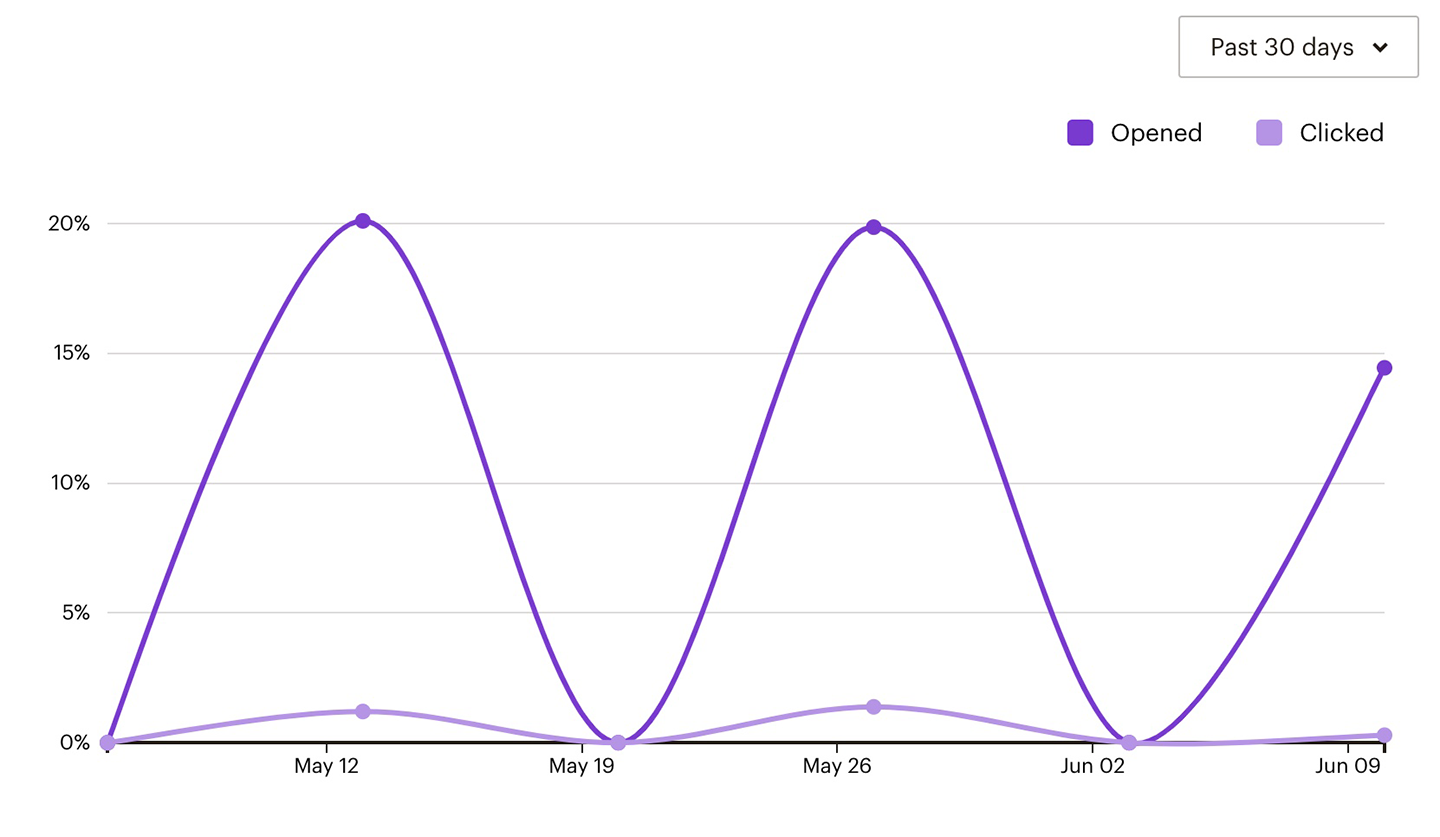
Open rates are arguably the most important stat you need to be tracking when it comes to marketing emails. Sure, your CTR (click-through-rate) is important, but if people aren’t opening your emails at all, they don’t even have the chance to click through!
These days it seems as though everyone is using emails as part of their marketing strategy; thus, audiences are receiving more emails each day than they ever have. In fact, globally there are approximately 269 billion emails sent each day! To help with the mass amount of email people are receiving Gmail has even started auto-segmenting emails into different inboxes: Primary, Social, Promotions, and Spam. This can make it even harder to get in front of the eyes of your target audience.
Fortunately, there are a few things you can do to make your e-marketing stand out!
Here are 10 ways to improve your email marketing open rate:
1. Send Time
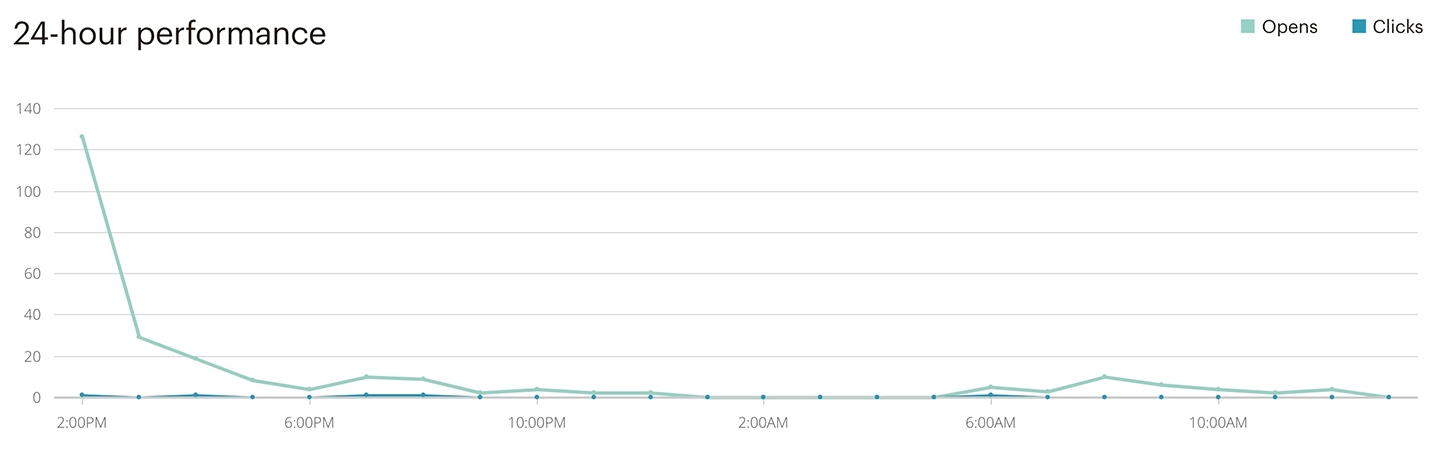
Wouldn’t it be great if you could email subscribers at the exact moment, they were looking at their devices? Investigating the open times of your emails can give you incredible insight not only on the days your emails are seeing the most traffic, but also the time of day your audience is choosing to open them.
Every email list will have a unique send day and time and it’s important to use the data you have at your fingertips to help you discover your optimal send time. If you’re not sure where to start, most people check their emails in the morning when they wake up, at lunch, or in the evening before bed.
2. Engaging Subject Lines
Subject lines are the most prominent piece of information your subscriber has to make their decision on whether to open your email or not. This makes it highly important to use the space provided efficiently and effectively. Putting a special offer, an intriguing question, or creating urgency early in the subject line are all proven ways to increase your email open rates.
According to MailChimp’s email subject lines best practices there are a number of faux pas you should avoid when writing your subject lines. As tempting as these words may be to encourage a sense of urgency, words like “Help”, “Percent Off”, and “Reminder” have been found to be the most common to be caught by spam filters; avoid using them to ensure your email has a chance to get into your audiences inbox.
3. Personalization
With the amount of mass email we receive daily, when we get something that is more personalized it usually sets itself apart, like receiving a letter. Adding tags into your subject lines to include your subscribers name, city or country location can give the added pop to your emails to really catch your readers eye and encourage them to open your e-newsletter.
4. Preheader
The preheader text is the summary text that follows the subject line in the preview in the inbox. This helps the reader have more context about the email before they decide whether to open it or not. The preheader is the perfect place to put a promotional offer or to extend your subject line.
Another way to utilize the preheader is to help your email appeal to a wider audience. If your subject line only applies to a certain group of people, the preheader is the perfect time to pull in those readers that might not normally open an email about the content mentioned in the subject line.
5. Mobile First
Did you know that over half of emails are read on mobile devices now? If you are not optimizing your emails for mobile, you are hurting its chances of being opened before you even send it. To be truly mobile optimized not only does your email content need to be designed to fit and be readable on a smaller screen but your subject line and preheader need to as well.
In a mobile email service provider, you may only have 50 characters to sell your e-newsletters content with your subject line and preheader! This means placing your CTA (Call-to-Action), or keywords at the beginning of the subject line to ensure they aren’t missed.
6. Segmentation
List segmentation is arguably the best way to improve your email marketing open rate, while simultaneously reducing your unsubscribe rate.
If you send a lot of emails on various different topics you may want to consider splitting your email list into different segments depending on demographics and interests when trying to find your optimal send time and day.
7. A/B Test
A/B testing is a great way to see which parts of your email are working and which parts need to be optimized. Understanding how your audience interacts with your email, which trigger words they respond to the most, and which CTA’s get your readers to open your emails are just a few ways A/B testing can help improve your e-newsletter open rates.
Do you get more opens from questions or lists in your subject lines? Here are some other things you can A/B test to improve your open rates are:
Your call to action
Your preheader
Personalization: name vs. location vs. none
The sender name
8. Personalize the Sender Line
Most of the emails people receive are mass marketing emails that have very little personalization and are strictly from companies trying to sell something. Readers are becoming much better at screening these emails based on the sender alone.
If you want to connect with your readers on a more personal level and have them trust that you are only sending them high-quality content, avoid using no-reply emails or generic info@. Instead use your actual name, or a pseudonym if you don’t feel comfortable handing out your actual name on the email.
9. Clean Your Email List
One really easy way to improve your open rate is to stop sending your email marketing to subscribers who don’t open your emails!
It sounds so simple, yet many marketers are more concerned with losing the potential open from someone who hasn’t opened their email in months. The size of a subscriber list is often something email marketers hold near and dear to their heart. Many have a hard time scrubbing the list of unengaged subscribers. You have worked hard at getting those people to even subscribe to your list in the first place, why should you delete them from your database altogether!? After all, they may not be opening your email-marketing right now, but they did at one point and they might again soon, right!? RIGHT!? (wrong!)
10. Stick to a Schedule
As mentioned in tip #1, finding the right send time and day is important to improving your open rate. Once you find that right day and time, stick to a consistent schedule. This helps build recognition with your readers, they are expecting your email at this point and hopefully, they’re looking forward to it! Don’t let them down or confuse them by sending at random intervals.
Now that you have the information to improve your email marketing, where do you start?
If you already have an email marketing software account such as MailChimp or Constant Contact but are unsure how to pull the data for the right day and time, A/B test, or segment your markets, we can help!
If you don’t have any email marketing software, do not be sending mass emails from your personal email, this will not only cause your personal email to be blacklisted but also is against CASL compliancy. Let us start you on the path to email marketing with a branded email template, list curating strategy and content optimization. Call today 905-836-4442 or email.
Here at Treefrog, we like to look at the bigger picture. Instead of thinking about the here and now, we see far into the future and understand that the decisions we make today, can greatly impact the next generation of Frogs.
We must share our beautiful world with everyone, and everything that resides here. While we might only live in a small pond we’ve found that a few simple changes can make a BIG difference.
At Treefrog, we are constantly looking for ways to reduce our carbon footprint.
Here are a few little changes that have made a big impact:
We Are Paperless
Saving trees starts with ditching paper. Once upon a time our entire project management office was run from coloured folders and stapled dockets. Moving the team away from the colour folder project system and into project management software was no small task. Our design team moved from sketchbooks and carbon pencils to a Wacom for digital mind mapping. Our Sales team moved to virtual notes directly in our CRM software (Salesforce), ditching the spiral Hilroy’s. Our cleaning team moved from paper towels to washable cloths, and we changed our washrooms to compostable towels.
The production and distribution of paper has a significant impact on the environment. Paper production poses issues on air, water and land. And as frogs, we dislike when deforestation destroys our homes. So we ask… why use paper when we have a virtual environment that can help us produce and deliver documents? And who likes paper cuts anyways? We do not.
We Started a Recycle and Compost Program
When we made the move from 12 Vincent to 567 Davis, we didn’t realize this change would mean giving up the ability to recycle and compost as we moved from a zoned-commercial/residential location to a pure commercial location. Unfortunately, the Town of Newmarket doesn’t offer pick up service for businesses.
We were faced with an issue of how to maintain our recycling and composting habits – since throwing out cans just didn’t seem like an option for the frogs. For the first few months, frogs would boomerang their lunches until we were able to convince the town to offer us curbside services too.
As Bill Nye the Science Guy would say: “To leave the world better than you found it, sometimes you have to pick up other people’s trash.” But, this was not enough.
The frogs lobbied for these services, and won! We are one of the only businesses in Newmarket with this opportunity, so we do our very best to ensure we are properly recycling and composting.
We Smart Commute
Commuting to work sucks. Especially when you are stuck sitting in traffic. And hello, the prices of gas are crazy! Speaking of gas, it is extremely harmful to our planet.
That is why Treefrog has implemented a Smart Commute Program. Before Smart Commute opened its doors to under 50 employee employers, we offered our Frogs cash bonuses when they choose to smart commute. This included carpooling, taking public transportation, walking to work (some frogs prefer hopping), or even skipping the drive and working from home1.
We Buy and Grow Locally
You can catch flies with honey. And frogs love flies. So, we go through lots of honey. However, we only buy locally sourced honey for our office. There are many environmental benefits in supporting local honey farmers. Farm-raised bees help to pollinate plants, which is beneficial to local wildlife. In addition, buying local supports honey farmers who are properly caring for and raising the endangered bees.
We also love to grow fruits and vegetables in our Treefrog garden. While having a garden may seem like a small impact, it has huge environmental benefits. Growing your own food can reduce carbon emission and waste. Food travels long distances to arrive at the grocery store, on average it takes over 1500 miles of travel before the fruits and veggies we love get placed in our carts. In addition, growing food can reduce waste as it eliminates the need for packaging such as plastic and cardboard. So, if you are ever passing Davis Drive in the summer, feel free to enjoy a tomato (or two) from our garden2.
We Only Drive Electric
Our Frogs are always on the go, whether we have a meeting with a client, a networking event or one of us is speaking at a workshop or conference; we have an electric car that will get us where we need to go. We invested in two fully electric cars to reduce our carbon footprint and protect our planet. While this might require some extra planning on our part when navigating to and fro, it’s worth the effort knowing that in the last five years we’ve reduced our carbon footprint by 130,000 km through the use of electric vehicles.
Vehicles that run on gas emit toxic greenhouse gases into the environment and pollute our air. Greenhouse gas emissions are the leading cause of climate change.
We Made Small Changes Around the Office
Change starts with the low hanging fruit, and at Treefrog, those are the simple things like batteries and lights.
As a digital marketing agency, it’s no surprise that we go through a lot of battery power. We recently started a new tactic with the goal of minimizing our environmental impact through battery conditioning. We converted all our batteries to brand new, top-of-the-line Eneloop batteries with a life of 2100 charges. So, no more one-time use batteries, only rechargeable!
Apart from the batteries, we also have a Nest Learning Thermostat that programs itself and helps save energy. Not only does it save us money on our heating bill, but it also helps us avoid running the air when no one’s home. We also use a combination of compact fluorescent lamp (CFL) lights and LEDs, which are more energy efficient.
These small things make a big difference in saving our planet. We want Treefrog to live on for many generations, and we hope you do too.
What are you doing in your space to reduce your footprint? We’d love to hear from you!
It would be cliché to suggest that the digital marketing landscape is becoming increasingly complex. Marketing and advertising have always been faced with the often-complex problem of knowing what will resonate with potential customers. Digital marketers face the same problem but unlike “traditional” marketing we have access to unprecedented levels of data about our intended audience. Learning as we go, we’re often able to craft content (blogs, articles, images, graphics) that users find valuable. Understanding that value is a nuanced and completely subjective concept, we try to gather and analyse multiple data sets before we ever put pen to paper.
What is contemporary content marketing?
Traditional marketing—think of a television commercial, for example—is based on the concept of interruption. A commercial diverts the viewer’s attention and interrupts them from viewing the “valuable” television program they were watching. Content marketing, in contrast, is based on the idea that trust is garnered through a genuine attempt to offer something that the reader or viewer will want to read, view, watch, or best yet—share. Content marketing talks “to” them rather than “at” audience. Depending on the product or service, thoughtful content marketing will help move a potential prospect through the digital funnel towards purchase and beyond towards becoming an advocate.
Unlike traditional advertising, content marketing is a persuasive soft sell and seeks to help the buyer make an informed decision. Sometimes, as digital marketers we attempt to create social proof of a product or service’s benefit through relying on the endorsement of key opinion leaders, or “influencers” in a particular industry. Think about it, it is far more effective if someone you trust endorses that new widget or gadget. This type of content, a kind of digital word-of-mouth, is as traditional as traditional gets—it’s just been given a new lease via content marketing.
Traditional Marketing vs Content Marketing
Let’s explore an example: If you’re in the floral business, getting a certain amount of walk-in traffic to your business would be expected if your business is centrally located in town. If you want to reach more customers, you might take out an ad in the local paper and maybe send out some direct mail postcards. Perhaps you decide to exhibit in the annual bridal show and home show. But how do you attract customers outside of these moments? How do you provide value for the user, even when they are not looking for your services? How will you keep them engaged and your business top-of-mind between purchases?
This could take a variety of forms:
Beautiful images on your social media of recent work
A bi-weekly blog with articles on relevant content such as “Best Flower Arrangements for a Winter Wedding” or “Easy, DIY Flower Arrangements for Your Next Dinner Party.”
A weekly newsletter with a DIY home décor activity
A monthly contest to encourage social media engagement
A monthly donation of flowers to an important local cause
Content like this provides your audience with something they see value in and ensures you’re in front of them long before they are at the point of purchase. And, importantly, it provides an opportunity to build a connection to your brand.
You can’t go wrong creating content of various kinds that your customers see value in. If they see value, likely so will Google. If your content can be the answer to a searched question, you will likely rank higher in search results. Again, it’s about creating something that your customers see value in before you ever ask for the sale.
The beauty of it all?
Your content will sell for you while you’re asleep. It works even when you’re not.
Getting started!
When it comes to producing content, it can be a daunting task. You might have no idea where or how to get started. Remember: quality content, produced frequently will have the greatest effect on your business. To start, explore the topics that resonate with your prospective audience, consider why your audience works with you, what pain points to address or problems you solve, be creative, take a different approach, and have fun.
Today, we are more connected and more engaged than ever with digital media. Creating a space for your customer (and potential customer) to interact with your brand and develop trust at their own pace, will have lasting effects on your business. It is critical to continue to provide this opportunity, even after the sale is complete. Creating opportunity to further the dialogue with your customers will help lead to long-lasting brand loyalty and repeat business.
And if you are to take one thing away from this article…remember: providing something of value takes time and effort but can yield huge returns!
“The day we stop learning is the day we die.” – Michael Scott
This all too common quote can also be applied to our businesses; the day we stop innovating in our business, is the day we die. But, how can you innovate when you’re in a classic or very structured industry?
There are many reasons to incorporate innovation as a regular part of your business. Perhaps though, you just don’t have the time to ‘think ahead’ due to working on and in your company all at the same time.
So, to provide some insight into how you can get your creative juices running, we’ve put together a list of five simple and practical suggestions to help you:
1. Host a lunch-and-share with your entire team.
Ask:
What could make them more efficient in their jobs?
What is one thing they have stopped doing manually as they’ve accessed new tools?
What is something that could be automated that would increase productivity?
Collect all of the ideas and don’t discard any, regardless of how crazy or wild it might be or seem. Wait 24 hours and then return to the list and see which one(s) you could act on.
2. Create an innovation team/committee.
Taking a page from a company known for its innovation, Apple has an innovation committee. Anyone can take an idea to the innovation committee and present it. The idea can be in the embryo stage or fully thought through and fleshed out. The committee then has a budget (time & money) to commit to innovation.
In your workplace, you could create an innovation committee out of your team lunch-and-share, with the first task of vetting the ideas already put forward.
3. Give your team one day a month (or quarter) to work on whatever project or task they want.
You will be amazed by what comes out of these sessions. Did you know this is how some of Google’s greatest inventions where born, like AdSense?
4. Start following Entrepreneurs who are known for being Innovative.
We hope you’ve found this list of ideas for injecting innovation into your workplace helpful. If you know of any other entrepreneurs or websites that you think should be on this list, we would love to hear from you!
At Treefrog, we encourage innovation and thought leadership in all that we do; we even have innovation ideation sessions for our clients. If you would like a complimentary 60-minutes session, please let us know.
One of the fundamental ways to make sure your social media posts are getting engagement is to include visuals. Images, infographics, and videos are more likely to capture a person’s attention when compared to text. If your post doesn’t include visual content, it risks getting lost in people’s timelines amidst all of the posts that do include visuals. To illustrate this point, let’s explore the facts (yay, statistics!)
According to Buffer, Tweets with images are retweeted 150% more than Tweets without.
74% of social media marketers use visual assets in their social media marketing, ahead of blogs (68%) and videos (60%).
Eye tracking studies performed by Nielsen Norman Group suggested that when people find images relevant, they spend more time looking at them on a webpage than reading the text.
Bottom Line: Visuals. Use Them. Whether it’s a photo, an infographic, a video, or anything else!
But keep in mind, all visuals are not created equal, and there are things that make certain visuals more engaging than others. While these will differ depending on your industry (different audiences react differently to images), here are some general tips that are crucial when selecting visuals to include in your post:
1. Include Eyes
A tried and true method of getting people to stop at your image when scrolling through their newsfeeds is to include images where people appear to be staring at the viewer. Eye contact is a super engaging visual, and if your image draws eyes to your post, the viewer is more likely to stop, stare, and read your content.
This is a perfect example of an image where the entire visual appeal is based on eye contact.
2. Include a Lot of Colours, when Appropriate
We generally recommend sticking to a similar colour scheme (preferably your brand colours) when creating images – in order to make sure people are able to quickly connect the visuals to your brand. However, visuals that include a variety of colours are more eye-catching than those with few colours. So, whichever colour scheme you choose, at the very least, avoid images with only shades or dark colours.
Good:
Bad:
3. Design them for Easy Comprehension
Because the brain is able to quickly determine relationships between objects, people can create connections more quickly by looking at visuals than reading text. In the clever image below, Coke uses this idea to quickly teach people a new way of making iced tea – all without using a single word of text. Talk about taking advantage of the human brain!
4. Try Incorporating Humour
If you’re ever struggling to figure out how to connect with your audience, try using humour! Different types of people like different things, but a sense of humour is innate (we laugh even before we learn to talk).
Old Spice is a master at creating visuals that catch people’s eyes by using humour that’s immediately noticeable. This image is simple, creative, and effective!
5. Guide the Eyes with Lines
Using lines can help guide people’s eyes to sections of images that you want them to see. For example, try using lines to guide people’s eyes to an image labelled “call now” (or similar) – to direct their attention where you’d like it to be.
In the post below, we used arrows to encourage people to swipe left and see the next image in the post. This is perfect for Instagram, where you can include multiple photos in one post.
Treefrog Tip: When you are absolutely out of ideas for what visuals to include, or simply don’t have the resources to generate ones, use royalty-free image websites like Pixabay or PEXELS to search for images relevant to your post.
Keep in mind, you can’t always Google image search photos to include in your posts, as someone else may own the rights to them, and you may end up in trouble if you use them.
Need help creating eye-catching visuals that get noticed? Our graphic design and social media teams are made up of experts who understand the power of captivating imagery.
Successfully navigating the world of digital marketing requires a strategy, a map if you will. You need to know where you are (point A) and where you want to go (point B, and possibly points C, D, and E too). These points on the map are your goals – the reasons you’re taking this journey and the places you want to go.
And once you know where you are and where you want to go, a content campaign that involves content development, search engine optimization, and social dissemination, will plot your best route to get there.
In part one and part two of our series on digital presence analyses, we explored how to perform a SWOT analysis on your brand and how to develop consumer personas. In part three, we’ll explore how to use both tools to develop and execute a content campaign that will raise your brand awareness and revitalize your business.
So, how do you create a content campaign?
Creating A Content Campaign
A content campaign combines social media, content, and SEO to create a unified digital strategy that will leverage identified personas, as well as the information collected in a DPA, to outline actionable items that will support a common goal.
Often underrated, content is the backbone of every marketing strategy as it provides material that can be shared through social, and that will be crawled and ranked by search engines like Google – positioning your company in front of your audience.
But what does a content plan look like?
The answer? It’s different for every company, as a content campaign should be completely unique to each brand – assessing needs and providing creative branded solutions to achieve those goals.
Let’s explore an example:
Should a footwear company wish to market a new shoe each month, monthly content campaign’s could be created to reach the audience who is most likely to be interested in that specific ‘shoe of the month.’
This could include targeted:
Blog posts about the features of the shoe
Email broadcasts promoting the shoe of the month
Social posts to share blog content about the shoe
Video teasers that showcase the shoe
Keyword optimization for the shoe name and features
Targeted PPC and SPPC ads for the shoe
Print materials that show imagery of the shoe, and more.
And as each of these marketing materials would adapt each month, as the target market shifts, new content would be developed with the audience in mind.
Example:
January Featured Shoe: Women’s Pink Breast Cancer Running Shoe – Brand X
Target Audience: Women who support breast cancer research and women’s charities, are athletic, like the colour pink, like yoga and exercising, are between the ages of 18-38, etc.
VS.
February Featured Shoe: Water Resistant Hiking Shoe – Brand Y
Target Audience: Men and women, ages 25-59, who are athletic and enjoy exercising, hiking, rock climbing, swimming, camping, etc.
While some characteristics, such as athleticism and a love of exercising are constant, the other characteristics may shift each month, demanding that the advertising and content campaign remain agile and follow a strategy that can speak to those unique and more specific niche audiences.
Therefore, the content campaign, in this case, would need to project a plan that runs months into the future, including what materials will be developed and shared on the month-to-month basis.
Content Development & Social Sharing
Content should tell a story, explain a concept, and persuade readers to take action. In other words, content should always aim to educate, inspire, entertain, and convince. However, without the right strategy and tools, content can fall flat and cause potential customers to look elsewhere for information.
Content campaigns require consistency between the content being created and the content being shared, and it is always best to create content that you can own and have control over. Owning quality content will increase your SEO, position your brand as a Key Opinion Leader in your industry, and help you to connect with your audience in a more authentic way.
However, in addition to sharing content that is branded and unique, you can also share content that has been curated by other sources.
For example, if you own a boutique that sells accessories, and you’ve recently begun selling a new line of scarves that you want to create a campaign around, you could share articles, published by other writers, which discuss:
How to wear a scarf
What to wear a scarf with
Why scarves are the best accessories
The specific brand you’re selling, and more.
Though this content is not native to your brand, curated content can fill in the gaps between the unique content you’ve crafted and will keep your audience engaged on a more regular basis. Leveraging programs like HootSuite, you’ll be able to schedule these posts months in advance, saving you time and the stress of having to remember to post frequently.
Your SEO ranking and performance is dependent on the content that exists on your website. To improve your ranking, it is important to analyze the following items before embarking on a content campaign:
Is your current content relevant and valuable?
Is your current website user-friendly?
Do you create content that is sharable (Ex: blog)?
Has your content been optimized using proper keywords, meta descriptions, etc.?
Within a content campaign, it is critical to consider the rules of SEO, as well as to optimize content so that your material will impact your visibility to potential customers. Through Google Analytics, you may also track the success of your campaign, monitoring increases in views, time spent on page, conversions, and other measurable results.
Leveraging A Digital Presence Analysis: A Checklist
So, while this all may seem overwhelming, we’ve compiled a checklist, in the most simplified way we could, to remind you of the steps covered in our three-part series:
Perform a SWOT analysis
Develop personas
Brainstorm
Create a content calendar
Write content
Optimize content
Create a social sharing promotional plan
Publish the content
Share the content
Measure your campaign success
Should you require support in navigating your digital presence analysis or content campaign, be sure to reach out to us at905-836-4442.
Our professional team of content, social media, and SEO specialists can provide you with solutions that will increase your brand recognition and overall marketing success.
Influencer marketing is a smart way to increase exposure for your brand.
Why tweet something for your two followers when you could get someone with 5,000 followers to tweet it for you?
However, getting influencers to promote you is easier said than done. It takes brainpower, patience, and a little bit of luck to build a network of influencers willing to do this – which is especially useful for relatively unknown business who need the exposure.
Below are four things companies should consider when establishing an influencer marketing strategy:
1. Offer Value to Influencers
Influencers don’t promote things simply out of the kindness of their hearts, so have something to offer them in return. A common way to connect with influencers is to offer them relevant content for their blogs or social media newsfeeds. People value content from others because it fills up their feeds, and if someone shares a link to your company’s blog, it will increase the number of people who will read it and ultimately visit your website.
The easiest way to do this is by guest blogging. However, you can also mention bloggers on social media (Ex. “check out my blog!”) to get retweets or shares.
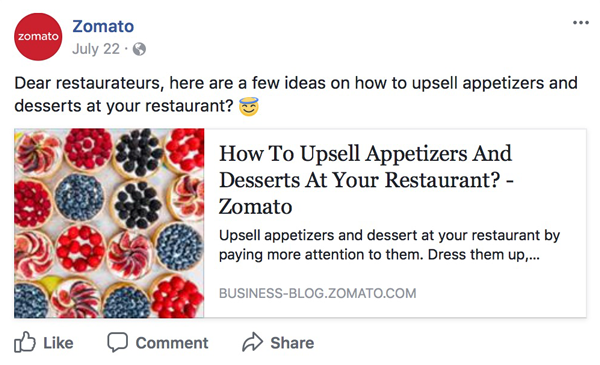
Zomato shares tons of blog content to its Facebook page. Imagine what would happen if your blog was featured on their website, and was shared to their Facebook page?
It’s ideal to offer a physical product or service to influencers because if they use it and promote it in a video or post, your company has the potential to get directly in front of a trusting audience. However, this is difficult in industries like the beauty industry, as beauty bloggers are sent countless products and standing out amongst the crowd is difficult without paying for fake, inauthentic, reviews.
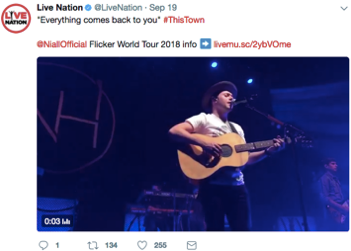
Live Nation offers value to artists by promoting their concerts and mentioning them on Twitter. In return, if an artist retweets Live Nation, the Live Nation link (which is where their service exists) will be positioned in front of more people – which will increase the likelihood of people visiting the event page and purchasing tickets from their site. It’s a win-win for both sides.
2. Target Influencers that are Relevant and Influential
Do some homework and research influencers before you reach out to them. Make sure that they have enough of a following that a retweet, mention, share, or post to their blog site will make enough of a difference to drive results for you.
Try using Foller, which gives a breakdown of Twitter users (followers, retweet ratio, reply ratio). If you use YouTube for your influencer marketing strategy (perfect for product reviews), use FameBit, which not only breaks down metrics that matter (like subscribers and average views), it actually lets you message influencers directly.
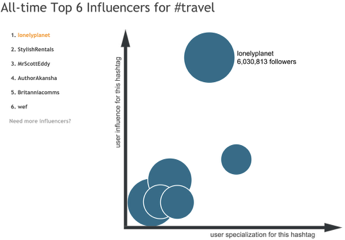
Also, make sure that the influencers you reach out to are relevant to your industry or niche. By using tools like Hashtagify, you can search for the top influencers in your subject area – ranked based on their sphere of influence.
Remember: Getting in front of someone else’s audience is useless if those people aren’t interested in your product or service, so make sure the influencer’s audience aligns with your goals.
Hashtagify ranks the top Twitter influencers in the subject area that you search for.
3. Build Relationships
If an influencer engages with you, why stop there?
Instead of putting effort into looking for new influencers, sparingly engage with an influencer you’ve already engaged with, again. Influencers who find you valuable (and don’t feel overwhelmed by ‘spammy’ frequent requests from you) will continue to engage with you and want to promote you.
If you continually get retweets or shares from the same person, you will keep increasing your reach with ease, as engaging with someone who already knows you is easier than finding someone new to partner with.
If an influencer engages you, continue offering them value to build an ongoing relationship.
4. Don’t Expect Immediate Results
Building a network of influencers to promote you, like all organic social media, is a slow build. It takes time to find people who will interact with you and even more time to build a relationship with them. However, if you are able to build several of these relationships, and take the time to develop trust and loyalty with the influencer, you will have a stronger and more motivated network of promoters who can do wonders for your brand.
Influencer marketing takes time, but once you build a few profitable relationships your online reach can skyrocket!
Influencer marketing is the future of social media. Contact Treefrog today to learn more about our out-of-the-box social media solutions.