
Digital Marketing

AI Noise
Artificial Intelligence, Digital Marketing, Growth Strategy, Marketing Growth Strategy, SEO

AI Is Not Replacing Marketers. It Is Replacing Guesswork.

There is no shortage of noise around AI in marketing right now, and most of it centres on content generation and productivity gains. While those efficiencies are real, they are not the structural shift that will separate high performing B2B organizations from the rest. The real impact of AI is not about producing more marketing output. It is about eliminating blind spots in how companies identify demand, prioritize accounts, and convert revenue.

In complex B2B environments, particularly in manufacturing and technical industries where sales cycles stretch six to eighteen months and involve multiple stakeholders, the majority of buying behavior happens before sales is ever invited into the conversation. Gartner reports that B2B buyers spend only a small fraction of their total buying journey meeting with potential suppliers, and when multiple vendors are involved that time is divided even further. In other words, most of the decision process unfolds out of view.

That lack of visibility is where AI creates leverage.

1. Anonymous Visitor Identification

Traditional analytics platforms tell you how many people visited your site and which pages performed well, but they rarely tell you which companies were behind that activity unless someone completes a form. In reality, serious buyers often conduct extensive research without identifying themselves. They review specifications, compare solutions, and revisit high value pages while coordinating internally with operations, engineering, procurement, and finance.

AI driven identification tools can match anonymous traffic to company level data using IP intelligence and behavioral pattern recognition. Instead of seeing isolated sessions, you begin to see organizational engagement over time. You can identify which accounts are returning, which content themes they are exploring, and whether interest is increasing.

That shift moves marketing from measuring traffic to understanding account level momentum, which fundamentally changes how pipeline is developed.

2. Intent Data Tracking

Buyers do not confine their research to your website. They consume industry publications, read analyst reports, compare vendors across multiple platforms, and search for answers on third party sites long before they make contact.

AI can aggregate intent signals across thousands of B2B content sources and detect when a company’s engagement around specific topics intensifies. Instead of guessing who might be in the market, you gain visibility into which organizations are actively researching problems aligned to your solution.

Forrester and other industry analysts have consistently found that organizations leveraging advanced intent data see improved alignment between marketing and sales, largely because prioritization becomes behavior based rather than list based. When you can focus attention on accounts demonstrating real research activity, budget allocation becomes more disciplined and campaign execution becomes more efficient.

3. Predictive Analytics and Account Scoring

Many organizations still rely on basic lead scoring models that assign arbitrary points to individual actions such as email opens or page visits. While that approach offers surface level insight, it rarely reflects true revenue probability and often inflates engagement without improving conversion.

AI driven predictive analytics evaluate historical deal data, firmographic attributes, engagement depth, buying committee involvement, and sales cycle patterns to identify which accounts are statistically more likely to convert. Instead of relying on intuition or vanity metrics, teams receive prioritized account rankings grounded in real performance data.

Research from McKinsey has shown that companies effectively applying AI within sales and marketing functions can generate meaningful improvements in conversion rates and revenue growth compared to peers relying on traditional processes. The advantage is not volume, it is precision.

When prioritization reflects probability rather than activity alone, leadership gains clarity and forecasting becomes more credible.

4. Buying Stage Identification

One of the most common inefficiencies in B2B marketing is messaging misalignment. Educational content is sent to accounts already evaluating vendors, while product specific messaging is pushed to organizations still defining the problem.

AI can analyze engagement patterns across content, page depth, return frequency, and cross channel activity to classify accounts into buying stages such as Awareness, Consideration, and Decision. Campaign messaging, advertising creative, website experiences, and sales outreach can then adapt based on where the account actually sits in its journey.

This does not require more campaigns. It requires smarter sequencing and better signal interpretation. The result is improved relevance and higher conversion efficiency without increasing headcount.

5. Campaign Orchestration and Sales Intelligence

When account identification, intent data, and predictive scoring are integrated, AI can coordinate campaigns dynamically across channels including display advertising, email nurture, and website personalization. Campaigns evolve based on engagement intensity rather than running as static sequences that ignore behavioral changes.

Equally important is the impact on sales. AI systems can generate alerts when target accounts spike in activity, revisit key solution pages, or increase topic research across industry platforms. Outreach becomes timely and contextual rather than speculative.

That alignment between marketing signals and sales action shortens response time and strengthens pipeline velocity.

This Is Not About Replacing People

AI does not replace strategic thinking, creative positioning, or executive leadership. What it replaces is guesswork.

It reduces wasted spend driven by poorly timed campaigns and misaligned outreach. It increases visibility into account behavior, sharpens prioritization, and improves timing precision throughout the revenue cycle.

At Treefrog, we recognized early that many growth challenges are not effort problems. They are visibility problems. Teams are executing campaigns, producing content, and supporting sales, yet leadership often lacks clear insight into which accounts are moving and why.

We use AI driven systems to surface the hidden signals inside target accounts, identify genuine buying intent, and prioritize execution around companies that are actively progressing through the market. By lifting the veil on anonymous behavior and aligning campaigns to real engagement data, strategy becomes more disciplined and growth becomes more predictable.

AI does not make marketing intelligent on its own. It enables intelligent execution when paired with strong leadership and clear positioning. Organizations that choose to operate with greater visibility will allocate capital more effectively, respond faster to market movement, and build more resilient growth systems.

The real question is not whether AI will influence B2B marketing. It already is. The question is whether your current system is designed to see what is happening beneath the surface or whether it is still relying on signals that arrive too late.

Digital Marketing, Growth Metrics, Growth Strategy, Leads, Marketing Growth Strategy, Top of funnel

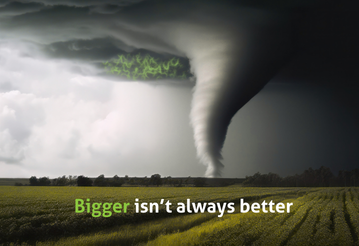
Faster Funnels Outperform Bigger Funnels

When growth stalls, most organizations instinctively try to fix the top of the funnel.

More campaigns + More channels = More leads. Right? 

The logic feels sound. If revenue isn’t increasing fast enough, the assumption is that there simply isn’t enough activity feeding the system. But here’s the thing: in practice, growth rarely breaks because of volume. It breaks because of speed.

Companies that outperform their peers don’t win by doing more. They win by moving faster.

The Illusion of Scale at the Top

A growing funnel looks impressive when you see lead counts rise, traffic increases, dashboards show upward trends.  A lot of activity creates confidence, even when revenue doesn’t follow.

This is why bigger funnels feel like progress.

Faster funnels are harder to see. They require looking at how quickly opportunities move, where they stall, and how long it actually takes for intent to turn into revenue. Those answers are less comfortable because they expose friction instead of celebrating activity. We all know the drill. You launch a massive lead-gen campaign, the pipeline dashboard looks great for a month, and then…crickets. The work isn’t happening on the front end; it’s happening in the messy middle.

So, most teams just optimize what’s easiest to measure and quietly accept inefficiency deeper in the funnel.

What a Faster Funnel Actually Means

A faster funnel doesn’t mean pressuring buyers or cutting corners. It means removing unnecessary friction between stages. You know, the stuff that makes your team groan.

Funnel speed is influenced by a small number of critical factors:

  • How quickly inbound interest is followed up.
  • How clearly leads are qualified.
  • How consistent the messaging is from first touch to close.
  • How efficiently decisions are supported.

Most organizations focus almost entirely on increasing the number of leads entering the funnel and far less on how effectively those leads move through it.

Salesforce research shows that 79 percent of marketing leads never convert into sales, often due to poor qualification and slow follow-up. Increasing volume without addressing speed simply increases waste. It’s just more garbage in, more garbage out.

Speed Creates a Measurable Advantage

Speed matters more than many leadership teams realize.

McKinsey research has found that companies with faster decision-making and execution cycles are up to twice as likely to achieve above-average financial performance. The advantage doesn’t come from just having better ideas. It comes from shortening the distance between insight and action.

Slow funnels create hidden costs:

  • Deals stall while buyers wait for clarity.
  • Sales teams spend time chasing low-intent opportunities.
  • Marketing budgets increase to compensate for inefficiency.
  • Forecasting becomes unreliable.

None of these problems are solved by adding more leads.

Where Funnels Commonly Slow Down

In most organizations, funnel friction shows up in predictable places.

Handoffs between marketing and sales are unclear.

Follow-up takes days instead of hours.

Messaging changes between funnel stages.

Decision-makers enter the process too late.

HubSpot data shows that companies that contact inbound leads within five minutes are up to nine times more likely to convert them than those that wait longer. Speed at moments of intent creates outsized returns.

Yet, many organizations accept slow response times as normal because the sheer volume of leads hides the problem. It’s easier to blame the lead quality than the internal process.

Why Faster Funnels Compound Growth

Speed compounds in ways volume doesn’t.

Faster movement produces faster feedback. Faster feedback improves targeting and messaging. Clearer messaging shortens sales cycles. Shorter cycles free up capacity. That capacity fuels the next stage of growth.

Bain & Company has found that companies that improve sales cycle efficiency can drive 10 to 20 percent revenue growth without increasing lead volume at all.

This is why faster funnels outperform bigger ones. They improve performance across the entire system, not just at the top.

Why Bigger Funnels Feel Safer Than Faster Ones

Improving funnel speed requires coordination.

It forces alignment between marketing, sales, and leadership. It exposes unclear ownership and deferred decisions. It requires teams to work together instead of optimizing in separate silos.

Bigger funnels allow teams to stay in their lanes. Faster funnels require shared accountability.

That’s why many organizations delay addressing speed. Not because it’s unclear what to do, but because it’s uncomfortable.

What High Growth Teams Measure Instead

Organizations that prioritize funnel speed track different signals:

  • Time to first response
  • Time between funnel stages
  • Opportunity aging
  • Win rates by segment
  • Time from intent to revenue

These metrics don’t flatter. They inform.

Gartner research shows that organizations that actively manage funnel velocity are significantly more likely to hit revenue targets than those that focus primarily on top-of-funnel metrics.

Bigger Funnels Create Activity. Faster Funnels Create Growth.

A large funnel can hide inefficiency for a long time. A fast funnel cannot.

In competitive markets, the company that learns and moves faster wins, even if it starts with fewer opportunities.

Growth isn’t about how much demand you generate. It’s about how effectively you convert intent into outcomes.

2022 digital transformation agency
Digital Marketing

The Era of Advanced Digital Transformation

While Tesla made waves with the introduction of commercially available electric transportation, heralding a shift in automotive trends, Treefrog has been at the forefront of championing a different kind of revolution: the continuous journey of Digital Transformation. As we step further into 2024, this journey has evolved, adapting to post-COVID realities and the ever-changing digital landscape.

Navigating the Digital Frontier

We’ve moved far beyond the initial phases of the digital era, often compared to the transition from film cameras to digital. Today’s challenge lies in the ongoing process of transformation – a dynamic, active journey. Treefrog stands as a guide and partner for businesses, navigating through this ever-evolving digital terrain.

The Essence of Digital Transformation

The concept of ‘digital’ encompasses a vast array of changes and practices. It’s an umbrella term that includes embracing advanced technologies, engaging in digital communication, expanding global trading, and adapting to remote work. Treefrog interprets Digital Transformation as a holistic change, integral for businesses to maintain relevance and edge in the competitive market.

Challenges and Opportunities

Digital Transformation is nuanced, offering both challenges and opportunities. It redefines customer satisfaction, efficiency, and work dynamics. This transformation requires a delicate balance, merging traditional values with innovative digital practices and catering to diverse employee and customer preferences.

Digital Disruption and Organizational Change

The role of corporate strategy and organizational culture is being redefined under the influence of Digital Transformation. It’s not just a technological shift but a cultural one, impacting the very fabric of businesses. This is a new chapter in the evolution of work and industry, necessitating adaptability and forward-thinking.

Strategic Digital Integration

The current landscape is not just about adopting digital tools; it’s about embedding digital thinking into the core of business processes. This involves a comprehensive overhaul of how businesses operate and interact with customers, marking a significant shift in the approach to work and customer engagement.

Embracing the Future of Digital Transformation

In today’s world, adopting a digital-first strategy is essential for survival and growth. The transition includes embracing innovative technologies like AI, robotics, and drones. Treefrog is dedicated to guiding businesses through this transformative era, ensuring they are well-positioned to thrive in the advanced stages of the Digital Revolution.

digital marketing for smb
Digital Marketing

Understanding Digital Marketing Tactics For Your SMB

You’ve built a great product or service and you’re ready to tell the world. You may be asking yourself one of the most difficult questions in marketing, especially for small and medium sized business. Where should I invest my hard earned time and my money? In marketing, these are called channels. Traditionally, it was TV, radio, and print. Digital marketing has transformed the ecosystem with several additional options to reach audiences. These are broken up into 4 main channels. Paid, earned, owned and converged media. Here is a list of the digital marketing channels and tactics and what they all mean.

Paid Media – Any channel that requires payment to show advertisements.

  • Search Engine Marketing / Pay Per Click (SEM/PPC, Google Ads)
  • Display and programmatic Advertising
  • Video advertising (YouTube Ads)
  • Paid social media marketing
  • Paid content promotion
  • TV, radio, print

Owned Media – Anything under your direct control where your time is the investment.

  • Search Engine Optimization (SEO)
  • Content marketing (blogs)
  • Social media marketing
  • Newsletters
  • Podcasts & webinars
  • Videos

Earned Media – Marketing methods that do not cost any money and are typically driven by other marketing activities.

  • Social media marketing mentions
  • Affiliate marketing
  • Referrals (word of mouth)

Converged Media – A combination of multiple channels

  • Influencer Marketing

Paid Media 

Paid media is marketing that comes with a cost. It’s the fastest and most effective way to get your brand in front of eyeballs. The only catch is that the website you are advertising has to be in excellent condition, otherwise, after the user clicks on your ad they will not have a good experience and will not convert to a sale. Think of opening a new restaurant. You’re almost ready to go, but your menu has been printed on paper because you haven’t had time to bind the new ones, and your debit machine isn’t working. You can still make great food, but some of your customers may have a bad experience. It’s important that your website is engaging and in its best shape before you start showing users the front door.

Owned Media 

Owned media is anything you have control over and the only investment is your time. This includes writing content for your website or social media channels. It can also be making videos for your YouTube channel to build up an audience. Owned media is the most effective digital marketing strategy for your SMB long term growth. The most important owned channel is Search Engine Optimization (SEO), the practice of getting your website to rank higher on Google. Writing great articles and optimizing your content can drive significant traffic to your website. Although it may sound easy, SEO is an art that takes great skill and experience to master.

Earned Media

Earned media is attention that you have gathered from other sources and have not directly paid for it. For example, a viral video you’ve made, or a blog post someone else has posted about you, mentions on social media, or recommendations and reviews. A fundraiser can be an example of earned media. Newspapers may pick up your story and write an article about you, or social media may notice and post about it for free.

Digital Marketing Recommendations For Your SMB

It’s time to decide which ones you should use for your SMB now that you can see all of the digital marketing options available to you. Your budget will also impact your strategy. Here are a few options depending on your budget. Also remember that your specific industry may have highly impactful channels compared to others. Use your research, experience and testing to decide which tactics to use.

Limited Budget

With limited or zero budget, do not start with paid media advertising. Use what you control already and start with owned media tactics. Your time and value would be best spent writing content articles to educate your audience and build trust. Learn how to write for SEO and take advantage of organic traffic growth. It’s free, has great long term value, and strengthens your brand. Earned media, specifically affiliate marketing, is great for generating revenue. 

Medium Budget

If you have a budget allocated to marketing, but not enough to cover all paid media channels, it’s a good opportunity to test and gather data by running small paid advertising campaigns. Use the same earned media tactics to build your content and SEO arsenal with a sprinkle of paid media using Google Search Ads. Start with a $5-10/day budget and test various ads and keywords to gather insightful data on what works and what doesn’t so when it’s time to invest to a larger budget you are prepared with learnings.

Large Budget

You’ve managed to take 30% of your earnings and dedicate it to marketing. Congrats! It’s time to play ball. Are you ready? Like I said before, it’s easy to spray and pray advertisements with a credit card. Ask yourself again, is my brand positioned well? Is my website and landing page built to engage and convert? Is my website trustworthy and do I have content and resources to back that statement up? Have I collected enough data through testing small budget paid campaigns to understand what works? There are several questions to ask yourself before you turn the speakers up. Learn who your audience is and what they like to respond to and you will be ready to tackle all of the paid, earned and owned media channels.

How Can Treefrog Help?

We have worked with hundreds of SMB’s and understand the challenges running a lean business. Carving out time in your day to create a digital strategy, write articles, and manage paid media budgets is a tremendous amount of your time. Our services are designed to be an extension to your team. Contact us if you are interested in learning more.

how to write for seo
Digital Marketing

SEO Copywriting in 2022: How To Write Articles That Rank

In the history of Treefrog, and indeed of the Internet, there was a time when you might have asked: “Should you hire a website pro or do it yourself?” For there was a time when building your own website was a real option. But in 2022 this vocation has become very professionalized, including SEO writing. DIY websites have gone the way of log cabins. Quaint, yes – and historically significant. But there are reasons that people stopped building that way! 

The History of Writing

More about SEO writing after we chase a little deeper down this rabbit hole. There were times when writing was on tablets! The ancient Sumerians etched onto wet clay with sharp sticks, then burned the clay tablet in a fire so that the content would never be lost. Then writing changed again, as Codex came into common use. Hey, the Nile was the first “papyrus valley” – long before Silicon Valley was opened up.

In 2022, websites are an integral part of the rapidly growing ecology of IT. Have you ever marvelled at how fast search engines like Google can answer your questions? Do you use other social media platforms like Facebook or Gettr? Do you tweet, or post your photos on Instagram? We all watch videos on Youtube. We upload our songs to Spotify. This virtual universe is spreading out fast from the initial Big Bang of email.

How to Write For SEO

Believe it or not, these social media dots are all being connected. No more is each website a stand-alone “silo”. For example, the way that your website is built will determine how fast it advances to the head of the queue on Google. This goal is becoming a paramount concern as businesses move towards the “new normal” of trading on the Internet. That move to trading on-line is Treefrog’s core business. Treefrog is no longer just a website builder, it has moved far beyond that. Clients who want to migrate to trading on-line need heavy doses of SEO writing, embedded in their websites.

The Fundamentals of SEO

Businesses want to be at the top of the list that Google presents when you ask it a question. The determinant of who floats to the head of that line-up is built into an optimal website, in terms of Google’s internal scoring system. DIY website builders probably do not understand this critical link as well as Treefrog does. This is not about “trade secrets” as much as about expertise and integration. In 2022, a website must connect very well with the other dots in the IT universe. Treefrog deploys skilled SEO writers in its overall team of technicians. There is more to creating content for websites that just good writing. This now involves a working knowledge of how search engines work.  SEO means “search engine optimization”. Writing website content involves both copywriting and some critical technical calculations as well. Check out our article on the basics of SEO to help you get started.

Building Your Story

It’s sort of like building a really fine restaurant out in the middle of nowhere. You may serve the very best cuisine and wines, but nobody knows it’s out there. They say that the three most important criteria when starting a restaurant are 1. Location 2. Location and 3. Location. Likewise, a website will be most visited when it is easy-to-read and interesting, while certain keywords and “tags” are also embedded in the text. Search engines are robots, after all. They count. If those hidden signals are not there in the content, you have a restaurant serving great food in a terrible location.

Getting to the front of the Google line-up can make a huge difference to your business volumes. And search engines are very predictable – if you know how to get to the front of the queue. There are many tricks, different devices and tips to make this happen. Their importance should not be underestimated.

SEO Formatting and Headings

Reading an article online is similar to reading a newspaper article. Remember newspapers? They are specifically formatted to guide your eyes and make it efficient for the reader to understand without effort. Digital articles, such as the one you’re reading if you had made it this far, are designed to be read on a scrolling screen. Do not write long running paragraphs and use descriptive headings to guide the reader. Keep it simple. 

Create a table of contents. Use one H1 tag for your title and multiple H2 tags for your headings. You will also notice this article links various keywords to other articles we have written on SEO. This is known as passing SEO equity to other pages on our website, but more importantly, it keeps the reader engaged so they stay on your website longer.

Natural Writing Makes Great SEO Articles. Do Not Force Keywords (Stuffing).

A good website is but one cell in a broad honeycomb – it is not a stand-alone. What defines “good” in IT terms is that Google will direct customers to that URL first. So there is more to writing great articles for websites than meets the eye. It also involves embedding signals that help search engines to award the URL priority over competitors. You can dive deeper into this topic with our top 4 SEO tips.

For example, did you know that the “keyword” in this article is “SEO writing”. And that the three other tags are “SEO, writing”, and “content”? Guess what? The keyword is repeated four times. The three tags are repeated twelve times. That’s what the search engines count amongst other signals. Hopefully you found this article interesting and informative as well?

content marketing
Digital Marketing

Marketing Strategy Planner for 2022

It’s almost the end of the year, and you know what that means, its time to start thinking about your marketing strategy for 2022. When it comes to planning for the new year, people tend to forget that it’s better to start now than already the new year.

When developing your strategy, you need to be asking yourself some important questions, such as what worked this year and what didn’t and what you need to focus on to grow your business?

We’ve been sharing this planner for many years, and this year we’ve made it even better. So make sure to download it below and if you’re looking for more marketing tips for 2022, check out our blog post on Digital Marketing Trends to Watch Out for in 2022.

content marketing

Treefrog’s Marketing Strategy Planner for 2022

We’ve ensured that our marketing strategy planner simple, free and easy to use. We recommend that you use this plan as your guide to planning your marketing strategy for your business in 2022.

Treefrog is Here to Help

Want help with your 2022 marketing strategy? The digital marketing experts at Treefrog are here to help you with your strategy or any other tactics your business needs for 2022. We can help you design, build and execute your plan and make sure it’s aligned with your budget and business goals.

Fill out the form below, and your copy of the 2022 Marketing Strategy Planner will be emailed to you.

"*" indicates required fields

This field is for validation purposes and should be left unchanged.
This field is hidden when viewing the form
Gen-Z's
Digital Marketing

Four Strategies for Marketing to Gen-Z’s

It’s no surprise that Gen-Z’s are making a name for themselves with the rise of TikTok and other social platforms. However, this also means that the way we marketed to millennials is not the same way we sell to Gen-Z’s, especially after seeing the two generations going head to head on different opinions (side parts and skinny jeans).

In Marketing, knowing your audience is key, which is why developing personas is so critical. So in order for you to market to this generation, you need to know who exactly is Gen-Z and build a persona surrounding them. Luckily, we’ve done the research for who they’re and how they think, so now all you need to do is follow our marketing strategy tips in this blog. Once you do, you’ll be well on your way to creating brand loyalty from Gen-Z’s.

Who is Gen-Z?

Before establishing how to market to Gen-Z’s, we first need to understand who this generation is and how they differ from other generations like Millennials. Gen-Zs were born between 1997-2010, and are consider Digital Natives. They grew up with cellphones and social media, and since able to, have been taking over the digital space. This generation is considered more conscious of who they purchase from, focusing on inclusive brands, having good values, and being socially conscious. Keeping this in mind will help you to tailor yourself to this generation.


1. For Gen-Zs, Transparency and Authenticity is Key

If there is one thing you need to know about Gen-Z’s, transparency is the number one thing you need to develop trust and brand loyalty with this generation. Gen-Z’s are truth seekers, so your brand needs to be upfront from the beginning. Make sure to make a conscious effort to be transparent in your marketing efforts and as a brand and hold yourself accountable when things go wrong.

2. Gen-Zs Love Video Content

Gen-Z’s have truly grown up with the rise of video, which is why they’re the most popular creators on TikTok. So naturally, incorporating video into your marketing will help you to reach this target audience. It’s essential to use it on various platforms, such as Youtube, Instagram (reels and stories), and TikTok. Make sure your video content is engaging, relatable and when possible, try to hop on current trends on these platforms.

3. Traditional Marketing Won’t Work on Gen-Zs

Hate to break it to you, but your traditional marketing won’t work with Gen-Z’s. Not only do they have a shorter attention span, but they no longer want to be marketed to by actors. They want to see relatable people in your marketing campaigns (think Aerie Real campaign). Use your storytelling abilities to showcase why Gen-Z’s will want this product over another and how it will benefit them. That’s the fastest way to market your brand or product.

4. Gen-Zs are Looking for Entertaining Content

Gone are the days of having professional-looking social media accounts. Gen-Z’s want to see the real side of your company. They want to see entertaining companies (Buffalo Wild Wing Twitter), have fun, and don’t follow the norm on social media. If you want to connect with Gen-Z’s, then it’s time to have a little more fun in your marketing strategies. Luckily, using video on social media will help you to nail this strategy.

Need Help with Digital Marketing? Contact the Team at Treefrog!

Does your business need help building a digital marketing strategy? Contact the experts a Treefrog. Our Frogs can help your business with its online presence. For more information on how our team can help, give us a call at 905-836-4442.

digital marketing trends
Digital Marketing

Digital Marketing Trends to Watch Out for in 2022

2022 is quickly approaching, which means it’s time to start planning and drafting your digital marketing plans for the new year. You might think it’s too soon to start planning, but planning and looking ahead to the future can help you stay ahead of the trends. It can also help you to find new and innovative ways to grow your business. That’s why today, we’ve compiled a list of trends to watch out for in 2022, so you can start considering them for your marketing strategies. 

Marketing Automation

Marketing automation has been something that digital marketers have been using for a while, but it’s slowly making more headway as new software and apps come out. Marketing automation allows companies to automate repetitive marketing tasks, such as scheduling social media posts in advance or sending out emails. This frees up time so you can focus on high-level marketing tasks that require full attention and is something you should start using as soon as possible. 

Multichannel Marketing

This should go without saying, but having and maintaining a website should not be the only thing you’re doing for marketing. Websites are great for marketing your product, but now with social media, it’s not enough to just rely on your website. It would help your business if you used various platforms to market your services or products, such as blogs, ads, social media, and webinars or events. If you want to start growing your business and customer base, you need to be using a multichannel marketing approach, especially in 2022.

Influencer Marketing

With the rise of TikTok came a more significant surge for influencer marketing. Brands have started to realize the impact of influencers on social media, especially when it comes to pushing their products. Influencer marketing is a great way to promote your business and generate sales for your products. Though the most critical thing influencer marketing does is create brand trust and brand awareness. This is something that companies and businesses should highly consider adding to their 2022 marketing strategy.

The Use of Short-Videos

The rise of TikTok didn’t just open people’s eyes to the power of influencer marketing. It also helped them realize the power of short, impactful videos. Human’s attention span is draining, which means you need to find quick and effective ways to engage users and stop them from scrolling past your content. Using platforms like TikTok and Instagram will help you to easily create short videos for your social media pages. Video will only grow in 2022, so it’s essential to start using it now to understand what content works and what doesn’t so that you can use it in your 2022 marketing strategy.


Digital marketing trends are constantly changing and growing, so it can be hard to keep up. That’s why it’s essential to make sure you are constantly researching to stay on top of the latest trends. Whether you add all these trends to your 2022 marketing strategy or you only add one, it will make a difference in your business.

Contact the Digital Marketing Team at Treefrog!

Need help building your digital marketing strategy? Contact the team at Treefrog. Our Frogs are experts in many fields that can be beneficial to your online presence. For more information on how our team can help, give us a call at 905-836-4442.

email marketing
Digital Marketing

Four Effective Email Marketing Techniques

In recent years, email marketing has gone down due to social media and paid ads. In reality, email marketing is still regarded as one of the most efficient ways to reach your customers today and increase sales. To make sure you’re using the proper techniques to generate click-throughs and increase sales, read on to find out about the four email marketing techniques you need to be using right now.

Subject Lines

Subject lines are everything. When an email shows up in your customer’s inbox, the first thing they read is the subject line, which will determine whether or not they open it. Many companies know the importance of headlines but forget that using generic headlines, like 75% off body care, tends to get your emails sent straight to the trash folder. Your customers love a good sale, but they also want value. The key to subject lines is to keep them short and vague.

An excellent example of this was President Obama’s email fundraising campaign when he used subject lines such as “Hey” and “Wow.” This approach contributed to Obama raising $690 million for his campaign. Keeping your subject lines short and vague will increase your open rate instead of getting sent straight to the trash.

email marketing

Exclusive Content 

Your customers subscribed to your mailing list for a reason. More than likely, they probably thought by signing up, they would get exclusive content that was just for them. So offer them something that is just for email subscribers. They will not only feel valued and appreciated as a customer, but they will likely stay subscribed and click through your emails more frequently. 

Retail stores do this well when sending out exclusive coupons and early sale access to their mailing lists. You can do something similar to this, but make sure it’s something you know your subscribers would be interested in.

Personalization 

A little personalization can go a long way into making a customer feel valued, whether using the customer’s name in the greeting of the email or focusing on your customer’s purchasing history or demographics.  

For example, Wayfair sends personalized emails based on suggested products or deals. This makes the email personable and makes me more inclined to open their emails to see what discounts might interest me. Keep in mind that too much personalization can also deter customers, so make sure not to overdo it.

mobile friendly

Mobile Friendly

Everyone has a cellphone, which means that the most common product used to check your email is through your phone, especially when consumers are out of the office. According to Hubspot 2017 Marketing Statistics, “two-thirds of emails are read on either smartphones or tablets.” So when the emails you send out are not mobile-friendly, that customer is likely to delete them or, even worse, unsubscribe. Before sending out an email to subscribers, ensure it is optimized for mobile and watch your click-through rate soar.

Conclusion

Social media is a great tool to reach your customers, but you can’t neglect email because it’s not going away anytime soon. There are various techniques to use when it comes to effective email marketing, so test different ones and find out what works for you. Good luck!

Digital Marketing Experts

At Treefrog Inc., our Frogs are experts in many fields that can help your business increase leads and sales. For more information on how our team can help, give us a call at 905-836-4442.

Digital Marketing

Digital Marketing Trends to Guide Your Online Strategy

With 2020 now behind us, it’s time to start thinking about what 2021 has in store for marketing. The world has changed, which means the way we were marketing before needs to change.

People are now online shopping and checking social media more than ever. So it’s time to start refocusing marketing efforts and figure out new and innovative ways to connect with consumers. So what exactly should businesses be focusing on in 2021, and how do we start implementing them.

The great “digital pivot” has shown us that businesses really need an online presence to grow. Consumers are naturally shopping more online, and this comes with high expectations for brands. Consumers are looking for inclusive brands, and they want them to be informed. They’re also looking for brands that offer a seamless online experience. Today we’re helping you clear through the noise and sharing our marketing trends to focus on in 2021.

close up of hands using laptop. Social media "like" icons floating in foreground

Social Media Continues to Dominate Online Conversations

Social media has always been a useful marketing tool, but not all businesses have been using it. Many skeptics believe that it’s not a helpful tool. However, it’s now apparent that companies need to use it to help them grow their business.

Now that social media platforms such as Instagram and Facebook are adding features such as Instagram shops, making it more convenient for consumers to shop. Companies need to begin looking to expand into social selling to increase sales and discoverability.

Brands should also focus on narrowing down the social media platforms they’re currently using. Social media is not a one size fits all, so it’s essential to create a strategy and specific purpose for each channel. Focus on where your core target audience is, and make sure to nurture that channel. It’s better to focus on a specific social platform than all of them.

Virtual Events are Here to Stay

Events have always been great ways to marketing your business and generate brand awareness. Unfortunately, 2020 put a stop to in-person events forcing us to reimagine how we attend events. This helped launch virtual events of all kinds, such as webinars, networking, conferences, and winter markets. Virtual events allow you to reach a broader audience that otherwise might have been impossible due to various circumstances such as travel and cost.

Businesses have seen overwhelming growth due to virtual events. We can expect that even when the pandemic is no longer a growing concern, virtual events will be here to stay. Businesses will need to determine how to entice and drive engagement to these virtual events and create concrete marketing plans around them.

Keep Investing In Short-Form Videos

With the rise of social platforms like TikTok and Instagram Reels, it’s no wonder consumers are looking at content that is quick and easy to consume. The ability to provide short but engaging content in the form of 60 seconds has become the new way to grab your audience’s attention.

Businesses should begin refocusing their marketing efforts on short video content, podcasts and email newsletters. Using content that is quick and cut down to bite-size pieces will keep consumers engaged and have them returning for more. Businesses should also focus on providing value, as this will turn potential customers into longtime followers.

Build Your Influencer Marketing

Influencer marketing has always been an excellent way for big and small brands to market their business and create brand awareness. There has always been a focus on influencers that have over 25k followers on social media.

However, we’re now seeing a trend of influencers with a small fan base also getting deals from various brands. This is partly because, according to a recent study by Later, these smaller influencers have high engagement rates. Brands should consider the benefits of incorporating influencer marketing into their 2021 marketing plans.

Keeping up with all the marketing trends can be difficult, and not all of them will work for your business. It’s important to research current trends and determine which ones will best help your business grow. It’s also critical to come up with a marketing plan that reflects what you want to achieve. Luckily we’ve made a 2021 marketing plan just for you. You can download it here.

Connect with the Digital Marketing Team at Treefrog!

At Treefrog Inc., we understand that digital marketing can be challenging, and we want to help! Our Frogs are experts in many fields that can be beneficial to your online presence. For more information on how our team can help, give us a call at 905-836-4442.

Scroll to Top