Mobile App Development

Treefrog logo made of moss
Artificial Intelligence, Augmented & Virtual Reality, Branding & Design, Digital Marketing, Hosting & Infrastructure, IoT, NFC and Beacons, Mobile App Development, Web Application Development, Web Design & Development

What Does Treefrog Do?

Our “Who”

It is not uncommon for a company, country, or an individual to have an annual theme. At Treefrog, our CEO has set one for the company each year, and while most often they have remained internal; this year, we’ve decided to launch a marketing theme along with an internal monologue:

“What does Treefrog do?”

While this might seem like a strange question to be asking after nearly 20-years of business, as a digital agency, we have evolved incredibly over the last two decades; from CD burning to website development, creating a content management system (LEAP), to the additions of search ranking and social, to bleeding edge innovation around AI, AR, and IoT. And throughout all of this change, we hold one common theme: innovation and ideation.

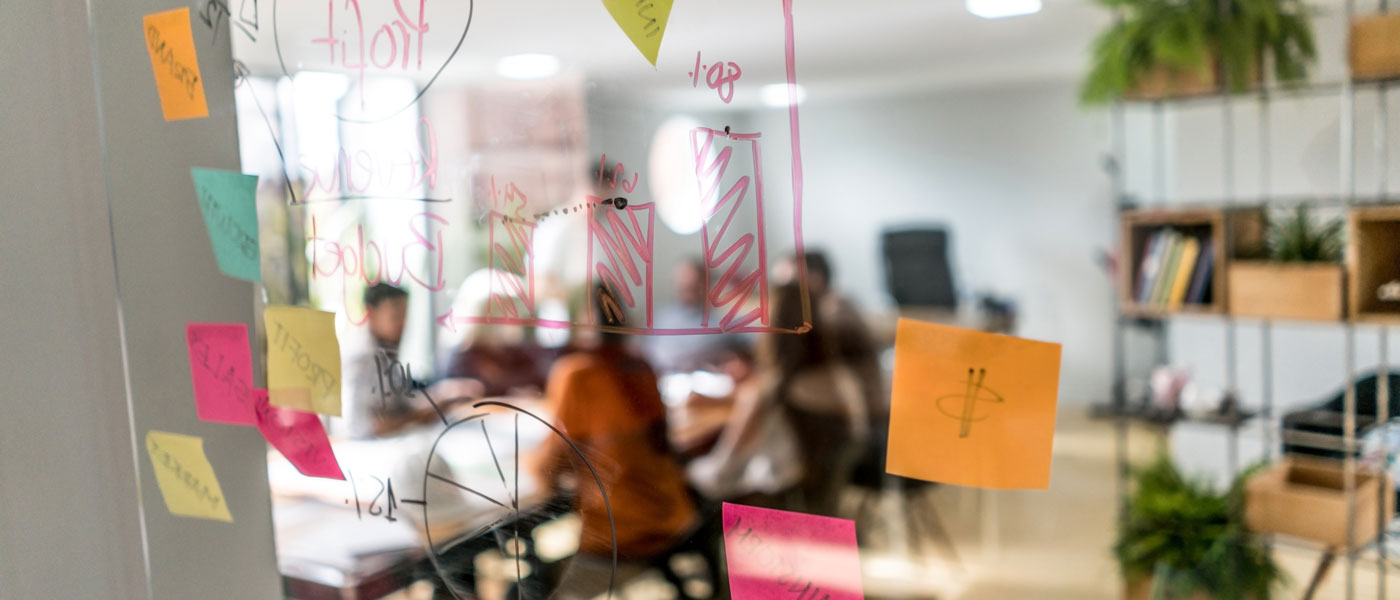
Wall with full of multi coloured adhesive, sticky notes, project planning.

But, we are no longer the people in a basement designing websites by day and coding them by night. We’ve grown into a 40+ team. Our clients have matured and grown, just as the small Town of Newmarket has too.

There comes a time in every organization where you need to step back and ask: Based on our growth, are our clients of yesterday still our clients today? And will they be our clients of tomorrow?

At the end of 2018, we set out to answer this very question.

Let us share how we did this:

Our goal was to identify ten words or fewer that would succinctly recognize who our client is. We began by listing out a variety of clients (both past and present), what types of services they offer, and the successes we’ve had with them. This was followed by a lengthy exercise of identifying attributes of these many customers and how we work with our clients.

During the process, we started to notice patterns in the clients and attributes. While some clients were our long-time partners of 15+ years, others had been working with us for less than two years. Some clients were multi-million dollar organizations, with operations around the world, and others were less than five team members and under half million in revenue.
Fascinating similarities in connection for all clients regardless of size, location, industry or income started to emerge. Attributes such as:

  • Relationship-focused
  • Growth-Oriented
  • Collaborative
  • Curious
  • Patient
  • Experts in their field

We then categorized the attributes, in the hopes of boiling our brainstorming session down into one sentence that was evident in all the clients that we selected, both prosperous and less successful (yes we looked at our failures too).

In all cases, we were dealing with the CEO or lead decision-maker; even in the $80-million company, we had a direct line to the CEO.

However, we also realized that in focusing on our clients, what they asked of us was only part of the equation. How we behave, and our values played an essential role in this process too.

As we mingled our values with the attributes of our clients, we landed on something very close to “who” our ideal client is. This included a definition of each client, and a description that would be lasting regardless of the services that we offer or the ways to which we provide support.

“Courageous, aspirational decision-makers concerned about being digitally underdeveloped who want an invested partner.”

TREEFROG INC.

It’s not marketing speak. It’s not meant to be pretty. It’s an internal dialogue for whom we define as our partner. Let’s unpack this definition:

Courageous

Courage defined as ‘being afraid of something and doing it anyway.’

Starting a company, inheriting a company, or gaining the position of leader in an organization is an act of courage. Sometimes it’s the only act of courage a leader makes (that’s an article for another time). But, taking on that role can be scary. Leading an organization takes courage, on a daily basis.

This word was especially crucial to our team, as many of the clients we looked at need a lot of courage in both their companies and industries. Also, when you think about technologies and the digital industry, there are a lot of unknowns, it’s intimidating to many individuals, yet the courageous person moves forward even in the face of uncertainty.

Aspirational

Aspirational or Aspiration has a dual significance in the hope or ambition to go-after or achieve something paired with the action or process to get it. Aspirational individuals are decisive, visionary, curious, and willing to take risks. At Treefrog, we are aspirational; we take risks, we go after big ideas with curiosity and joy. Our best clients are aspirational, taking risks in business, achieving something beautiful.

Decision-Maker

Let’s be real. We all want to be dealing with the decision-maker, that’s a given. But, this decision-maker is unique, they go after new things, and they embrace or welcome innovation, thinking outside the box. They are not just any decision-maker but one who eagerly craves success.

Concerned

This word is especially significant in our definition. Several businesses in the world are happily digitally underdeveloped or non-existent. These are not our clients. We are not seeking to find these decision-makers.

We have one of these businesses leaders on our team right now, a hired consultant working with us part-time: but she is not our client, as she isn’t concerned about her digital footprint.

We are instead interested in working with (and for) companies and decision-makers who are worried about their place in the digital space, who fear missing out, who recognize they are lagging in the digital arena even though they may be experts in their industry.

Digitally Underdeveloped

What does it mean to be digitally underdeveloped? It is relative to the business, knowledge holders, competitors in the industry, and the company itself. It could mean a variety of status points, having an out-dated website, lagging in social engagements, using antiquated systems such as Excel for essential business functions, and more.

This is the one area we’ve spent the most amount of time on, defining and understanding what this could mean to many businesses including our past, current, and future clients. Stay tuned for part two of this article next month, as we will unpack this even more.

Want

Desire. Need. Want. Again, another impactful word in our definition as it describes the mental state of the decision-maker. They aren’t merely looking to fill a gap; this is something they crave or seek. It’s like breathing or nourishment to them, and they see the importance, they are willing to explore and find more than just the bare minimum.

Invested Partner

Lastly, a partner, yet not just any partner but one who is there for the long journey. At Treefrog, this is one of our strongest values, almost to a fault. We think of our clients and their businesses as if they are our businesses and our families. We pride our relationships with authenticity and love. When we engage in a new project, we look at the contract like that of the full depth and sanctity. For better, for worse, for richer, for poorer, in sickness and in health, to love and to cherish. We are there side-by-side with our clients.
What’s next for Treefrog?

Now that we have a defined a clear path of the types of individuals for whom we have seen through evidence-based work and by aligned values, partnership, and longevity, we can start to examine the ‘what’ in: What does Treefrog do?

We hope you’ve found this article informative as to how we discovered our “who,” a question most businesses struggle to articulate.

At Treefrog, we encourage innovation and thought leadership in all that we do. If you would like help in finding your “who,” we offer no-charge innovation ideation sessions for our clients. We merely ask for a 10-15 minute pre-call to learn about your business and what keeps you up at night.

Interested? Please let us know by emailing info@treefrog.ca.

A green potted plant near a laptop on a wooden table
Artificial Intelligence, Augmented & Virtual Reality, Branding & Design, Digital Marketing, Hosting & Infrastructure, IoT, NFC and Beacons, Mobile App Development, Web Application Development, Web Design & Development

Why The Frogs Are Green

Here at Treefrog, we like to look at the bigger picture. Instead of thinking about the here and now, we see far into the future and understand that the decisions we make today, can greatly impact the next generation of Frogs.

We must share our beautiful world with everyone, and everything that resides here. While we might only live in a small pond we’ve found that a few simple changes can make a BIG difference.

At Treefrog, we are constantly looking for ways to reduce our carbon footprint.

Here are a few little changes that have made a big impact:

We Are Paperless

Saving trees starts with ditching paper. Once upon a time our entire project management office was run from coloured folders and stapled dockets. Moving the team away from the colour folder project system and into project management software was no small task. Our design team moved from sketchbooks and carbon pencils to a Wacom for digital mind mapping. Our Sales team moved to virtual notes directly in our CRM software (Salesforce), ditching the spiral Hilroy’s. Our cleaning team moved from paper towels to washable cloths, and we changed our washrooms to compostable towels.

The production and distribution of paper has a significant impact on the environment. Paper production poses issues on air, water and land. And as frogs, we dislike when deforestation destroys our homes. So we ask… why use paper when we have a virtual environment that can help us produce and deliver documents? And who likes paper cuts anyways? We do not.

We Started a Recycle and Compost Program

When we made the move from 12 Vincent to 567 Davis, we didn’t realize this change would mean giving up the ability to recycle and compost as we moved from a zoned-commercial/residential location to a pure commercial location. Unfortunately, the Town of Newmarket doesn’t offer pick up service for businesses.

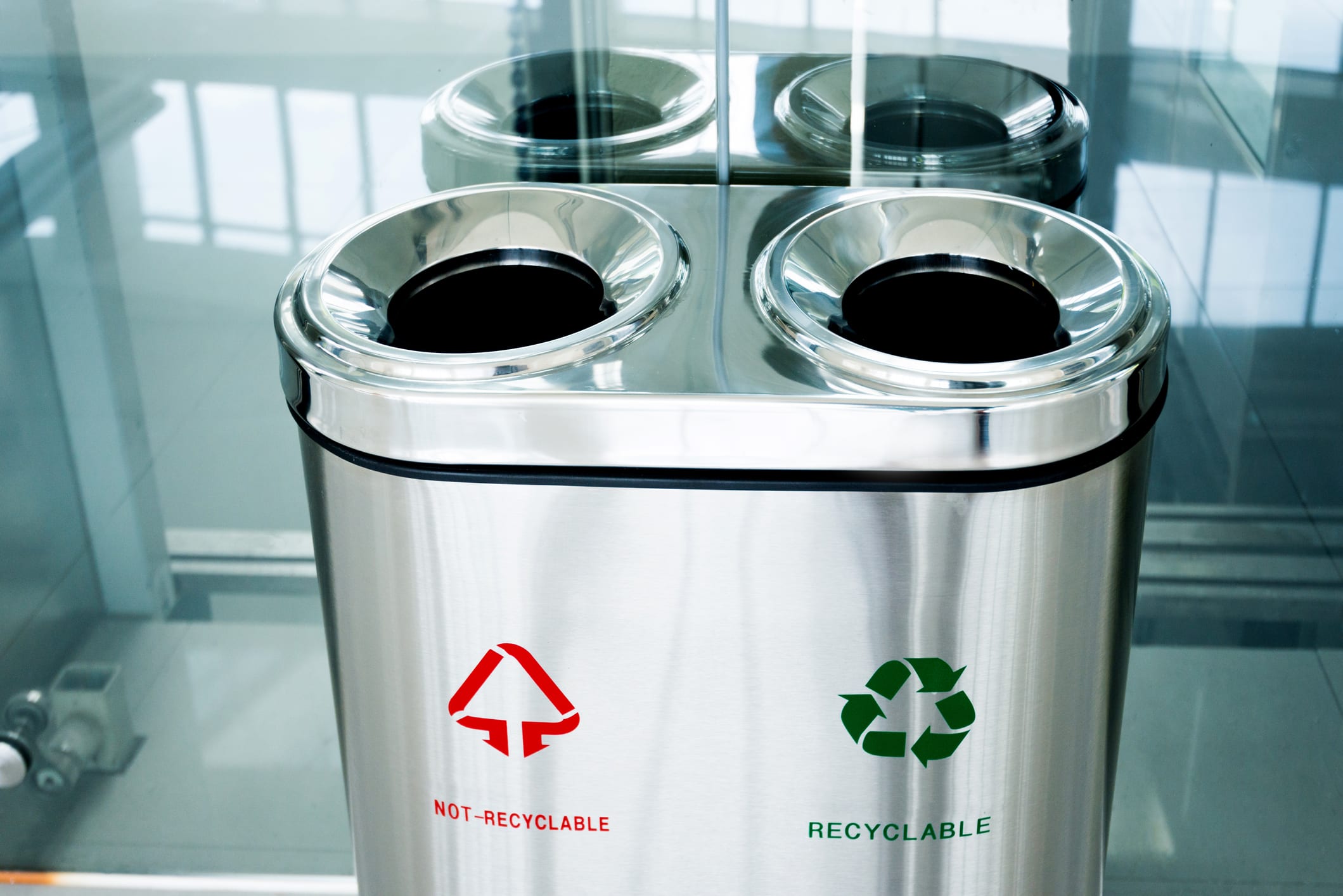
Recyclable and non-recyclable garbage can indoors.

We were faced with an issue of how to maintain our recycling and composting habits – since throwing out cans just didn’t seem like an option for the frogs. For the first few months, frogs would boomerang their lunches until we were able to convince the town to offer us curbside services too.

As Bill Nye the Science Guy would say: “To leave the world better than you found it, sometimes you have to pick up other people’s trash.” But, this was not enough.

The frogs lobbied for these services, and won! We are one of the only businesses in Newmarket with this opportunity, so we do our very best to ensure we are properly recycling and composting.

We Smart Commute

Commuting to work sucks. Especially when you are stuck sitting in traffic. And hello, the prices of gas are crazy!  Speaking of gas, it is extremely harmful to our planet.

That is why Treefrog has implemented a Smart Commute Program. Before Smart Commute opened its doors to under 50 employee employers, we offered our Frogs cash bonuses when they choose to smart commute. This included carpooling, taking public transportation, walking to work (some frogs prefer hopping), or even skipping the drive and working from home1.

We Buy and Grow Locally

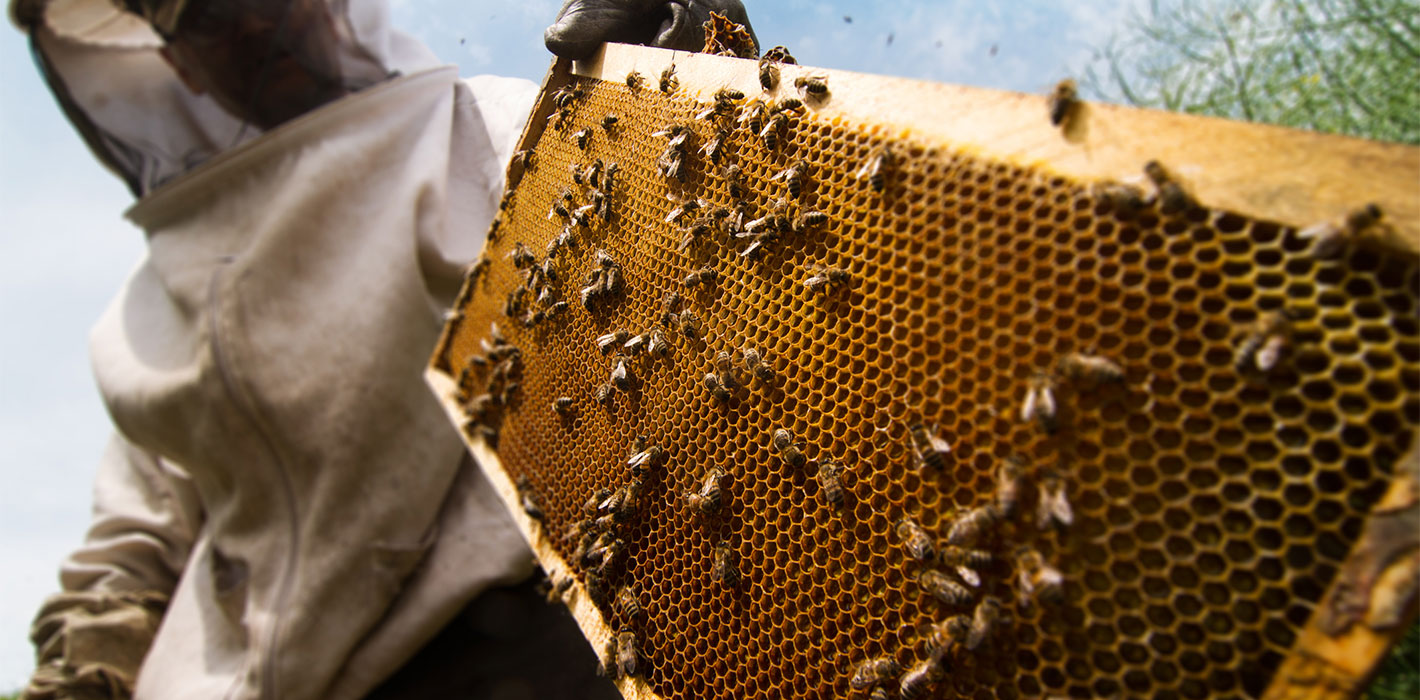
You can catch flies with honey. And frogs love flies. So, we go through lots of honey. However, we only buy locally sourced honey for our office. There are many environmental benefits in supporting local honey farmers. Farm-raised bees help to pollinate plants, which is beneficial to local wildlife. In addition, buying local supports honey farmers who are properly caring for and raising the endangered bees.

We also love to grow fruits and vegetables in our Treefrog garden. While having a garden may seem like a small impact, it has huge environmental benefits. Growing your own food can reduce carbon emission and waste. Food travels long distances to arrive at the grocery store, on average it takes over 1500 miles of travel before the fruits and veggies we love get placed in our carts. In addition, growing food can reduce waste as it eliminates the need for packaging such as plastic and cardboard. So, if you are ever passing Davis Drive in the summer, feel free to enjoy a tomato (or two) from our garden2.

We Only Drive Electric

Our Frogs are always on the go, whether we have a meeting with a client, a networking event or one of us is speaking at a workshop or conference; we have an electric car that will get us where we need to go. We invested in two fully electric cars to reduce our carbon footprint and protect our planet. While this might require some extra planning on our part when navigating to and fro, it’s worth the effort knowing that in the last five years we’ve reduced our carbon footprint by 130,000 km through the use of electric vehicles.

Vehicles that run on gas emit toxic greenhouse gases into the environment and pollute our air. Greenhouse gas emissions are the leading cause of climate change.

We Made Small Changes Around the Office

Change starts with the low hanging fruit, and at Treefrog, those are the simple things like batteries and lights.

As a digital marketing agency, it’s no surprise that we go through a lot of battery power. We recently started a new tactic with the goal of minimizing our environmental impact through battery conditioning. We converted all our batteries to brand new, top-of-the-line Eneloop batteries with a life of 2100 charges. So, no more one-time use batteries, only rechargeable!

A pair of rechargeable batteries.

Apart from the batteries, we also have a Nest Learning Thermostat that programs itself and helps save energy. Not only does it save us money on our heating bill, but it also helps us avoid running the air when no one’s home. We also use a combination of compact fluorescent lamp (CFL) lights and LEDs, which are more energy efficient.

These small things make a big difference in saving our planet.  We want Treefrog to live on for many generations, and we hope you do too.

What are you doing in your space to reduce your footprint? We’d love to hear from you!

Resources

https://www.worldwildlife.org/threats/deforestation-and-forest-degradation
https://www.tomsofmaine.com/good-matters/natural-products/the-amazing-benefits-of-local-honey

1 Smart commute bonus is only for in-office commuters.
2 Garden options tend to change from year to year.

Close up of a hand holding a mobile phone
Mobile App Development

Driving Your Business Forward With Mobile Apps

Is it just us, or are mobile apps taking over the world? It would certainly seem so.

Gaming apps, dating apps, exercise apps, and more – we’d bet there’s a ton of lifestyle apps cluttering your phone. However, while mobile apps can certainly be entertaining and fun, they can also help with productivity, promotion, and be incredibly beneficial for securing new opportunities for growing companies.

Business-to-Business-to-Consumer Mobile Apps

Here at Treefrog, we’ve noticed a lot of buzz around apps that serve both business-to-business needs and business-to-consumer needs. These dual-focused apps allow companies to manage both their clientele and their business partners/employees – all through the same app!

Why so much buzz? These dual service apps offer innovative solutions to businesses that need fluid communication both internally and with the world. And while most of our clients already have a process for how to manage the two different sides of their business, a customized mobile app can take service and communication from just “good,” to “fantastic”.

Take a mobile app like Foodora for example. Foodora is a food-ordering app that was built to service both restaurants (who need to manage incoming orders, promote their business, and reach new customers), and customers (people wanting to place food orders for quick delivery).

While Foodora could exist exclusively online, fast paced restaurants and on the go customers don’t always have access to their computers. Therefore, a mobile app acts as the perfect custom solution to a previously inconvenient and lengthy food ordering process – all through the click of a few buttons.

Business-to-Employee Mobile Apps

For your business, a customized mobile app can help to ensure your employees have access to the right information, whenever and wherever they require it. An employee-geared mobile app will not only improve workplace satisfaction (as worker mobility is improved and expanded), but with positive user experience, your workers are also destined to become better and quicker at their jobs. This type of app is especially useful for employees who are constantly on the move, such as journalists, recruiters, traveling salespeople, etc. Examples of B-to-E apps include: DocuSign and Evernote.

Business-to-Business Mobile Apps

Business-to-business mobile apps can help to strengthen and build customer relations with industry partners. These apps are especially useful for businesses that want to improve efficiency by tracking analytics, product movement, sales, and project development. Examples of B-to-B apps include the Google Analytics App, the HootSuite app, and Salesforce Mobile.

Business-to-Consumer Mobile Apps

For your clients, a customized mobile app articulates that their satisfaction is a priority. By offering a user-friendly and attractive app to improve their ability to interact with your brand, you’re directly investing in customer loyalty and building the foundation for more business to come your way. With your convenient app downloaded to their phone, we bet they’ll use it again and again! Examples of B-to-C mobile apps include restaurant-specific ordering apps, clothing store apps, and even lifestyle dating apps.

Going Mobile with Your App

The reality is, people are busy, and attention spans are shrinking. Therefore, clients and employees are demanding more comprehensive and efficient ways to consume information and complete tasks that are integral to their jobs and everyday life.

At Treefrog, our Mobile App Development team can design a customized app that solves and addresses your most pressing concerns and process-related issues. By improving user experience and offering better processes that directly help to secure new business, your company will remain competitive in an ever-changing techno-culture.

Call us at 905.836.4442 to learn how we can take your business mobile with a customized Android or native iOS app.

Gold ore
Mobile App Development

4 Ways to Make Money with Your Mobile App

Deciding which monetization model best suits your branded application depends on many factors

Like the moneyed prospectors who raced northwest to the Yukon’s Klondike region in the late 1800s in search of fortune in the form of gold, the modern equivalent of the gold rush may be the desire of businesses and independent developers to create a new revenue stream via a mobile application. But like the Klondike gold rush, not everyone will end up hitting the jackpot.

Conceivably, finding a way to make money from a mobile app is similar to the plight of social media marketers to generate sales through the use of compelling content, in that it comes down to a question of user engagement.

There are different ways to generate revenue through a mobile app. Deciding which model to adopt and what to charge your targeted audience may be the most taxing call you will need to make. But here’s food for thought: according to research by Statistica, the most profitable option is the in-app purchase. In 2012, global in-app revenues were an estimated to be US$2.11 billion and are predicted to rise to $36 billion by 2017. However, the in-app model may not be the lucrative windfall for all types of apps, with about 15% of smartphone users making such a purchase.

Four App Monetization Models to Consider

In general, apps have four major channels available for generating revenue. Determining which model you should employ depends largely on the type of app you have or intend to build, and what your expectations are for user engagement:

  1. Charging to download it from the Apple App Store or Google Play.

    Provided your app offers something of value to your customers, then you can monetize it by charging people to download and use it. However, you should also know that Apple and Google will take approximately 30% of every sale or download, and the cost you can affix to your app must be based on either Apple’s or Google’s pricing scales.
  2. Using mobile ads banners and offering an ad-free version of your app.

    Instead of charging your users to download and use your app, you can sell advertising space in it like many newspaper companies do, and subject your users to mobile ads banners within the app. You can also charge your users for an ad-free version of the app, but know that Apple and Google will take 30% of what you charge your users for an ad-free version of your app.
  3. In-app purchases.

    While allowing your app to be downloaded for free, in-app purchases are purchases your users make inside of your mobile app. The items they purchase could be to access additional features of the app, or for virtual items to use within your app. For instance, many gaming apps provide in-app purchases so their users can buy special characters or abilities within whatever game they’re playing. It is currently the most successful way of making money with an app. You should also be aware both Apple and Google will take 30% of all in-app purchases.
  4. mCommerce or mobile commerce.

    Whereas we refer to selling products and services online as “eCommerce”, selling goods or services via a mobile device is known as “mCommerce”. The good news with mCommerce is neither Apple nor Google will impose a 30% cut for whatever products your users buy via your app. However, a mobile app with mCommerce functionality also requires a backend server for things that can’t be done solely on-device, such as sharing and processing data from multiple users, or storing large files. You will also need a payment processor to facilitate debit or credit card payments.

Other App Economic Options

There are a couple of other options to consider for your app: the freemium model, and the use of a paywall.

The freemium model is often found on gaming apps such as the wildly addictive Candy Crush, which allows users to play for free, and offers gamers the option of purchasing in-game features or an interruption-free version of the game. You’re not obliged to purchase anything in this game, but it will impose a short-term time-out on its users after they hit certain game milestones. For gaming apps, the freemium model has proven to be the most successful type to date, suggests data from mobile marketing and engagement firm Swrve.

The other option – one that’s typically used by newspaper and magazine publishers to generate subscription revenue – is the paywall. Similar to the freemium model, paywalls let users access a fixed amount of content for free before restricting access, and asking them to buy a subscription. The problem with the paywall model is unless you’re in the publishing business, it may not apply to your company or industry.

Are you curious if your business should create its own mobile app and how to monetize it? Zap us. Our knowledgeable and talented development team can bring your mobile app concept to fruition.

Scroll to Top