
Digital Marketing

Shot of a young female designer working in her office
Digital Marketing

How To Leverage A Digital Presence Analysis – Part 3

Part Three: Creating A Content Campaign

Successfully navigating the world of digital marketing requires a strategy, a map if you will. You need to know where you are (point A) and where you want to go (point B, and possibly points C, D, and E too). These points on the map are your goals – the reasons you’re taking this journey and the places you want to go.

And once you know where you are and where you want to go, a content campaign that involves content development, search engine optimization, and social dissemination, will plot your best route to get there.

In part one and part two of our series on digital presence analyses, we explored how to perform a SWOT analysis on your brand and how to develop consumer personas. In part three, we’ll explore how to use both tools to develop and execute a content campaign that will raise your brand awareness and revitalize your business.

So, how do you create a content campaign? 

Creating A Content Campaign

A content campaign combines social media, content, and SEO to create a unified digital strategy that will leverage identified personas, as well as the information collected in a DPA, to outline actionable items that will support a common goal.

Often underrated, content is the backbone of every marketing strategy as it provides material that can be shared through social, and that will be crawled and ranked by search engines like Google – positioning your company in front of your audience.

But what does a content plan look like?

The answer? It’s different for every company, as a content campaign should be completely unique to each brand – assessing needs and providing creative branded solutions to achieve those goals.

Cropped shot of a businesswoman giving a presentation in the boardroom

Let’s explore an example:

Should a footwear company wish to market a new shoe each month, monthly content campaign’s could be created to reach the audience who is most likely to be interested in that specific ‘shoe of the month.’

This could include targeted:

  • Blog posts about the features of the shoe
  • Email broadcasts promoting the shoe of the month
  • Social posts to share blog content about the shoe
  • Video teasers that showcase the shoe
  • Keyword optimization for the shoe name and features
  • Targeted PPC and SPPC ads for the shoe
  • Print materials that show imagery of the shoe, and more.

And as each of these marketing materials would adapt each month, as the target market shifts, new content would be developed with the audience in mind.

Example:

January Featured Shoe: Women’s Pink Breast Cancer Running Shoe – Brand X 

Target Audience: Women who support breast cancer research and women’s charities, are athletic, like the colour pink, like yoga and exercising, are between the ages of 18-38, etc.

VS. 

February Featured Shoe: Water Resistant Hiking Shoe – Brand Y

Target Audience: Men and women, ages 25-59, who are athletic and enjoy exercising, hiking, rock climbing, swimming, camping, etc.

While some characteristics, such as athleticism and a love of exercising are constant, the other characteristics may shift each month, demanding that the advertising and content campaign remain agile and follow a strategy that can speak to those unique and more specific niche audiences.

Therefore, the content campaign, in this case, would need to project a plan that runs months into the future, including what materials will be developed and shared on the month-to-month basis.

Shot of a young businessman giving a presentation to his colleagues in an office

Content Development & Social Sharing

Content should tell a story, explain a concept, and persuade readers to take action. In other words, content should always aim to educate, inspire, entertain, and convince. However, without the right strategy and tools, content can fall flat and cause potential customers to look elsewhere for information.

Content campaigns require consistency between the content being created and the content being shared, and it is always best to create content that you can own and have control over. Owning quality content will increase your SEO, position your brand as a Key Opinion Leader in your industry, and help you to connect with your audience in a more authentic way.

However, in addition to sharing content that is branded and unique, you can also share content that has been curated by other sources.

For example, if you own a boutique that sells accessories, and you’ve recently begun selling a new line of scarves that you want to create a campaign around, you could share articles, published by other writers, which discuss:

  • How to wear a scarf
  • What to wear a scarf with
  • Why scarves are the best accessories
  • The specific brand you’re selling, and more.

Though this content is not native to your brand, curated content can fill in the gaps between the unique content you’ve crafted and will keep your audience engaged on a more regular basis. Leveraging programs like HootSuite, you’ll be able to schedule these posts months in advance, saving you time and the stress of having to remember to post frequently.

For tips on social media success, check out our article “Why Social Media Works”.

Search Engine Optimization

Your SEO ranking and performance is dependent on the content that exists on your website. To improve your ranking, it is important to analyze the following items before embarking on a content campaign:

  • Is your current content relevant and valuable?
  • Is your current website user-friendly?
  • Do you create content that is sharable (Ex: blog)?
  • Has your content been optimized using proper keywords, meta descriptions, etc.?

Within a content campaign, it is critical to consider the rules of SEO, as well as to optimize content so that your material will impact your visibility to potential customers. Through Google Analytics, you may also track the success of your campaign, monitoring increases in views, time spent on page, conversions, and other measurable results.

For more insights into the value of SEO, check out our blog ‘Conversion Rate Optimization & What It Can Do For You.’

Company employees working in software development and designer office

Leveraging A Digital Presence Analysis: A Checklist

So, while this all may seem overwhelming, we’ve compiled a checklist, in the most simplified way we could, to remind you of the steps covered in our three-part series:

  • Perform a SWOT analysis
  • Develop personas
  • Brainstorm
  • Create a content calendar
  • Write content
  • Optimize content
  • Create a social sharing promotional plan
  • Publish the content
  • Share the content
  • Measure your campaign success

Should you require support in navigating your digital presence analysis or content campaign, be sure to reach out to us at 905-836-4442

Our professional team of content, social media, and SEO specialists can provide you with solutions that will increase your brand recognition and overall marketing success.


Laughing friends crowded around a mobile phone
Digital Marketing

Don’t Do Social, Be Social!

Social interaction is the bedrock of social media marketing. In fact, it is the fundamental principle on which it was created. Therefore, being heard on social media requires having conversations with other people and not just posting content.

And unless you already have a large and engaged social media following, posting without interacting is like shouting into a void.

Sure, you can use things such as hashtags to get your posts seen, but inspiring others to take action requires you to have ongoing conversations that actually engage and inspire users.

Comments, likes, and shares are examples of these interactions, but let’s look at a few other things you can do to make sure you are being social rather than just doing social:

Listen

Get social by listening

Before you can interact with your audience, you need to conduct some ‘social listening’ – the process of finding people who are talking about your brand or your industry in general. As people don’t always @ mention your brand when they talk about it, social listening will help you find and respond to posts that may need your attention.

Social listening tools like Hootsuite track brand mentions, and high-end social listening tools such as Sprout Social can provide a deeper analysis. However, if your budget is too small to adopt these tools, you can always search your brand name (or other relevant search terms) on social media platforms directly – to find posts that you may want to respond to.

Insert Yourself into Relevant Conversations

People talk, and you better be there when they do

‘Hilton Suggests’ is a Twitter account run by Hilton Hotels that responds to people looking for travel suggestions.

By listening for and responding to travel posts on Twitter, Hilton Suggests positions itself as a ‘helpful friend’ that is willing to provide answer seekers with useful, travel-related information – whether a person’s inquiry has to do with Hilton Hotels or not.


Hilton Suggests randomly inserts itself into conversations with travellers to keep the brand top of mind for them the next time they need a hotel. 
Taking after Hilton Suggests, try joining Facebook and LinkedIn groups that exist around a topic relevant to your brand. The most important interactions happen in these groups because they consist of people who you know are already interested in your type of product or service.

Start Conversations

If you’re having trouble joining a conversation, start one

Several companies have started Facebook groups that relate to their brand or industry. These platforms are beneficial for the host company, as members will always have these brands top-of-mind when they interact within these groups.

If done correctly, a group can create a loyal community for your brand – keeping users coming back for more.

Skincare brand “The Ordinary” created a Facebook group for people to share skincare tips and see new products. The brand constantly posts in the group and speaks with users, which increases sales without having to spend time trying to engage new users:

You don’t have to use groups, though. Fast food chain Tim Horton’s is notorious for using social media to ask people what they think about their new menu items. These posts are riddled with lengthy conversations where customers debate what they think about them.

Show Love

“Treat others how you want to be treated” is also the golden rule in social media. If you want people to like, comment on, or share your social media content, you better do the same for them.

Sharing third-party content on social media is great because it fills up your newsfeed and it entices others to share your content in return (make sure you mention them so they know that you shared it, and talk about how great it is).

Our tip? Try searching Twitter for accounts that are relevant to your industry (but who are not competitors) and retweet them so that they feel more inclined to do the same for you.

Being Social with Treefrog Inc.

People love to talk, and brands who engage with consumers in real-time are the ones who are winning at leveraging social media to meet their goals.

At Treefrog, we aren’t satisfied with cookie-cutter social media solutions that only consist of posting. Instead, our social media team engages with the audiences of our clients in real time – so that their message gets heard and people are inspired to take action.

Request a free quote or give us a call at 905.836.4442 today!

Group of people sitting on the floor in front of a decorated wall. They each hold electronic devices such as phones, laptops, or tablets.
Digital Marketing

The 5 Most Exciting Social Media Trends to Watch in 2018

Last year, we sat down to analyze the top trends that we think will dominate social media in 2018. With these insights gathered, and with the new year finally here, we’re excited to announce our picks for media trends that we’re most looking forward to seeing in 2018!

Facebook Spaces: To Adopt or Not to Adopt?

Facebook Spaces is a virtual reality version of the Facebook app that will allow users to access 360-degree photos and videos, and interact with other Facebook users by using avatars. It’s like chatting in a Facebook group message with your friends except you are “there” (virtually) and can visit different locations.

 This version of Facebook was announced very recently and is still in beta mode. Currently, you can access Facebook Spaces using the HTC VIVE or Oculus Rift virtual reality headsets.

We can’t wait to see how Facebook users react to Facebook Spaces, and we’re already brainstorming how companies can use them to connect with their target audience.

The Plight of Twitter

If social media platforms aren’t growing, they’re shrinking. Between the first and second quarter of 2017, the total number of users on Twitter remained the same, and in the US, the number of users fell, which is bad news as the US generates the most Twitter ad revenue compared to any other country.

Why are we excited about the plight of Twitter, you ask? Because we love Twitter and have had some major wins using it for clients in 2017! Because of this news, we can expect Twitter to regroup and release something new to reengage audiences (new features? A redesign, maybe?). Recently, Twitter increased the character limit for Tweets from 140 to 280 and launched their Tweetstorm feature which allows people to publish multiple Tweets at once. We can’t wait to see what they come up with in 2018!

Facebook Will Test Pre-Roll Ads

If you’ve watched a YouTube video since 2008, you are undoubtedly familiar with pre-roll ads, which are ads that play before you watch a video. And while Facebook stated that they would not use pre-roll ads because they thought users would react negatively to them, they just announced that they will be testing them in 2018.

This is great news as us Frogs are obsessed with video marketing and we can’t wait to see how users will react to this type of ad on Facebook and how we can use it for clients.

Growing Popularity of Video Marketing

Video marketing will soon be the norm! According to Insivia, almost 50% of internet users look for videos related to a product or service before visiting a store, and 48% of marketers had planned to add video marketing to their strategies by the end of 2017. Whether this happened or not, the interest in video marketing for consumers and marketers is growing!

This year, Treefrog created more videos for clients than in any other year, and we even launched our digital marketing video series, Treefrog TV, on YouTube! We can’t wait to use video marketing even more in 2018 to make our clients win!

Hello, Generation Z!

For years, companies have stressed about keeping a close eye on millennials, specifically how they use social media. However, in doing so, businesses have overlooked the entire generation born between 1995 and 2000 – who are now old enough to purchase things and who are pioneering new ways of using social media. We’re talking about Generation Z.

Generation Z adopted technology at a younger age than millennials. As social media is such a large part of their lives, companies without sophisticated social media strategies are setting themselves up for failure if they plan to try to connect with this cohort.

Our social media team includes researchers with backgrounds in sociology and social anthropology, who closely watch and study how different age demographics behave online – and they are super excited to continue researching Generation Z!

There is a lot to be excited about in 2018 on social media. To learn more about these emerging trends and how to put them into action for your business, request a free quote or give us a call at 905.836.4442 today!

Smiling young adults standing in a line looking at their electronic devices.
Digital Marketing

How to Create a Killer Influencer Marketing Strategy

Influencer marketing is a smart way to increase exposure for your brand.

Why tweet something for your two followers when you could get someone with 5,000 followers to tweet it for you?

However, getting influencers to promote you is easier said than done. It takes brainpower, patience, and a little bit of luck to build a network of influencers willing to do this – which is especially useful for relatively unknown business who need the exposure.

Below are four things companies should consider when establishing an influencer marketing strategy:

1. Offer Value to Influencers

Influencers don’t promote things simply out of the kindness of their hearts, so have something to offer them in return. A common way to connect with influencers is to offer them relevant content for their blogs or social media newsfeeds. People value content from others because it fills up their feeds, and if someone shares a link to your company’s blog, it will increase the number of people who will read it and ultimately visit your website.

The easiest way to do this is by guest blogging. However, you can also mention bloggers on social media (Ex. “check out my blog!”) to get retweets or shares.

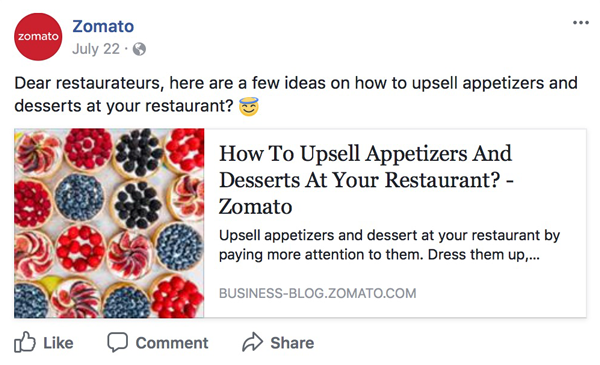
Zomato shares tons of blog content to its Facebook page. Imagine what would happen if your blog was featured on their website, and was shared to their Facebook page?

It’s ideal to offer a physical product or service to influencers because if they use it and promote it in a video or post, your company has the potential to get directly in front of a trusting audience. However, this is difficult in industries like the beauty industry, as beauty bloggers are sent countless products and standing out amongst the crowd is difficult without paying for fake, inauthentic, reviews.

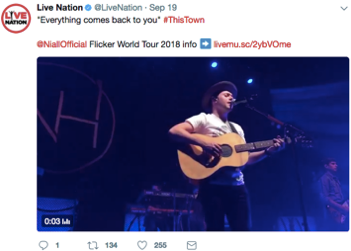
Live Nation offers value to artists by promoting their concerts and mentioning them on Twitter. In return, if an artist retweets Live Nation, the Live Nation link (which is where their service exists) will be positioned in front of more people – which will increase the likelihood of people visiting the event page and purchasing tickets from their site. It’s a win-win for both sides.

2. Target Influencers that are Relevant and Influential

Do some homework and research influencers before you reach out to them. Make sure that they have enough of a following that a retweet, mention, share, or post to their blog site will make enough of a difference to drive results for you.

Try using Foller, which gives a breakdown of Twitter users (followers, retweet ratio, reply ratio). If you use YouTube for your influencer marketing strategy (perfect for product reviews), use FameBit, which not only breaks down metrics that matter (like subscribers and average views), it actually lets you message influencers directly.

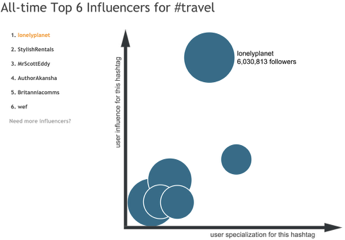
Also, make sure that the influencers you reach out to are relevant to your industry or niche. By using tools like Hashtagify, you can search for the top influencers in your subject area – ranked based on their sphere of influence.

Remember: Getting in front of someone else’s audience is useless if those people aren’t interested in your product or service, so make sure the influencer’s audience aligns with your goals.

Hashtagify ranks the top Twitter influencers in the subject area that you search for. 

3. Build Relationships

If an influencer engages with you, why stop there?

Instead of putting effort into looking for new influencers, sparingly engage with an influencer you’ve already engaged with, again. Influencers who find you valuable (and don’t feel overwhelmed by ‘spammy’ frequent requests from you) will continue to engage with you and want to promote you.

If you continually get retweets or shares from the same person, you will keep increasing your reach with ease, as engaging with someone who already knows you is easier than finding someone new to partner with.

If an influencer engages you, continue offering them value to build an ongoing relationship.

4. Don’t Expect Immediate Results

Building a network of influencers to promote you, like all organic social media, is a slow build. It takes time to find people who will interact with you and even more time to build a relationship with them. However, if you are able to build several of these relationships, and take the time to develop trust and loyalty with the influencer, you will have a stronger and more motivated network of promoters who can do wonders for your brand.

Influencer marketing takes time, but once you build a few profitable relationships your online reach can skyrocket!

Influencer marketing is the future of social media. Contact Treefrog today to learn more about our out-of-the-box social media solutions.

Request a free quote or give us a call at 905.836.4442 today!

Close up of hands playing an electric guitar
Digital Marketing

5 “Boring” Companies That Are Rocking It On Social Media

Most people tend to think that social media only works for companies in industries that have a target audience of social media-motivated Millennials and Gen X-ers. It’s often believed that only “fun” and “young” industries, like Go Pro or Red Bull, can really rock social media… but this just an assumption.

While it’s true that some industries do lend themselves better to social media, there are some “boring” companies who have dared to show what makes them unique and are connecting with users as a result.

Struggling to figure out how you can make your industry, product, or service seem exciting on social media? Check out how and why these seemingly “boring” companies are truly killing it when it comes to making their content more appealing to their audience.

1. Magna International

Some companies are at a natural disadvantage when trying to leverage their products as visually appealing social media content. However, Magna International, a massive ‘behind-the-scenes’ automotive supplier, has spiced up their Instagram content by choosing to focus on the finished product they helped to make.

Why?

There’s no denying that a cherry red Lykan HyperSports car is going to get much more attention and likes than a photo of a high-pressure vacuum casting. By focusing on the beautiful cars designed using their mechanical parts, Magna’s social content becomes more visually pleasing and yet remains relevant to what they do.

2. MailChimp

Email automation platforms are exciting, right? Uh, not so much.

However, while creating quality visuals for MailChimp might seem like a challenge, the company expertly leverages social media for something other than advertising their software.

How?

MailChimp uses Instagram to show off their lighthearted company culture and to attract young talent to their team. MailChimp uses the image-based platform to meet their hiring and recruitment goals, even though an email marketing social page might not seem glamourous or “worth the follow” to most users.

3. SAS Software

Software analytics company SAS is smart about the content that they post on Facebook. Rather than strictly posting about things related to their niche market, they branch out into other topics that are fun but not entirely off base.

How?

In their Thanksgiving-themed Facebook post (see below), SAS managed to relate the hugely popular American holiday with data analytics; giving a regional breakdown of where popular holiday foods are sourced. A very clever connection!

4. Mr. Clean

Cleaning products probably don’t get you excited, but Mr. Clean is trying to change that by posting hilarious GIFS and memes on Twitter.

Why?

Mr. Clean has chosen to add a “sexy” and humourous flare to their line of cleaning products to attach some fun and youthfulness to their “tough” cleaning image. As a result of their use of funny GIFS and memes, they are able to connect with the next generation of cleaners and have earned nearly 30,000 followers on Twitter to date. Wow!

5. General Electric

General Electric has managed to breathe life into their social media content, not just for their consumer products, but for their business-to-business products as well.

How?

To make their Facebook content more engaging, General Electric avoids tech jargon in favor of staggering facts about the capabilities of their products (which acts as an attention grabber). Compliment this with edgy visuals, and you’ve got a business-to-business company that is finding success on multiple social platforms, not just LinkedIn.

Struggling to figure out how to make your social media content engaging? At Treefrog, our social media team specializes in providing out-of-the-box digital marketing solutions for companies of all types and in all industries. Leave it to us. We’ll take your social media presence from “meh” to “that’s amazing!”.

Request a free quote or give us a call at 905.836.4442 today!

A hand touching a floating graphic of interconnected icons
Digital Marketing

How To Leverage A Digital Presence Analysis – Part 2

In part one of our series on digital presence analyses, we explored how to perform a ‘SWOT Analysis to Review Your Digital Presence’. This included information on how to evaluate the strengths and weaknesses of your brand, as well as how to identify the opportunities and risks your brand may access and face.

However, while it’s a great step to have completed a SWOT analysis, many of you may be asking: What do I do with all of that information? What’s next?

In part two of our series, we will discuss how to leverage the information collected in a SWOT analysis to create customer profiles of whom your strategic digital presence will target.

Identifying Consumer Personas

Before you can begin actioning the goals identified in your SWOT analysis, you’ll need to use the information you’ve collected to build quality and well-rounded consumer personas.

  • 44% of the B2B marketers have already discovered the power of Personas
  • 83% of B2B marketers expect to use Personas in the near future.

A fictional digital persona taps into the psyche of the people who are most likely to engage with your brand. Persona’s take hours of research to develop and can include details as specific as age, gender, occupation, education, where a person shops, what types of social media networks they use, how many kids they have, and so much more.

However, as noted by Hubspot, it’s just as important to understand what personas are not:

  1. Target markets
  2. Job titles/roles
  3. Dependent on specific tools or technology
  4. Specific real people

Overwhelmed?

Think of the buyer journey as a story in three parts:

Persona: Defines the main character in the buyer story. Who they are, what they do, and why they do it. This includes their pain points, their fears, what brings them joy, and what stirs them.

Scenario: Where does the story take place? In a store? Online? How does the persona behave in that environment? Why did they arrive there instead of somewhere else?

Goal: What does the persona want out of their buying experience? What needs do they have? What is their motivation? What will make their experience a success?

Source: www.smashingmagazine.com/wp-content/uploads/2014/06/04-running-persona-opt.jpg

The goal-oriented buyer persona study is important because without knowing whom your specific target market is and how they act, how will you know how to cater your marketing initiatives? How will you know which platforms and methods of advertising you should use to connect with them?

By doing the research up front, personas will save you time and money – as your marketing ventures will target the right people right off the bat, increasing your chances of sales and conversions.

How To Create A Persona

Research is always your best tool. The more you know, that more you can strategize and make informed marketing decisions. It’s therefore crucial to first identify some basic questions about your ideal customer:

  • Who are they?
  • What questions do they ask?
  • Why are they ideal?

If you are able to develop a persona that is based on your ideal customer (maybe even someone who is already buying from you), your persona research process will become much more realistic and informed. From there you can ask more specific questions such as:

  • What is their budget?
  • What does their daily life look like?
  • Where so they spend most of their time?
  • What they’re drawn to and why?

This data can be gathered through customer surveys, Facebook and Google Analytics, industry statistics, interviews, focus groups, and anthropological research.

Bonus Tip: Hubspot suggests that in order to recruit people to participate in your persona research interviews or surveys, it’s always a good idea to offer incentives, to be clear that your ask for participation is not a sales call, and to make it easy to say yes – by making the process simple and flexible.

Hubspot also provides some great Persona Interview Questions that are worth checking out!

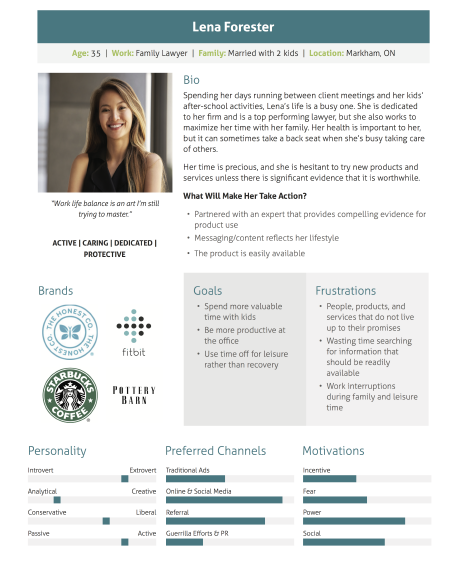
Here’s an example of a persona we’ve identified for a client here at Treefrog:

Once your persona profiles have been developed, make clear and strategic decisions as to which platforms you will use to market to them, what type of language you’ll use to speak to them, and make the effort to engage your personas in the ways they’re most likely to respond.

For example, the fictional Lena Forester is most likely to engage with social media ads, is motivated by power, is analytical, wants to spend more time with her kids while also being productive at the office, and she is drawn to products that partner with trusted experts and relate to her. It’s therefore not surprising that she is a fan of family-friendly yet sophisticated brands like Fitbit, The Honest Co., and Starbucks, as each fits her lifestyle and answers to her needs and desires.

Should another company wish to market to Lena, they will have to tap into these same things – leveraging the knowledge that she likes easily accessible products, that she hates work interruptions when at home, and that she is active and protective.

However, keep in mind that the persona’s your brand appeals to can evolve and change over time as preferences and interests shift. What appeals to Lena in 2017 and 2018, may not appeal to her in the same way when her children have grown into young adults, and she’s considering retirement. It’s therefore important to update your personas over time and to consistently check the pulse of your audience.

Putting Your Personas To Work

Once you have developed your personas, you’ll be able to use the data to specify your advertising reach – especially through content development and targeted social posting.

When it comes to blogging, understanding your audience will allow you to craft topics and provide sharable content that makes your customers say, “It’s like this article was written just for me!” By connecting with your target market on a more personal and strategized way, they’re more likely to share the content, engage with your brand, and purchase your product or service.

Creating user-driven content will also benefit your SEO as valuable content improves ranking and will help connect even more potential customers to your brand.

When it comes to social advertising, platforms like Facebook allow advertisers to insert specific persona data into the Facebook Ads system, which will position your advertisement in front of people, on both Facebook and Instagram, who most meet the specifications of your targeted persona. Incredible, isn’t it?

  • 56% of companies have created higher quality leads using Personas.
  • 24% of companies gained more leads using Personas.

Moving Forward

Once you have verified your top priorities and have conducted your persona research; it’s time to move into brainstorming and the dissemination of tasks.

As most digital presence initiatives cannot be completed alone – you’ll need to assemble a team, communicate the information gathered in your SWOT and persona analyses, create a content campaign, and assign to-dos based on individual strengths… but those are topics for other Treefrog articles to come! *wink, wink*

Contact Treefrog Today!

Should you require assistance to identify your brand persona profiles, consult an agency that will be able to conduct deep analysis of your customers. Understanding and developing the basis for a marketing plan is no easy task – and at Treefrog, our team is here to help.

Call us at 905-836-4442 or submit a free quick quote to learn more. 

Business man taps on a computer tablet. Various tech related graphics are superimposed.
Digital Marketing, Web Design & Development

How To Leverage A Digital Presence Analysis – Part 1

Part One: Using SWOT Analysis to Review Your Digital Presence

Having a digital presence once upon a time meant that you had a website. Today, digital presence covers so much more than just a website; it includes your brand’s targeted keywords, strategized content, analytics about your online visitors, e-commerce and lead conversions, engagement on social media, and beyond. The lines are continually blurring between what defines “marketing”, and what defines “digital marketing”. Soon enough, these will be considered the same thing, because any business who is not considering digital as part of their overall marketing mix is missing the boat.

When it comes to understanding your digital presence, it’s important to first evaluate your goals over time by asking a few questions:

  • How do customers research your product?
  • Where can customers buy your product? 
  • What do people think about when they see your brand?
  • What target market are you trying to reach?
  • How does your digital presence measure up against your competitors?

These are just some of the questions you need to be asking. Once we’ve started to establish a clearer understanding of our digital presence, it’s helpful to conduct an assessment of a “where are we now” overview. This can be effectively done by conducting a tried-and-true method: a SWOT analysis.

Let’s dig in: 

SWOT Digital Presence Analysis

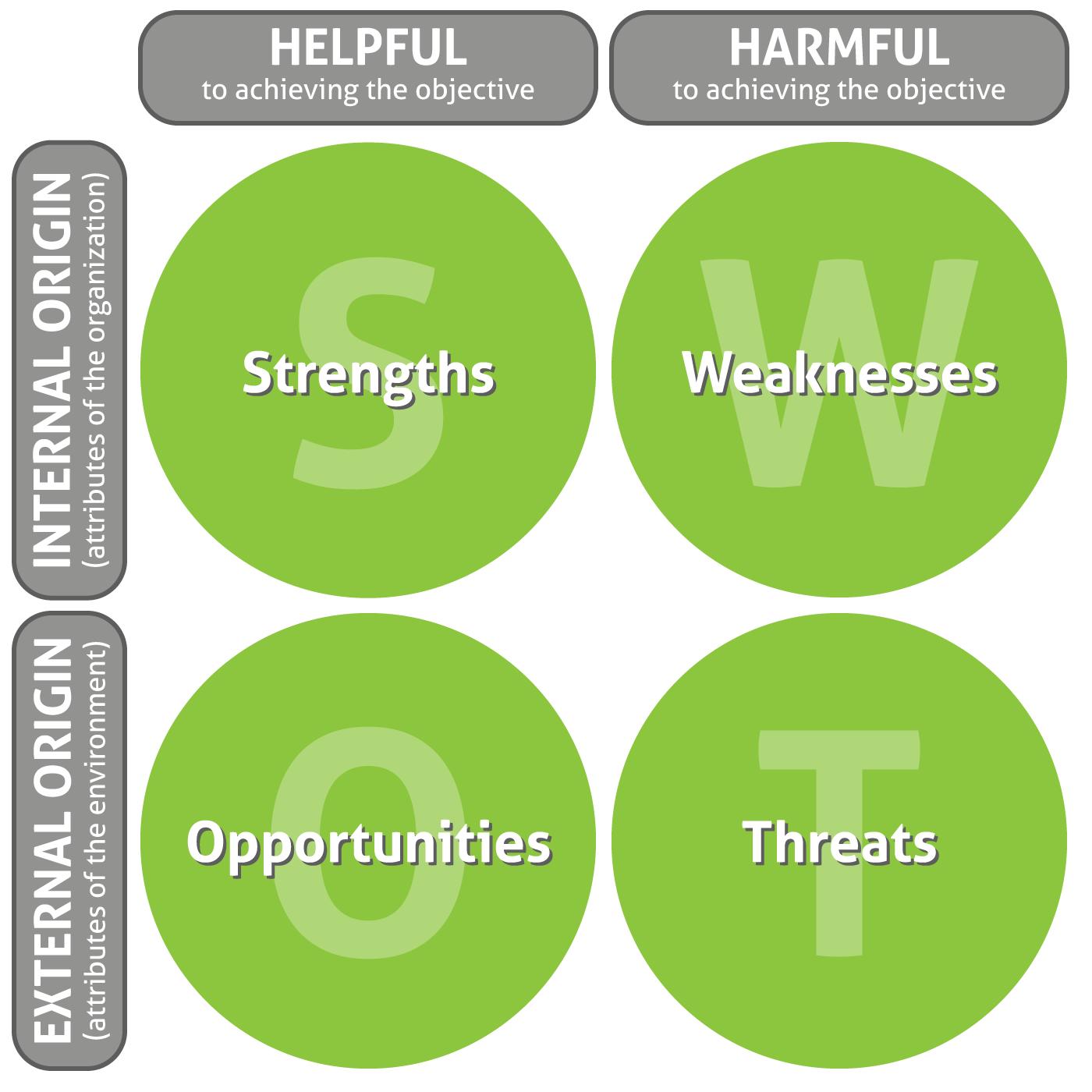
There are a number of ways to approach an assessment of your digital presence, and one insightful approach is to apply SWOT to your digital presence. SWOT stands for:

  • Strengths
  • Weaknesses
  • Opportunities
  • Threats

By leveraging the SWOT analysis method, you’ll be able to take a deeper look into what your brand is doing right online and what your brand is doing wrong. Below we examine some of the items you should consider when analyzing your online presence.

Strengths

What is your digital presence doing well

Odds are your digital presence isn’t completely terrible – unless it simply doesn’t exist or you haven’t touched it in months. To identify your strengths, it’s important to leverage available tools that can help you understand how people are currently using your website, such as Google Analytics. You should also be leveraging your social media account analytics to get a sense of how people perceive your brand. Make an effort to ask both your clients and those who have never interacted with your brand for feedback. It is best to remove your personal bias when examining what works and what doesn’t.

Strength Examples:

  • You have a social media posting schedule and you are engaging your audience.
  • You have a clear budget to make some improvements.
  • You have a marketing resource that can dedicate time to improving your digital presence, whether in-house or a third-party provider.

Weaknesses

What is your digital presence lacking?

Much like your strengths, you’ll be able to gain insight into your weaknesses by reviewing data and asking for external feedback. After years of attachment to your brand, you can become too narrow-minded when it comes to truly understanding the pain points of your presence. By asking outsiders to review your brand for the first time, you’ll have a much clearer understanding of the first impression your company is giving, and also the information that is not being articulated well.

Weakness Examples:

  • Your website is outdated, difficult to navigate, and possibly boring.
  • You can’t remember the last time you added new content to your site. Existing content has poor grammar, broken links, references to events that are years old… in other words, digital cobwebs.
  • You haven’t posted anything on social media in months (or years).
  • You don’t rank well on search engines where you should (yet your competitors do).

Opportunities

What opportunities would have a positive impact on your digital presence?

When it comes to your digital presence, there is always room for improvement. Now that we’ve looked at your weaknesses, we can use them to create a list of opportunities. Companies should never quit looking for new possibilities, even if they think things are just fine. Why be great when you can be innovative and set the bar as high as you can for all other companies in your industry? Not to mention you want to remain top of mind to your customers and be a bright, shining beacon to new prospects. Keep in mind also that digital changes quickly—what works today may just not work tomorrow.

Opportunity Examples:

  • Optimize calls to action on your website will create clear pathways from users to the information they need, and ultimately to you (a.k.a. leads!).
  • Leverage the content you have to connect with clients on social media to build long-lasting relationships and referrals (more leads!).
  • Create new content that answers the questions you hear from clients – let your website and social media be your 24-hour-a-day salesperson (did we mention leads?).
  • Technology is advancing all the time, and there are new channels and features to leverage.

Threats

What factors could threaten the success of your digital presence?

With change comes risk. However, never changing can pose even greater risks. By neglecting your digital presence, you face the threat of becoming irrelevant, stagnant, and forgotten. It is important always to stay ahead of the curve and to take risks and expand capabilities and knowledge to reduce threats.

Threat Examples

  •  Competitors have a better online presence with better brand recognition, more followers, and higher rankings.
  • Your budget for improvement is limited.
  • Your internal team doesn’t have the time or marketing knowledge to build your online presence.
  • You don’t have any metrics to tell you what’s working and what isn’t.

Leveraging SWOT

Once you have identified your company’s strengths, weaknesses, opportunities, and threats, you should then be able to outline appropriate objectives to reach your goals. In other words, you need to know where you are and where you want to go before you can start determining a plan of how to get there.

To learn more about Digital Presence Analysis’ and how to leverage your SWOT findings to achieve your goal, check out ‘Part Two’ of our DPA coverage on Persona’s.

To get your SWOT Analysis started, contact Treefrog Inc. today. By identifying your brand strengths, weaknesses, opportunities, and threats, we’ll help you to identify the areas of your business that require the most attention. Once you have a clear understanding of where you’d like your digital presence to go, we can also help to design and implement a roadmap that will help you to achieve your goals.

Call us at 905-836-4442 to learn more. 

Laptop on a long table with the YouTube logo on its screen
Digital Marketing

YouTube is Social Media Too!

Most people use only Facebook, Twitter and Instagram when developing a social media strategy and miss opportunities to have success with other platforms. YouTube is not usually thought of as a social media platform, but it is one with a lot of potential to drive success for brands.

Read on to learn why YouTube is awesome for marketers and how to best use it to achieve your goals.

How is YouTube Related to Success?

Video marketing is increasingly driving results:

  • 4x as many customers would rather watch a video about a product than read about it.
  •  Landing pages with videos have higher conversion rates compared to those without by up to 80%.
  • Almost 50% of internet users look for videos related to a product or service before visiting a store.
  • Online shoppers who view demo videos are 1.81x more likely to purchase than non-viewers.

YouTube is the biggest hub for video content online:

Why are these figures important?

Bringing epic success to companies, YouTube has proven to be effective for driving clear figures that are used to measure success, such as conversions. Trends of YouTube use are also on the rise, and as a modern business you’ll want to stay ahead of the curve:

  • 48% of marketers plan to add YouTube to their content strategy by the end of 2017.
  • 43% of marketers said they’d create more video content if there were no obstacles like time, resources and budget.

At Treefrog, if we are not creating and leveraging video content to meet clients’ goals, we risk putting them at a disadvantage because their competitors may do this first. However, if their competitors are among the 43% who are concerned about resources, there is an opportunity to bring them epic success by leveraging YouTube before they do.

How to be Successful on YouTube (Best Practices)

As is the case with other social media websites, some people are killing it on YouTube and others are not seeing the results that they want.

Here are qualities of incredibly successful YouTubers (measured in subscribers) that are important to consider when trying to use YouTube to achieve your goals.

1.  Post consistent & relevant content:

  • Just like with blogging, you will attract a larger and more engaged audience if you post frequently and if your content is tailored to a specific audience.
  • Jenna Marbles (17.5 million subscribers) posts a new video to her channel every single week, so her viewers know when/how often to visit her channel.

2.  Go for an angle:

  • Have something that sets you apart from YouTube channels run by other companies in your industry or niche.
  • Tastemade’s YouTube channel (900 thousand subscribers) is not a generic cooking channel; it combines cooking and travel by focusing on locational pieces (“Crispy Rice in Brooklyn”) that set it apart from countless other YouTube cooking channels – including the Food Network’s channel (which has 300 thousand subscribers).

3.  Produce videos with good production value:

  • Make videos as high quality as is possible within your budget.
  • Nigahiga (20 million subscribers) is successful because his videos have high production value that is also unique (he can draw an entire video and often edits videos with special effects).
  • Resources might restrict production quality, but at the very least you should have good camera quality, sound and lighting.

4.  Be entertaining:

  • Maintaining a certain level of professionalism is important, but consider delivering your brand’s message through some form of entertainment (gags, parodies). Entertainment is the most popular reason that people watch YouTube videos in the first place.
  • Super Cooper Sunday (TmarTn2) is entertaining because the hosts share the life of their dogs, even though they talk about mundane, ordinary things.

5.  Be genuine & relatable:

  • Successful YouTubers usually appear ordinary, relatable, authentic and engaging, which is the difference between popular YouTubers and carefully created brand videos.
  • Try making videos that look candid and natural. Try taking risks by displaying a sense of humor that would not typically be shown by certain companies and in certain industries.
  • KSI (17 million subscribers) has candid looking videos that are often filmed in the first person, which creates an intimate viewing experience for people.

Getting Social on YouTube

YouTube is a video-sharing website and therefore a social media website (to share is to be social!). Luckily for businesses, it is possible to build and engage a relevant community on YouTube as it is on Facebook, Twitter and Instagram.

Here’s how it’s done:

  • Subscribe to other relevant channels and interact with their content (share, like, comment).
  • Interact with users using your own videos (as you would on any other social media website).
  • Leverage your other social media followings by directing them from other social media websites to your YouTube channel (YouTube accounts can be connected with other social media accounts. If you have video content on YouTube, why not use it on your other social media profiles to drive engagement?).

By leveraging YouTube for clients, Treefrog delivers smarter and more complete social media experiences that drive successful branding results for businesses like yours. Get in touch with us at 905.836.4442 to learn more today!

Hands holding a mobile phone that has social media likes, comments, and followers icons floating above it.
Digital Marketing

15 Post Ideas for Social Media

Ensuring the success of your social media presence involves consistent effort – from posting interesting content to engaging with your audience. However, for those who post frequently, it’s quite easy to find yourself in a creative rut.

Here are 15 content ideas to inspire your next post:

1.    Take Your Audience Behind the Scenes

Sharing photos from the office, such as sneak peeks of work in progress, is a fun and easy way to humanize and get people interested in your brand.

2.    Run a Contest

People love participating in contests, making this idea an easy way to boost engagement on your page. Offer a discount on a product/ service or give away something for free.

3.    Ask a Question

Asking your audience questions is a great method for getting valuable feedback on existing or new products/services!

4.    Fill-In-The-Blank

Boost your engagement by asking your audience to fill-in-the-blank! Example: “Fill in the blank: My favourite thing to do after a long day of work is ____.”

5.    Conduct a Poll

People love sharing their opinions, and what better way to leverage that than conducting a poll?
The multiple-choice nature of polls makes it easy for your audience to participate.

6.    ‘A Day in the Life’ Post

Here’s another great way to humanize your brand! Feature one of your employees and have them post for a day, highlighting what they do.

7.    Take a Trip Down Memory Lane

Share photos of old events or company moments on a Thursday with the hashtags #ThrowbackThursday or #TBT.

8.    ‘Caption This’

Post a funny image and ask your audience to caption it in the comments below! Comments increase post visibility, and you’ll likely see some hilarious answers!

9.    Create an Infographic

Infographics are great for sharing important statistics or information about your company while keeping it easy to read and understand.

10.    Celebrate Milestones

Celebrate the accomplishments of your company and any exciting employee milestones. You can do this by remembering to take and post photos and videos!

11.    Weekly Round-Up

Create a slideshow of the exciting moments that happened over the week! This round-up can be anything from pictures of a delicious pie an employee shared at the office, to videos of an event that your company attended.

12.    Share User-Generated Photos

Ask your customers to share photos of them using your products. As a bonus, request that they include a branded hashtag so that you can search and see them all!

13.    Influencer Take-Over

Collaborate with an influencer in your industry and let them take over your social media for a day or a week! The influencer will likely post on their own social platforms, informing their followers that they will be taking over your social accounts, resulting in an influx of new eyes on your social profiles!

14.    Inspire with Quotes

Quotes work well because people can easily relate them. Easy to find and source, quotes get liked and shared frequently.

15.    Introduce New Employees

Show off some of the new faces at your company. This will humanize your brand while also making your employees feel valued and celebrated!

Coworkers sit and stand, looking at a paper held by a woman.
Branding & Design, Digital Marketing, Web Design & Development

How To Strategically Plan Your 2018 Marketing Budget

Marketing budgets vary per company and industry, but what’s true about all businesses, is that having a marketing budget, no matter what size, is necessary.

In this article, we discuss what should be included in your marketing plan, and provide an overview of the below checklist – which covers the action items you’ll need to complete as you head into 2018:

  1. Organize your finances
  2. Identify your needs and goals
  3. Determine your spend
  4. Develop a marketing plan
  5. Decide how to allocate your budget
  6. Action your plan

Organize Your Finances To Identify Your Needs

Before creating your marketing budget for 2018, you need to strategically organize and collect social and financial data that will allow you to:

  • Identify holes or ‘misses’ in past marketing campaigns
  • Identify 2017 gross revenue to predict 2018 gains
  • Reflect upon which areas (social, content, SEO) you are struggling in
  • Identify which areas of your business need attention and larger investment

Identifying Your Needs & Goals

Once your financial plan is in order, you will be in a better position to consider the state of your business and how much focus you will need to give social media, website building, design, SEO, or content marketing in the upcoming year. Having a clear understanding of this data will help you to identify your actionable needs and goals for 2018, such as:

  • Developing a social media campaign around a new fundraiser you’re hosting
  • Increasing SEO to rank higher on search engine results pages (SERPs)
  • Updating out-dated content on your website
  • Designing new marketing material to hand out at a tradeshow you’ll be attending
  • Starting fresh with a new website

What is your biggest priority for 2018?

Determining Your Spend & Plan

Brand New Companies

Companies that are less than a year old are likely limited to a very small marketing budget. They should, therefore, leverage predominantly free social media platforms (Ex. Facebook, Instagram, etc.) and consider attending a comprehensive Social Media Training session to begin generating buzz around their brand. By learning how to strategically publish yourself, you’ll reduce costs.

New Companies

Businesses that have been established for one to five years should consider using a healthy percentage of their gross revenue on print (Ex. brochures at tradeshows) and digital marketing (Ex. website enhancements and blog development). A larger marketing budget will help to launch awareness and boost familiarity amongst new and returning customers.

Established Companies

Companies that have been in business more than five years, and have a secure budget for marketing, should allocate a substantial amount of their gross income to brand marketing (Ex. Email marketing, PPC, and social media/content campaigns). For companies who exist in extremely competitive markets, are in need of brand reputation management, or who are promoting a new service or product, this budget should only continue to increase.

Allocating Your Budget

Branding

Graphic design can transform a boring and stagnant brand into something refreshed, relevant, and captivating. Although branding feeds into SEO, social media, content, and website integration, most branding begins in the design studio – where talented teams research and draft branding materials that reflect the vibe and intent of the company’s messaging.

If your business relies on brochure material, tradeshow booth design, or needs a complete logo and brand overhaul, your marketing budget should be catered towards branded design elements, as well as the integration of those designs – into your social media platforms, web copy, and website.

SEO Management

Companies that find they are in need of more quality leads, improved recognition, and higher visibility within search engines like Google, are in need of quality and consistent SEO management, as well as PPC advertising.

However, SEO relies heavily on quality content to rank and perform ideally. Therefore, if your business is in need of SEO, you’re also in need of new and better content – audited, identified, and strategically improved throughout your website.

61% of marketers say improving SEO and growing their organic presence is their top inbound marketing priority.

Local searches lead 50% of mobile visitors to visit stores within one day. (Google, 2014

78% of local-mobile searches result in offline purchases. (Search Engine Land, 2014

Content Marketing

Web content articulates your visual brand messaging in text. In other words, content backs the intent and messaging that your branding portrays. Content also goes a step further – to provide context, drive actions, present valuable information, help your company to rank well in search engines, and, in most cases, helps users make an informed consumer decision.

While writing words for a webpage may seem easy, content marketing does more than just list details about a product and tell you why it’s great. Content marketing strategically develops copy that will speak directly to a targeted market, tap into their concerns and interests, support SEO, and drive specific conversion goals. This targeted marketing is also effective for email marketing broadcasts.

53% of marketers say blog content creation is their top inbound marketing priority. (HubSpot, 2017

On average, B2B marketers allocate 28% of their total marketing budget to content marketing. (Content Marketing Institute, 2015

Social Media Marketing

For businesses looking to improve brand recognition and to interact with their customers and clients, a new marketing budget should shift primarily to social media engagement, management, and development. With SSPC on the rise, companies need to consider investing money in social media advertising – to convert social media engagement into a potential sale of a product or service. By allocating the rest of your budget towards content development and SEO management, your online profile will continue to flourish.

83% of all marketers actively pursue social media marketing initiatives. (Aberdeen, 2016

Nearly one-third of the world uses social networks regularly. (eMarketer, 2016

Website Design

If your website is out-dated, hard to navigate, and is not serving the purpose it should – it’s time to dig deep and invest in SEO, content, social media, and web design. Working together to achieve the succinct goal of driving brand recognition, leads, and success for your company, each of these marketing sectors can deliver a complete overhaul for your public and online persona.

While a full website build is a major investment, the payoff of refreshing your entire brand at once will ensure the future of your business is on-trend and prosperous.

Investing In End of Year Marketing

Is your online business holiday ready? If your company relies on online sales during the end of year season, your marketing budget should allow for an increase in spend during these months. That means more social media campaigns, a stronger PPC play, content development to drive interest, and graphics to support your initiative.

For more information on re-visiting your end-of-year ecommerce marketing budget, check out our article ‘Now’s The Time To Spruce Up Your Ecommerce’.

81% of shoppers conduct online research before making big purchases.

Actioning Your Plan

With so many options of where to begin, it can be hard to identify which marketing venture your company should be focused on and participating in. That’s where we come in.

Treefrog Inc. – Your Digital Marketing Solutions Specialists

At Treefrog Inc., we understand that the needs of B2B and B2C clients are sometimes different, and our Client Care Advocates are well versed in identifying client needs based on their pain points and industry sector. If you’re not sure where to begin, we can help:

  • Social Media Training
  • Content Development Workshops
  • SEO Training
  • Email Marketing
  • Website Programming
  • Graphic Design
  • Content Marketing
  • Social Media Management
  • SEO

As one of Treefrog’s Marketing Partner’s (MP’s), your business will receive monthly project management, support, strategizing, development, and reporting – across content, SEO, and social media departments (if required).

To learn more about planning your upcoming marketing budget, contact us today or give us a call at 905.836.4442

Scroll to Top