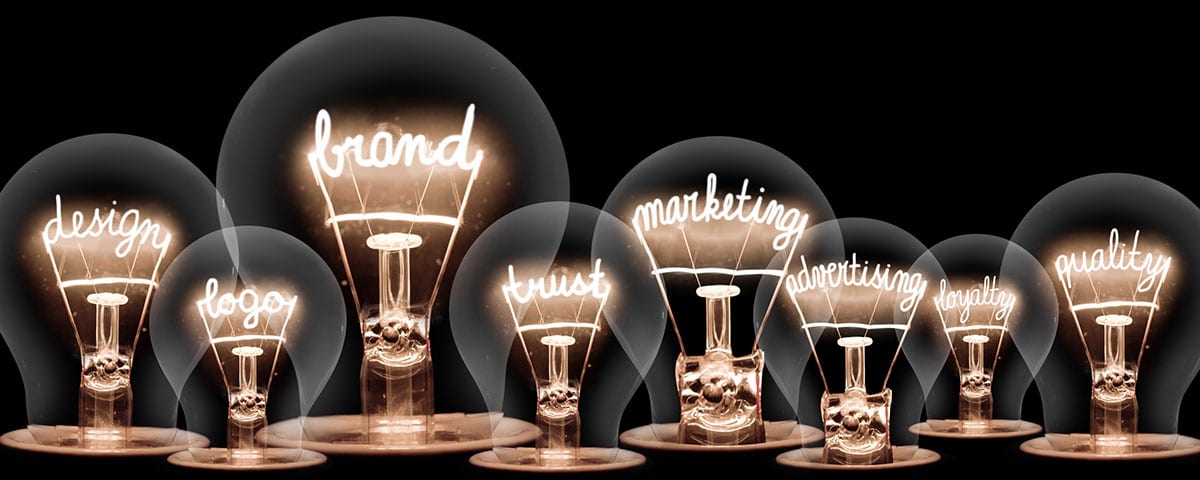
Every business wants to connect, to make an impact, and to grow. To do so, a brand must be so closely identified with the industry’s defining characteristic that they become known for it.
There is a very precise science to creating a strong brand and maintaining that strength. As humans, we are bombarded with so many stimuli every second that our brain creates a filter – known as sensory gating – to only take in the information that is deemed valuable. This may seem like an exaggerated statement at first, but think about your morning routine today. You most likely turned off the alarm on your phone, scrolled through social media, showered, ate breakfast, and drove to work. In every single one of these steps, despite your brain’s best efforts to block out all the promotional noise, your choices were affected by the power of strong brands.
So how do you ensure that your brand gets through the filter?
5 Basic Branding Barriers
A strong brand must satisfy the needs and wants of the target audience to last through the ages. Consider the list of characteristics below and see how many boxes your brand checks:
Emotive: consumers today are more driven by emotion than necessity, and a brand is the visual conveyance of a feeling that is most closely related to the target audience’s decision-making process.
Memorable: 50 per cent of consumers are more likely to click on a particular brand name if that brand name shows up more than once in a search engine. A strong SEO presence is essential.
Identifiable: a brand should be visually appealing and streamlined across all platforms. A simple yet powerful logo design can help with this.
Accessible: even with a brick and mortar storefront, studies show that 82 per cent of consumers will use their phone to help them make an in-store purchase. Without a digital presence, a brand will suffer.
Results-Driven: consumers will not return to a brand that has let them down in the past. Your clients’ success is your success.
The need to get past these “barriers” is what makes graphic design so important. At Treefrog, we have spent years studying the exact science of what makes or breaks a brand. The business world looks very different today than it did 20 years ago. Before digital marketing was ever an option – or even existed – companies were built on recommendations from friends and family. Now, this word-of-mouth has gone digital, and instead of close relations, consumers can get recommendations from millions of people at the click of a button.
Building Brand Recognition
Consumers are far more likely to choose a brand that they recognize over something unfamiliar, even if they don’t know a great deal about the company at the time. This means that even if a consumer has not made up their mind about a brand – and 90 per cent of searchers fall into this category – they are more likely to use a business simply because they know it. Consider the following benefits that come from a powerful, easily recognized brand:
Customer recognition
Competitive edge in the market
Easy introduction of new products
Customer loyalty and shared values
Enhanced credibility
Business Branding Experts
Are you ready to strengthen your brand and build your business? At Treefrog, we take a top-down approach to helping you develop your brand strategy. Whether it’s logo design, logo maturation, corporate identity or graphic design services, we’re your business branding experts.
Give us a call at 905-836-4442; our team of graphic design and branding experts are ready to help!
It is not uncommon for a company, country, or an individual to have an annual theme. At Treefrog, our CEO has set one for the company each year, and while most often they have remained internal; this year, we’ve decided to launch a marketing theme along with an internal monologue:
“What does Treefrog do?”
While this might seem like a strange question to be asking after nearly 20-years of business, as a digital agency, we have evolved incredibly over the last two decades; from CD burning to website development, creating a content management system (LEAP), to the additions of search ranking and social, to bleeding edge innovation around AI, AR, and IoT. And throughout all of this change, we hold one common theme: innovation and ideation.
But, we are no longer the people in a basement designing websites by day and coding them by night. We’ve grown into a 40+ team. Our clients have matured and grown, just as the small Town of Newmarket has too.
There comes a time in every organization where you need to step back and ask: Based on our growth, are our clients of yesterday still our clients today? And will they be our clients of tomorrow?
At the end of 2018, we set out to answer this very question.
Let us share how we did this:
Our goal was to identify ten words or fewer that would succinctly recognize who our client is. We began by listing out a variety of clients (both past and present), what types of services they offer, and the successes we’ve had with them. This was followed by a lengthy exercise of identifying attributes of these many customers and how we work with our clients.
During the process, we started to notice patterns in the clients and attributes. While some clients were our long-time partners of 15+ years, others had been working with us for less than two years. Some clients were multi-million dollar organizations, with operations around the world, and others were less than five team members and under half million in revenue.
Fascinating similarities in connection for all clients regardless of size, location, industry or income started to emerge. Attributes such as:
Relationship-focused
Growth-Oriented
Collaborative
Curious
Patient
Experts in their field
We then categorized the attributes, in the hopes of boiling our brainstorming session down into one sentence that was evident in all the clients that we selected, both prosperous and less successful (yes we looked at our failures too).
In all cases, we were dealing with the CEO or lead decision-maker; even in the $80-million company, we had a direct line to the CEO.
However, we also realized that in focusing on our clients, what they asked of us was only part of the equation. How we behave, and our values played an essential role in this process too.
As we mingled our values with the attributes of our clients, we landed on something very close to “who” our ideal client is. This included a definition of each client, and a description that would be lasting regardless of the services that we offer or the ways to which we provide support.
“Courageous, aspirational decision-makers concerned about being digitally underdeveloped who want an invested partner.”
It’s not marketing speak. It’s not meant to be pretty. It’s an internal dialogue for whom we define as our partner. Let’s unpack this definition:
Courageous
Courage defined as ‘being afraid of something and doing it anyway.’
Starting a company, inheriting a company, or gaining the position of leader in an organization is an act of courage. Sometimes it’s the only act of courage a leader makes (that’s an article for another time). But, taking on that role can be scary. Leading an organization takes courage, on a daily basis.
This word was especially crucial to our team, as many of the clients we looked at need a lot of courage in both their companies and industries. Also, when you think about technologies and the digital industry, there are a lot of unknowns, it’s intimidating to many individuals, yet the courageous person moves forward even in the face of uncertainty.
Aspirational
Aspirational or Aspiration has a dual significance in the hope or ambition to go-after or achieve something paired with the action or process to get it. Aspirational individuals are decisive, visionary, curious, and willing to take risks. At Treefrog, we are aspirational; we take risks, we go after big ideas with curiosity and joy. Our best clients are aspirational, taking risks in business, achieving something beautiful.
Decision-Maker
Let’s be real. We all want to be dealing with the decision-maker, that’s a given. But, this decision-maker is unique, they go after new things, and they embrace or welcome innovation, thinking outside the box. They are not just any decision-maker but one who eagerly craves success.
Concerned
This word is especially significant in our definition. Several businesses in the world are happily digitally underdeveloped or non-existent. These are not our clients. We are not seeking to find these decision-makers.
We have one of these businesses leaders on our team right now, a hired consultant working with us part-time: but she is not our client, as she isn’t concerned about her digital footprint.
We are instead interested in working with (and for) companies and decision-makers who are worried about their place in the digital space, who fear missing out, who recognize they are lagging in the digital arena even though they may be experts in their industry.
Digitally Underdeveloped
What does it mean to be digitally underdeveloped? It is relative to the business, knowledge holders, competitors in the industry, and the company itself. It could mean a variety of status points, having an out-dated website, lagging in social engagements, using antiquated systems such as Excel for essential business functions, and more.
This is the one area we’ve spent the most amount of time on, defining and understanding what this could mean to many businesses including our past, current, and future clients. Stay tuned for part two of this article next month, as we will unpack this even more.
Want
Desire. Need. Want. Again, another impactful word in our definition as it describes the mental state of the decision-maker. They aren’t merely looking to fill a gap; this is something they crave or seek. It’s like breathing or nourishment to them, and they see the importance, they are willing to explore and find more than just the bare minimum.
Invested Partner
Lastly, a partner, yet not just any partner but one who is there for the long journey. At Treefrog, this is one of our strongest values, almost to a fault. We think of our clients and their businesses as if they are our businesses and our families. We pride our relationships with authenticity and love. When we engage in a new project, we look at the contract like that of the full depth and sanctity. For better, for worse, for richer, for poorer, in sickness and in health, to love and to cherish. We are there side-by-side with our clients.
What’s next for Treefrog?
Now that we have a defined a clear path of the types of individuals for whom we have seen through evidence-based work and by aligned values, partnership, and longevity, we can start to examine the ‘what’ in: What does Treefrog do?
We hope you’ve found this article informative as to how we discovered our “who,” a question most businesses struggle to articulate.
At Treefrog, we encourage innovation and thought leadership in all that we do. If you would like help in finding your “who,” we offer no-charge innovation ideation sessions for our clients. We merely ask for a 10-15 minute pre-call to learn about your business and what keeps you up at night.
One of the fundamental ways to make sure your social media posts are getting engagement is to include visuals. Images, infographics, and videos are more likely to capture a person’s attention when compared to text. If your post doesn’t include visual content, it risks getting lost in people’s timelines amidst all of the posts that do include visuals. To illustrate this point, let’s explore the facts (yay, statistics!)
According to Buffer, Tweets with images are retweeted 150% more than Tweets without.
74% of social media marketers use visual assets in their social media marketing, ahead of blogs (68%) and videos (60%).
Eye tracking studies performed by Nielsen Norman Group suggested that when people find images relevant, they spend more time looking at them on a webpage than reading the text.
Bottom Line: Visuals. Use Them. Whether it’s a photo, an infographic, a video, or anything else!
But keep in mind, all visuals are not created equal, and there are things that make certain visuals more engaging than others. While these will differ depending on your industry (different audiences react differently to images), here are some general tips that are crucial when selecting visuals to include in your post:
1. Include Eyes
A tried and true method of getting people to stop at your image when scrolling through their newsfeeds is to include images where people appear to be staring at the viewer. Eye contact is a super engaging visual, and if your image draws eyes to your post, the viewer is more likely to stop, stare, and read your content.
This is a perfect example of an image where the entire visual appeal is based on eye contact.
2. Include a Lot of Colours, when Appropriate
We generally recommend sticking to a similar colour scheme (preferably your brand colours) when creating images – in order to make sure people are able to quickly connect the visuals to your brand. However, visuals that include a variety of colours are more eye-catching than those with few colours. So, whichever colour scheme you choose, at the very least, avoid images with only shades or dark colours.
Good:
Bad:
3. Design them for Easy Comprehension
Because the brain is able to quickly determine relationships between objects, people can create connections more quickly by looking at visuals than reading text. In the clever image below, Coke uses this idea to quickly teach people a new way of making iced tea – all without using a single word of text. Talk about taking advantage of the human brain!
4. Try Incorporating Humour
If you’re ever struggling to figure out how to connect with your audience, try using humour! Different types of people like different things, but a sense of humour is innate (we laugh even before we learn to talk).
Old Spice is a master at creating visuals that catch people’s eyes by using humour that’s immediately noticeable. This image is simple, creative, and effective!
5. Guide the Eyes with Lines
Using lines can help guide people’s eyes to sections of images that you want them to see. For example, try using lines to guide people’s eyes to an image labelled “call now” (or similar) – to direct their attention where you’d like it to be.
In the post below, we used arrows to encourage people to swipe left and see the next image in the post. This is perfect for Instagram, where you can include multiple photos in one post.
Treefrog Tip: When you are absolutely out of ideas for what visuals to include, or simply don’t have the resources to generate ones, use royalty-free image websites like Pixabay or PEXELS to search for images relevant to your post.
Keep in mind, you can’t always Google image search photos to include in your posts, as someone else may own the rights to them, and you may end up in trouble if you use them.
Need help creating eye-catching visuals that get noticed? Our graphic design and social media teams are made up of experts who understand the power of captivating imagery.
Great brands resonate with customers through the strategic execution of look and feel, reputation management, and by telling a great story. And while some brands like Pepsi and Instagram can take things to the next level by making small adjustments to their brand, other companies may require a full brand overhaul to revitalize their presence.
How do they do it?
They hire professionals who can help to identify when their brand identity is becoming stagnant and mature their logo, website, packaging, and messaging – seamlessly and according to trends identified in the marketplace.
How do you know when it’s time to contact the professionals?
1. You’re Making Too Many Excuses
Are you at the point where you’re making up excuses for updating your branding? You know, saying things like, “We’ve just been too busy,” “It’s not that bad,” and, “Maybe next year”?
If this sounds like you, it’s time to take the necessary steps towards a brand overhaul. Think about it, if you, (a person who is biased towards your brand) is noticing that you’re falling behind, imagine what your potential customers and clients are thinking.
We know your brand may have sentimental value, but it’s important that over time, it still appeals to your audience. Revitalize your business by contacting a digital marketing agency that can begin to strategize and action your creative and innovative comeback.
2. You’re In Need Of Reputation Management
If your business is looking for ways to overcome a series of bad reviews or some sort of scandal; a brand overhaul and reputation management may be able to save your company from losing momentum. Re-branding is the perfect way to articulate that improvement and change are being made to rectify the concerns of your customers.
Creative re-branding is also helpful in distracting customers from the ‘bad’ and getting people excited about the ‘good’ that’s to come as you turn a new leaf. Take fast food giant McDonald’s for example:
When American filmmaker Morgan Spurlock released his documentary Supersize Me, McDonald’s, unsurprisingly, panicked. While customers knew that McDonald’s wasn’t necessarily healthy, the negative press and shocking results of the documentary turned into a massive scandal for the brand.
To minimize the hit, McDonald’s quickly went to the drawing board to try to change the way people were thinking about their food. Since then, McDonald’s has re-designed their restaurants, ordering experience, and promotes sophisticated McCafe coffee and smoothies, Happy Meal apple slices, salads, snack wraps, Angus burgers, and shows no signs of slowing down – a brand overhaul well done.
3. Your Business Is Growing Rapidly
Start-ups typically launch with one service or product, but as they develop a following and identify consumer interests and needs, they are likely to expand their offerings – potentially changing their target market and brand messaging. Therefore, when growth develops outside of the scope of an original business plan, a brand overhaul may be necessary – to target and appeal to a wider audience.
In the beginning days of a start-up, it’s also not uncommon to try to save money by building your own basic website, designing your own print materials, and crafting your own logo. However, as your business begins to grow, you may want to consider consulting print, web, design, and content professionals who can mature the logo and promotional materials you started with, making them more sophisticated, versatile, and professional.
4. Your Brand Is Losing Interest & Customers
Over time, audience preferences change, and it’s your responsibility to keep up. This is especially true for brands that have been around for decades and must launch new campaigns to remain fresh and relevant with changing trends and target markets. Take men’s deodorant brand Old Spice for example:
Before launching their 2010 campaign featuring athlete Isaiah Mustafa, Old Spice had become stagnant, dated, and boring. However, through their successful commercial campaign, Old Spice rebranded with humour, connected with a younger demographic, and became a key creative player in the marketplace. They even went viral with ‘The Man Your Man Could Smell Like’.
Other successful re-brands include Keds partnership with Taylor Swift, Burberry’s innovative use of technology and personalization, and The Bay’s shift back to their original name, ‘Hudson’s Bay’.
How Treefrog Can Help
Need professional guidance on how to execute your brand overhaul or logo maturation? That’s our specialty. Our Treefrog team of content marketers, social media gurus, kick ass designers, and programmers, can help to deliver a brand refresh that will keep your business moving forward.
Trade shows are an engaging opportunity to build your brand, meet with new prospects and strengthen your relationships with established clients. Often it is not taken into consideration the amount of time it takes to complete the process of conceptualizing, designing and printing of trade shows booths.
Because most industry trade shows are just that: a gathering of the industry, it is important to consider the competition and how to distinguish your business from them in such close quarters. Trade shows can play an extremely pivotal role in your business’ networking if you are able to make the right connections.
Remember it is imperative to think about your target audience and ask yourself if you are effectively communicating with them.
How can you best reach your target market?
What is the desired action of your target market?
How is your presence at the trade show going to affect your target market?
Does your booth coordinate with your branding & other marketing efforts?
A compelling, custom booth is a sure-fire way to stand out on the floor and increase foot traffic at a crowded trade show.
In order to achieve this goal, it all has to start weeks earlier in the planning stage. Better yet, let’s say plan months earlier, or as early as you can. This way you will be able to handle any unexpected hiccups or hurdles that are all too common on projects like this.
It all begins with a deadline. When is the booth needed? From there you begin communication with a printer to determine their requirements. Accordingly your design or marketing team work backwards from this date, if left too late and they only have a week, you are likely to be limited in our options. However if you have planned appropriately, there are a variety of innovative alternatives to explore, and you are able to create the right message and invest wisely.
Put simply; people are attracted to booths that look good. Investing some time and money into an appealing design will serve you well when you arrive at the show. You need to communicate visually to any potential visitors what your brand stands for and the message you are expressing. This result is not created plainly with a slogan printed on a 7-foot piece of vinyl but communicated through engaging colour, composition and typography in tandem with a solid marketing message.
There is a multitude of options and booth alternatives to explore and consider, including:
iPad stands
Video/TV displays
Presentation equipment
Furniture
How will visitors interact with you and the space?
This interaction is another important component to consider, as you want to make an impression not only immediately in person, but also when everybody returns home from the trade show and has time to reflect on the many choices they have to digest.
To ensure a lasting impact you may want to examine something tangible to send back with all of your new connections, such as:
Takeaway pieces
Business cards
Brochures
Giveaways
Even once you have your artwork finalized, the project is not complete.
It is then time to return to the printer in order to turn these digital files to a functioning exhibit. But this too, is not an overnight process. Just how long does it take to get a booth printed? This information varies from printer to printer, as well as depending on the time of the year. However, you could be looking at anywhere from one week to four weeks depending on the size and complexity of the booth as well as shipping times. Remember if you are looking to get a booth printed, it is likely that many other businesses in your industry are as well. You wouldn’t want to miss out on an effective booth because the printer couldn’t find the time to complete your job!
When time and finances are budgeted appropriately, an appearance at a trade show can often be a momentous networking opportunity, and exhibit a great return on your investment.
Need a hand determining a strategy for success at your upcoming trade show?
Treefrog is in the business of helping your business in situations just like this. Contact us today; we’re here to help!
Email marketing is one of the most effective tools when it comes to keeping in direct contact with your customers, business partners, and suppliers. Moreover, professionally crafted and informative emails can generate new and repeat business from happy readers.
Your business can use email broadcasts to share company-related news, provide loyal customers with special offers, inform your audience of new educational or thought-provoking content, and ultimately, drive traffic to your website and increase revenue.
However, there are four major email marketing faux pas that many businesses are unknowingly committing each time they send out their broadcast:
Sending Without Strategy
When it comes to email marketing, creating a pre-launch strategy is essential. In addition to design, knowing your demographic, and creating a targeted email list, it’s also important to investigate all of the factors that make a strategy succeed:
Know the best time to send your email. By understanding your ideal client, you’ll begin to identify the times in which they’re more likely to see, open, and have a moment in their day to read your email. Based on user behaviour, some data collecting systems will even make send-time suggestions for you.
Know the goal and intent of your email. What are you trying to achieve? Leads? Awareness? Sponsorship? Craft an email with that goal consistently in mind.
Be sure to offer plenty of opportunities for people to subscribe to your email list. Add multiple sign-up forms on your website, promote a sign-up sheet at your front desk, and also offer an easy way for people to unsubscribe – if they determine the information isn’t of interest to them after all. The reality is, not everyone will be motivated to interact with your brand, and by allowing people to unsubscribe, you are increasing the quality of the addresses on your targeted email list.
Ensure you’re providing email content that has value to your subscribers. This information could take shape as a helpful blog post (that links back and drives traffic to your site) or you could provide promotional discount codes (encouraging sales). What do your readers want most out of their electronic relationship with you?
Ensure you have a straightforward call to action that invites your readers to take the next step should they be interested in learning more about your offerings. CTA’s allow the reader to connect with you (while it’s fresh in their mind) and can provide you with a potential sales lead.
Lazy Subject Lines
A creative subject line can be the difference between your email being opened/read and being sent straight to the trash box. Think about it – what types of emails are you more likely to open? For the most part, friendly subject lines are much more effective than pushy sales pitches as readers don’t typically respond to anything that feels intense or threatening.
It’s important to also think about the vibe your brand wants to articulate and the ideal audience you want to reach. Is your business of a serious nature? Can you incorporate some humour into your message? What demographic is receiving your emails? What interests your subscribers? Consider these types of questions to ensure your subject line is speaking to the right kind of audience.
Poor Design
A common misconception is that email marketing is too technical and too difficult. Because of this, many companies choose to send out simpler, less organized, and less visually appealing emails. However, email marketing, when done right, can pay off, and therefore requires more attention and a deeper strategy.
High-quality images, a healthy use of brand colour, and template consistency can go a long way. When images are pixelated, or too small, and text is not formatted correctly, your email is more likely to get deleted. Why? Because unprofessional emails can come across as “spam,” even if they aren’t.
The same goes for emails that are too busy and chaotic – they scare your subscribers away! We know you want to catch your reader’s attention, but flashing GIFs and too many calls to action can be overwhelming (and annoying). Professionalism and consistency is key.
Sending Without Permission
Canada’s anti-spam legislation (CASL) has made it mandatory to have permission to send electronic messages to your list of recipients unless you have an existing business relationship with them. The CASL legislation, which came into effect on July 1st, 2014, aims to protect Canadians from spam, electronic threats, and to instill confidence in digital technology.
As a Canadian business that utilizes email marketing, it is your responsibility to ensure your broadcasts are only sent to individuals who have agreed to receive them. Should your email list include those who have not verified consent, it is wise to remove them in preparation for stricter laws and potential lawsuits.
Update: While July 1, 2017, had been scheduled to mark the day Canadian citizens would gain the legal right to sue organizations that committed CASL violations, the Canadian Government, as of June 7th, 2017, has suspended this action, pending review.
“Canadians deserve to be protected from spam and other electronic threats so that they can have confidence in digital technology. At the same time, businesses, charities and other non-profit groups should have reasonable ways to communicate electronically with Canadians. We have listened to the concerns of stakeholders and are committed to striking the right balance.” – The Honourable Navdeep Bains, Minister of Innovation, Science and Economic Development
Sending an email without intent is never a good idea. By going through the checklist above, and ensuring you have a strategic view of your audience and the mission of your email, your business has a much better shot at securing new subscribers and new business through email marketing.
Have more questions about how to execute a top-notch email marketing campaign? Call Treefrog Inc. today at 905.836.4442.
From your company’s site search engine ranking to the number of quality sales leads you receive, good storytelling and valued content reaps reward
Whether your company’s digital marketing strategy is successful or not depends on one key element: consistently producing and publishing great content.
Online and offline, we are bombarded by an unending stream of corporate messaging and advertising wherever we look or go. Naturally, we ignore content that does not interest us or that we regard as hype.
Think about it. You’re a consumer, too. When you’re online, what grabs your attention? Content and messaging rife with corporate jargon, spelling errors, and poor grammar? Or content that clearly and succinctly addresses a challenge you face, is educational, or useful to you in some way?
Can You Tell Your Customers’ Story Effectively?
Fifteen seconds. According to digital content analytics company Chartbeat, that’s about the average length of time visitors to your website spend reading your content.
And don’t be coaxed into thinking if someone socially shares a link to one of your webpages or blogs that they read it first. Some social sharers do, but many don’t. A joint study by researchers at Columbia University and the French National Institute revealed, “though social networks commonly measure a story’s popularity in shares, researchers found that 59% of all links shared in their sample went unclicked, and presumably unread.”
But here’s more promising news: data from the Pew Research Center finds smartphone users will spend an average of one to two minutes reading news articles provided they are well-written and of interest to them. Additionally, having a mobile-friendly website goes a long way toward attracting and retaining mobile-based audiences.
Nevertheless, it still presents you with a formidable challenge. And if you’re still reading this article, consider you need to be able to produce impactful, compelling, and SEO-optimized content that is of interest to your intended audience for a broad range of digital and print properties, including:
In light of the above, there are other important factors to weigh. Can you tell your target customers’ story well? Can you write concisely about how your company and its products and services solve people’s problems? Do you have the time to do it on a daily, weekly, and monthly basis consistently? And do you have the bandwidth and know-how to track the effectiveness of your content marketing efforts?
Admittedly, that last one was a trick question. Determining how strong your content’s performance is (the return-on-investment) at increasing your sales leads and revenues is no simple feat. Why? Because content marketing is a long play, and you need to decide which metrics are important to track.
For example, many companies and publications are taking a different approach to online measurement. By switching from solely tracking the number of pageviews and click-thrus to including time-on-site and other attention-focussed metrics, their goal is to try to infer which content resonates with their audiences most.
Good Storytelling Creates Value
Good storytelling stirs interest and creates meaning, fosters contemplation in its readers, and in turn, becomes valuable to your intended audience. But not everyone is a natural storyteller. And not many business owners or leaders can commit the time to writing engaging content for all of their company’s marketing needs.
You need to be able to weave a compelling tale; to sell without selling. In short, you may need to hire a ghostwriter, aka an anonymous writer, to tell your customers’ story (and subsequently yours) to the world.
Some of the world’s most important literary works were written by anonymous writers. And the practice of hiring a professional writer to write on another’s behalf is as common today for everything from business books to marketing collateral to thought-leadership articles, blogs, and company websites.
But you’re keen to write your company’s content yourself. Okay, what do you need to do? How much time can you commit to writing? And how do you go about writing stories and marketing content that appeals to your existing and prospective customers intellectually or emotionally? Try these tactics:
Find the right topics. The notion of brainstorming with others is dead, and besides, there are no guarantees it will work. Does that mean you need to dismiss collaborating with a group of people altogether and go it alone? Not necessarily. Conferring and working with trusted sources to come up with important topics and an editorial calendar, or to discuss how to approach writing about a particular subject can produce great results. Most importantly, think about your customers and the questions they have for your company. Arrange to have an informal discussion with one of your longtime customers to get their thoughts if you’re uncertain. Or tell a story about how you failed at something – reading someone else’s account of how they mucked up badly, but who ultimately learned from the mistake and went on to succeed never gets old. You can also create a list of what are referred to as “evergreen topics”. Evergreen stories are based on broad subjects that have lasting appeal like why content marketing is important.
Manage your time efficiently. Just as you would plot the tasks involved in conducting any other aspect of business, build an executable schedule that divides up the work you need to do, and don’t waver from it. As you begin to write, different things will occur to you, so allow for lots of revision and editing time.
Research your topic. Once you know what to write about, hop online and find statistics, as well as the supporting or opposing points of views of others and link to them (or cite them accordingly). Depending on what your topic is, and if you can’t find useful sources to cite, you can always get help from a librarian in your community.
Write your first draft. Ernest Hemingway is famously quoted for allegedly remarking, “The first draft of anything is shit.” Whether he uttered those words or not, there is truth in the sentiment, and it is this: don’t get emotionally attached to the first draft of anything you write. Let it ferment in your head. Read it aloud. Have others proofread it for errors. Get the feedback of others you trust, and don’t be hurt by their constructive criticisms, mull them over. Then revise your first draft – and second, third, or fourth drafts if necessary.
Any literate person can write, but writing well is hard work, and you need to be damn good to attract and retain an audience, especially online.
It takes a significant amount of time to adequately research, write, edit, and produce good content for different media types and audiences. You need to discover what your brand’s voice is, determine your writing style, and commit to the craft on a daily basis.
In her 1969 autobiography, I Know Why the Caged Bird Sings, American poet, author, and civil rights activist Maya Angelou wrote, “There is no greater agony than bearing an untold story inside you.” I couldn’t agree more. But sometimes, you need a professional writer’s help to tell that tale effectively and generate the reaction you desire.
Are you ready to tell your story to the world? Drop us a line and tell us what your content marketing and storytelling wants and needs are.
A combination of digital and traditional marketing materials can build brand loyalty and spur sales. But if your printed collateral falls short of expectations, it can bruise your reputation
Get ahead of the rush to prepare for trade show season and be ready to wow conference attendees and increase your sales leads with professionally designed printed marketing materials.
Taking the helter-skelter approach to your professional printing requirements prior to a major trade show or customer presentation is stressful. More importantly, scrambling at the last moment to have new trade booth banners, brochures, and business cards printed, cut, and delivered on time and on spec can be risky. Why? Because you’re leaving yourself no margin for error and no time to fix any imperfections that crop up. Mistakes made at the print shop in the rush to be ready for your next trade show are expensive, irreversible, and completely avoidable. And what if your last-minute delivery doesn’t arrive on time?
The quality and appearance of your company’s printed matter are mission-critical. Anything less than exemplary is unacceptable and potentially harmful to your firm’s reputation. Design and print go hand-in-hand, but they are not one and the same. There is a great deal of strategy and skill required to ensure the translation between your digital design properties and the printing press are accurate and as you envision them.
“The purest and most thoughtful minds are those which love colour the most.” – JOHN RUSKIN
A Worthwhile Investment
An experienced, professional designer has the knowledge required to set up any size or type of design for a print shop flawlessly. It is a critical point to bear in mind since mistakes can be costly when they’re made by a printer whose expertise does not include the finer points of graphic design.
Through their work, a knowledgeable and seasoned designer who is familiar with the printing lexicon will ensure your printed materials are neither delayed nor rife with rookie errors. Five important things designers focus on for print-related requirements include:
The difference between RGB and CMYK. RGB (red, green, blue) are primary colours of light. CMYK (cyan, magenta, yellow, and key or black) are the primary colours of ink used in printing. Your computer monitor uses RGB colours. Print shops use CMYK colours. To print digital designs on a four-colour press, the RGB colours must be converted to CMYK, but in doing so, their appearance can change significantly. Hence, colour conversion is a delicate affair best not left to chance.
What the Tristimulus colourimeter reads. In the fascinating world of colourimetry (the science of describing our perception of colour), a Tristimulus colourimeter is a device that measures the quality, intensity, and hue of colours omitted by a computer monitor. It helps designers to calibrate the colour levels on their monitors to accurately match the levels of the printer.
Being mindful of Pantone colour coverage. With more than 1,000 Pantone spot colours available to commercial printers, it is the industry standard spot colour printing system they rely on when mixing inks to produce colours on printed materials. Pantone colours are listed by number, and how they translate into print also depends on whether or not the paper stock is coated or uncoated.
Understanding how to use bleed effectively. In commercial printing, bleed refers to the elements of a design that touch the edge of a page without leaving a white margin. The bleed area is what is trimmed off of printed materials. For designers, knowing what the bleed is helps them determine how digital artwork files need to be set up before they’re sent to the printer.
Triple checking the spelling and kerning. If words are misspelled or the spacing between letters and words is out of whack, changing them digitally is no big deal. Errors of this nature on printed materials, however, is another matter entirely (and a costly one).
Generating Sales with Slick Printed Materials
Professionally designed and produced printed materials – whether for the trade show circuit, a direct mail campaign, or as handouts in your office’s lobby – can reinforce brand loyalty among your existing customers, and help your sales force generate new leads. In fact, producing printed business materials is an important part of complete content campaign strategy.
Moreover, and according to a study conducted by MarketingProfs, three out of four small businesses prefer using both print and online channels as part of their marketing strategies because it tends to produce the best return-on-investment.
Do you have marketing materials that need to be printed for an upcoming trade show? Talk to us before you randomly pick a printer.
Design is the process of collecting ideas, and aesthetically arranging and implementing them, guided by certain principles for a specific purpose. Web design is a similar process of creation, with the intention of presenting the content on electronic web pages, which the end-users can access through the internet with the help of a web browser.
Elements of Web Design
Web design uses many of the same key visual elements as all types of design such as:
Layout: This is the way the graphics, ads and text are arranged. In the web world, a key goal is to help the view find the information they seek at a glance. This includes maintaining the balance, consistency, and integrity of the design.
Colour: The choice of colours depends on the purpose and clientele; it could be simple black-and-white to multi-coloured design, conveying the personality of a person or the brand of an organization, using web-safe colours.
Graphics: Graphics can include logos, photos, clipart or icons, all of which enhance the web design. For user friendliness, these need to be placed appropriately, working with the colour and content of the web page, while not making it too congested or slow to load.
Fonts: The use of various fonts can enhance a website design. Most web browsers can only read a select number of fonts, known as “web-safe fonts”, so your designer will generally work within this widely accepted group.
Content: Content and design can work together to enhance the message of the site through visuals and text. Written text should always be relevant and useful, so as not to confuse the reader and to give them what they want so they will remain on the site. Content should be optimized for search engines and be of a suitable length, incorporating relevant keywords.
Creating User-Friendly Web Design
Besides the basic elements of web design that make a site beautiful and visually compelling, a website must also always consider the end user. User-friendliness can be achieved by paying attention to the following factors.
Navigation: Site architecture, menus and other navigation tools in the web design must be created with consideration of how users browse and search. The goal is to help the user to move around the site with ease, efficiently finding the information they require.
Multimedia: Relevant video and audio stimuli in the design can help users to grasp the information, developing understanding in an easy and quick manner. This can encourage visitors to spend more time on the webpage.
Compatibility: Design the webpage, to perform equally well on different browsers and operating systems, to increase its viewing.
Technology: Advancements in technology give designers the freedom to add movement and innovation, allowing for web design that is always fresh, dynamic and professional.
Interactive: Increase active user participation and involvement, by adding comment boxes and opinion polls in the design. Convert users from visitors to clients with email forms and newsletter sign-ups.
Treefrog’s Toronto web design professionals create excellent User Interface (UI) Design for a satisfying web experience. They use critical planning and analysis for the design and they pay attention to individual client specifications, converting the intricate process into a simple and elegant piece of art.
An effective content campaign can help your company reach new audiences and generate more sales leads. Learn how to build focused, impactful content campaigns that will resonate with your customers
It’s common knowledge that content marketing is what drives traffic to websites, improves a site’s search engine optimization (SEO) rankings, and generates sales leads. But how do you use content effectively to do that? And what’s the difference between content marketing and a content campaign?
Content marketing encompasses many types of content including blogs, email broadcasts, social media posts, pay-per-click (PPC) advertisements, podcasts and videos, e-newsletters, and more. Its purpose is straightforward: to create and share content for free that is informative and entertaining, and helps your firm build trust with readers so they will become your customers.
In general, content marketing is designed to draw people to your website and entice them into your sales funnel. It’s the most critical ingredient in the commercial digital marketing stew. According to a 2015 poll of marketers conducted by Smart Insights, 29.6% ranked content marketing ahead of all other marketing techniques in importance, including marketing automation (12.8%), mobile marketing (11%), social media marketing (8.9%), and PPC marketing (3%).
A content campaign is a long-term, focused effort to drive awareness of your company and its services, or to change an impression people have of your company with content you have created that centres on a single topic.
Your content campaigns are not sales pitches. They contain targeted, relevant, useful information that is designed to educate or answer your readers’ questions. They address specific issues that your desired audience cares about while positioning your company as a thought leader in your industry. For example, a heating, ventilation, and air conditioning company may launch a content campaign each autumn explaining to homeowners how they should winter-proof their homes to help reduce their energy bills.
How to Build an Impactful Content Campaign
At one time, some companies would produce irrelevant, forgettable content stuffed with keywords as a means of spiking their SEO rankings. Thankfully, that methodology has fallen by the wayside. Now, search engines determine their rankings based on both keywords and valuable content.
There are five steps you need to take to develop a useful and impactful content campaign:
Be credible. Building trust demands credibility. That is to say, readers (or consumers) are more inclined to trust a company that consistently provides positive, personal experiences, quality products, useful information, and which responds to problems when they arise quickly and transparently.
Serve your audience with knowledge. Understanding quality, relevant content is the glue that holds your company’s sales funnel together, give your audience what they value: answers to questions they may have. Do it well, and you’re more likely to increase your sales in the short- and long-term.
Use keywords strategically. Using a select number of keywords is useful but don’t rely on them solely. From an SEO point of view, it’s important to use them to help people find your content, but keywords alone won’t help you create fantastic content that will resonate with people. It’s also critical to understand that SEO techniques are useless without meaningful content. Content is the foundation on which SEO sits.
Tap into your team’s creativity. Brainstorm with your colleagues and come up with interesting topics for content campaigns that will capture both your existing customers’ and desired prospects’ attention. Sometimes, you can discover terrific topic ideas simply by scouting Twitter hashtags relevant to your business or targeted audience.
Define what your goals are. What is the objective of your content campaign? Is it simply to give sales a boost? Then ponder how a content campaign can achieve that since using content to make a blatant sales pitch rarely works. Is it to increase email subscribers? Now flip the question and ask yourself, “how will someone who reads your content benefit from it? What matters to your targeted audience?”
Measuring the Results
After you’ve published your content and run the campaign, analyze the results to see what worked and what didn’t. Make changes where required, then begin anew. Bear in mind that determining a return-on-investment (ROI) on your content campaigns is not a straightforward calculation, and don’t lose sight of the big picture: you’re playing the long game with content. It’s a brand-builder, it inspires trust, and it helps position your company as an industry leader.
When measuring results to determine the ROI, you first need to know:
How valuable each new visitor to your website is and the length of time they spend at your site
How valuable is improving your visibility on Google
What the worth is of new visitors to specific product pages on your company’s site
The level of importance to place on the growing number of your social followers
Are you looking for a digital marketing partner to help you grow your company’s sphere of influence, and in turn, its revenues? We can help. Tell us what you want to achieve and let’s get started positioning your business as an authority in your industry.