
Digital Marketing

Water drops on a long leaf
Digital Marketing

The Duplicate Content Penalty

Be warned: if Google finds duplicate content, a spike will come out of the internet and impale your website horribly.

Frightened? Many are. But they shouldn’t be.

Duplicate Content Is Necessary

Let’s consider for a moment that Google, or at least some of the higher ups that hold sway at Google such as this guy, state that every website in the universe has some form of duplicate content on it. Think of press releases, blog quoting, product descriptions between manufacturers and dealers… some duplicate content is just natural. If Google were to drop the hammer on all of this content—i.e. implement a “duplicate content penalty” for any duplicate content it came across—it would make a whole lot of content syndicators really grumpy. Google often doesn’t care about making people grumpy—what it does care about is user experience, because users are the ones who click on ads.

On that note, it’s frustrating for a user to see a bunch of webpages in a search result with exactly the same content. Users like to see diverse angles and opinions on a given topic.

It comes back to user experience. We have to think of why the content is duplicated. Is there a logical and justifiable reason? If so, Google will most likely understand. Google has also given us a number of tools to use to properly outline why the content is duplicated.

The Duplicate Content Penalty

A myth that needs to be cleared up is this: there is no “duplicate content penalty”. Although in extreme situations, websites with a ton of duplicate content (hundreds of pages) have been the victim of a manual action. If Google thinks your site is trying to hone in on ranking by posting myriad pages all about the same topic, with identical content, then the skies may open up and Google will smite thee.

If you have content on your website that is the same as other pages on the same site—a paragraph or two let’s say—then you needn’t worry. As long as there is a clear and logical reason for that content to exist, you’ll be fine.

That being said, Google provides us with the necessary tools to identify and categorize our content so there’s no question about why it exists. I’ve listed some examples of these tools below.

Where Canonicalization Fits In

What the blue hell is “canonicalization”? Well, let’s say you have a product that comes in various colours. Your website may have a different webpage for that product in each colour available, which would make for several pages with the same text (describing the product) with minor differences. To keep this organized, it makes sense to define one solitary page that you wish to show up in a Google search for that product. In this case, it is best to use a practice that no one can pronounce, called “canonicalization”. N.B. I’ve actually heard this term referred to as “chocolization”, and I didn’t have the heart to correct the client.

Canonicalization basically means picking a leader. Consider a clone army. You have a bunch of clones (webpages with the same content, only minor differences, like colour red versus blue) and you only want one to step up to the plate and represent. So, you’d canonicalize all those other peon clones towards the leader. The leader will get all the authority, and she’ll be the one putting herself out there in a search result for the world to see. You’ll need to go through the leader in order to get to all of the other clones. If Google has to choose between too many webpages as the authority, it will just get bored and go acquire another company.

Point being, canonicalization will help define for Google the reason for the duplication. You have a better shot of ranking with the one authoritative leader than with several identical pages all competing for the same keywords.

Canonicalization for Pagination

Let’s say you have an article on your website that spans multiple pages. There’s a tag you can implement to tell Google that you want the first page of the article to rank, not all of the subsequent pages.

The tag is used to signal to Google that there’s a logical sequence to the order of the content.

Users wouldn’t benefit from seeing all the internal pages of an article in a search result; why would you want to start reading an article on page 3? The pagination tag allows you to indicate to Google that you’re aware the article has multiple pages, but you only need page one (the leader) to show up in a search result.

301 Redirects?

We’re not going to get into explaining 301 redirects here, but I mention them simply to point out that canonicalization and redirects are two very different things.

Put simply, you use a redirect if you want to route users and search engines to a new location for the content (a change of address). You use canonicalization when you need all the pages to still be accessible by users. The canonical tag is meant to indicate to search engines that you’re aware the content is very similar across those pages, and you only want the “leader” to show up in a search result.

Key things to remember

We need to keep in mind that canonical tags are a recommendation to Google. Whether Google actually follows this recommendation or not is another story. In other words, I can recommend that a train not hit me if I’m standing in the middle of the tracks, but there’s no guarantee it will listen. In Google’s own words, these tags are used as “hints”, not absolute directives.

Is there a good reason for the duplication? If you’re asking whether something will be perceived as duplicate content, put yourself in the mind of the user. Would someone expect the content to be there? If there’s a good reason for the duplicate content to exist, then we should be in good shape. Where we can apply one of the above tags as a hint to Google, then let’s do that.

There is no duplicate content penalty. Google will not shoot your website in the face if it crawls duplicate content. Will SEO tools pick up on duplicate content as a potential negative ranking signal? Sure. But again, let’s think of why the content is duplicated in the first place. If there’s a perfectly good reason for it to be there, then we should be good.

Unique, original content is always best. There are some cases where you may feel compelled to duplicate content. I’ve seen some clients copy and paste text from a source and use it on their own site. I would not ever recommend you do this. Best case scenario is to write your own version of that content so it’s original. Cite the original source of the content with a genuine link. That’s far more natural than simply copying the content.

Thanks for reading! Let me know if you have any questions.

More quality reading about canonicalization

More about duplicate content:


More about chocolization:

Close up of a microphone with a stage and audience out of focus in the background
Digital Marketing

How to Become a Key Opinion Leader in the Digital World

A Key Opinion Leader.

“What’s that?” you ask.

“A Key Opinion Leader is a person who successfully combines expertise and passion, both online and off”
– Sean Stephens

A mainstay in the pharmaceutical and life sciences fields, the concept of Key Opinion Leader, or ‘KOL’, has infiltrated digital spaces as an adjunct to the popular, and perhaps cliché, concept of ‘Thought Leader’.

What makes a Key Opinion Leader? In the medical field, a Key Opinion Leader is a person with long-standing respect, who builds their influence and reputation by speaking at conferences, developing new theories, being published and re-quoted in journals, popular press, and by others who possess considerable influence. A KOL is a person who other professionals look to for answers and guidance because they have distinguished themselves by pushing the boundaries of their field.

Pharmaceutical marketing teams look for KOL’s to act as product advocates – someone who will give their ‘stamp of approval’ on the efficacy and effectiveness of the product. As advocates for the drug brand, KOLs are used to generate increased revenue by capitalizing on their popularity.

Within the realm of digital media and marketing, a KOL possesses social, rather than purely academic, influence. This social variant of a KOL is open to regular, everyday people who can become influential to their peers or “following”.

Out of our discussion with two real-life Key Opinion Leaders in the digital world, Treefrog Inc. CEO Sean Stephens, and Perfect Community Manager and local entrepreneur Lucas Chang, we’ve assessed how both content and social media can help launch and support your KOL career.

Get Social

“It’s critical to be involved and accessible.”

Sean Stephens and Lucas Chang both agreed that Key Opinion Leaders don’t necessarily need to be high profile, but they do need to get out there and be social.

If you are interested in becoming a KOL, it is critical that you make yourself accessible to your community, both in person and online. It is also important that you ensure to leave a positive impact on those you encounter, making your followers feel valued, heard, and more informed after speaking to or hearing from you.

To accomplish this, take advantage of various speaking opportunities and attend conferences in your field of expertise. Afterward, make time to shake hands, exchange contact information with those who may present further opportunities to you, and join in for pictures. The more you are seen, the more you will become recognizable and established.

Another key tip is to be engaging and active on various social media platforms. Social media will allow you to access a wider audience, as well as to spread your message instantly. By leveraging social media, your material has greater potential to be shared, liked, and commented on.

You should also consider pitching interview topics with both local and national media, increasing your platform’s visibility. Not only will producing this material build your resume, but it will also provide documented proof of your ability to lead and educate, establishing a more concrete reputation.

Make Strategic Connections

“In order to develop an opinion that isn’t just fluff, you have to surround yourself with people who are also equally engaged in the same material as you.” 

Using the analogy of iron sharpening iron, Sean Stephens stressed the importance of surrounding yourself with people who are passionate about the same material as you; yet don’t necessarily share your same exact opinion. Stephens went on to explain that Key Opinion Leaders gain credibility when they engage with other leaders and not only express their personal opinions, but also actively listen and learn.

Social media can significantly support these types of connections as social websites like Facebook contain customizable group and event pages where meetings can be set up, conferences can be advertised, and discussions can be had.

While Lucas Chang reminded us that there is still a lot of value in face-to-face interaction, social media now plays a huge role in guiding people to an actual in-person meet. Think about it. When you read a book or article that genuinely interests you, you are more likely to reach out to the author, through either social media or email. Once an online relationship is fostered, you are then more apt, (and likely more comfortable) to meet and interact with that person in real life.

Using social media as a tool, there are limited boundaries with whom you can connect with online and in person. Why not give it a try?

Become A Specialized Expert

“A KOL is a person who successfully combines expertise and passion.” 

By attending local events and networking, you can begin to build your personal brand and reputation. However, Sean Stephens reminded us that the social persona of a true Key Opinion Leader is only valuable if based on validated expertise.

KOL’s must responsibly invest in themselves, as well as their area of interest, consistently working to develop their opinion by further investigating the subject. KOL’s can become experts through online research, meeting with others who are interested in their same field, and through receiving accreditation.

Above all, creating quality publishable content will position your brand as reputable. Experts become known when their novels, theories, and opinions are published on websites or in credible magazines, newspapers, and journals. Without a foundation of content, your ‘expertise’ will be seen as just talk.

Be Consistent & Present

“Always go to the things you say you’re going to go to.” 

Sean Stephens expressed that one of the most valuable things a KOL can be is consistent and therefore reliable. He stressed that absence and lateness do not go unnoticed and that being considered inconsistent can ruin a reputation. Stephens also claims that there’s a notable difference between being present and truly having a presence both in person and online.

In a digital era, online presences can either make or break a Key Opinion Leader. When a person chooses to support a social media account by following and engaging with it, that person is essentially saying, “I like what this page has to offer me” and “I’d like to see more”. However, when media platforms are neglected, or if the posts do not reflect the messaging a follower initially followed that page for, that person is likely to un-follow and disengage with the account.

If you commit to having a social media page, be sure that you are able to set ample time aside to support that page, making frequent, appropriate, and applicable updates, which will keep your audience interested.

When strategized correctly, social media can launch your brand towards success, but when not executed well, these failed campaigns can damage your reputation.

Be Passionate

“When you can tell that someone is passionate, whether it be quietly passionate, or overtly passionate, you want to hear more about what they have to say.” 

While anyone can educate themselves on any topic, especially in a digital era, both Sean Stephens and Lucas Chang believe that passion is what sets regular experts and Key Opinion Leaders apart. When a speaker is truly passionate, their level of excitement will naturally transfer to their spectators, leaving a lasting impact.

To build one’s passion into a credible opinion, you must allow yourself to continuously learn and rediscover the meaning behind your passion as it grows. In a technology-obsessed world that is constantly changing, a KOL must be adaptable, finding new ways to keep their message interesting, informative, and up-to-date.

One of the most powerful ways to express passion is through open, genuine, and relatable online posts. Key Opinion Leaders can demonstrate love for their specialty by writing exciting articles about new finds in their field, sharing promotional material for related events on Facebook, posting pictures of themselves in action on Instagram, and more. When audiences physically can see that a Key Opinion Leader is consistently engaging with their area of interest, that person’s passion becomes believable.

Be Practical

“Any person can come up with an idea, but a majority of people never execute those ideas.”

Lucas Chang explained that aspiring KOL’s must pick a specialty that they are naturally passionate about, and then must find a way to make their dream practical. Chang claimed that most people fail in becoming a KOL when they are full of ideas and yet are unable to make their dream a tangible reality.

However, with incredible advances in technology, becoming a Key Opinion Leader has never more achievable. Social media sites are built with the intent to connect people to the things and people they find interesting, expediting one’s ability to gain momentum and success.

In the past, Key Opinion Leaders relied on content alone, to build a reputation of expertise. However, the value of printing words in a book is fading. Content now needs to be supported by the internet, making the sharing of content practical and accessible to more people.

It is then opportune for potential Key Opinion Leaders to leverage social media to support their written work, preventing incredible ideas from just being stored and ignored on a dusty bookshelf. You never know, your message might even go viral.

It is not enough to simply want to become a known expert; you must also be willing to put in the work to make it happen.

Too busy to do it alone?

Through expertise in the development of engaging social media campaigns, as well as content writing, Treefrog Inc. can help establish your Key Opinion Leadership.

By managing your social media profiles, building your website, developing blog topics, and more, the Frogs at Treefrog Inc. can customize your path to success, helping to relay your message to the right audience.

Hand on a laptop keyboard
Digital Marketing

Search Engine Changes and How They Affect Your Content

Updates in Search Engine Optimization have brought content marketing full circle. Nowadays, Google actively abolishes websites that include keyword stuffing, multiple thin pages, misleading information—in essence, Google is encouraging us to be better writers.

But isn’t this the way it should have always been?

When you are able to develop content that is genuinely useful and interesting to your audience, that same audience is more likely to engage with your material, increasing the success of your website and business. This type of content will then also naturally improve your websites SEO results, as well as improve the quality of your online presence.

Below we explore this, as well as some other major search engine shifts, which directly affect how you should be approaching your website content. Understanding where search engines are headed will not only help to keep your website competitive, but will also ensure your message is reaching the audience it is intended for.

So with that, let’s dive in!

A Mobile-Friendly Shift

Is your website mobile-friendly? You’ve likely already run into this question many times.

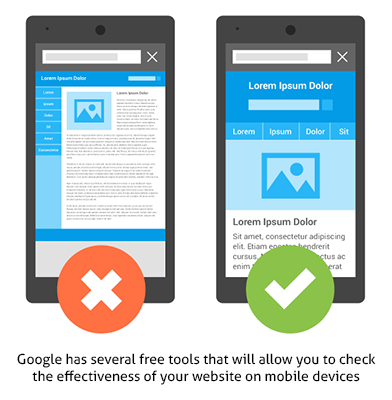
Updating their Search Quality Ratings Guidelines, Google has recently given extra emphasis on the importance of having a mobile-friendly website. As users are more frequently using their mobile phones and tablets (over laptops and desktop screens) to search for information, websites that are not mobile-friendly may fall behind. When people are unable to access, navigate, and read all of the information on your webpage with ease, they are likely to lose interest and abandon the site.

To have a mobile-friendly site means that when a person accesses your web content on their handheld device, they aren’t forced to “pinch and zoom” to get at the content. Google also recommends having a design that is responsive to the size of various screens, which is the preferred route to having a separate site for mobile devices and a separate website for desktop.

Google’s shift to mobile-friendliness affects content by forcing us to think about how someone is consuming content via the medium. After all, mobile devices have smaller reading screens, and people consuming content on mobile are often opting for a quick ‘snack’ rather than a full course meal. While content developers could still write the same detailed content as they always have, mobile users are not likely to keep scrolling and scrolling down, committing to read a long post in its entirety. When most people go looking of for an answer on their phone, they want a quick and tightly packaged response. So – while large-screen webpages have much more physical room for the development of information, writers have had to adjust to the idea of keeping marketable content as concise as possible. Content writers have also been forced to articulate an answer within the first paragraph of content – ensuring a reader receives what they’re looking for before losing interest and leaving the page to look somewhere else.

Long-form content still has a place on mobile, there’s no doubt. If it didn’t, there would not be such wide adoption of e-books on mobile. However, the medium encourages us to focus heavily on our target audience. Are they likely to consume this piece of content on a smartphone? If so, then perhaps we should consider length, the images we opt to use, our desired calls to action, etc. We not only need to think about the reader, but also consider how the reader will best engage with the content we’re putting in front of them.

Link building as PR

It’s no longer common practice, nor is it particularly effective, to purchase or incentivize links that deliver a user to content. Even asking for links is often now considered outdated. It’s far more applicable to acquire links organically; in other words, have people come across or land on your page because they want to, not because you’re asking or positioning them to.

So – how do you receive these organic engagements? Hard work. Link building isn’t what it once was—it’s now essentially a Public Relations strategy. This practice involves reaching out to bloggers and industry publication editors as an expert in a specific field, providing links to applicable sources that may benefit that organization’s developing stories. Positioning your webpage as a reliable resource validates your page as useful, and drives traffic to your site. By acquiring links from media sources naturally—because they were genuinely interested in linking to your article—the next time Google crawls from those outlets to your content, it will give your website that much more credibility, and thus improve SEO.

Engagement VS. Keywords

Traditionally, the importance of populating a webpage with keywords for search engine ranking took precedence over user happiness. SEO departments worked vigorously to compile data concerning which words, when optimized, would lure the most users to a page. SEO would pass this data on to content writers for keyword-focused content to develop.

However, a major shift has occurred. No longer are SEO specialists identifying keywords for the use of content developers – the value of content itself, is now taking priority.

Web developers realized that keywords were getting traffic to a webpage, but that content, which was created only for the purpose of including a keyword, was not providing customer-focused information. Without creating content with user intent in mind, people would stray from these pages quickly – damaging the website’s SEO performance.

Searchers normally have one of three main reasons to conduct a search online: transactional (want to buy), navigational (want to go to), and informational (want to learn). Businesses must now think of content not only in terms of the audience that they’re trying to reach, but also in terms of matching that audiences’ intent. The more you are able to focus your content on what the searcher wants, the more effective you will become at solving both reader and customer problems.

Voice Search Is on the Rise

Siri. Love her or hate her, there’s a lot to be said about what she can do. Siri, Apple’s on-board automated assistant, can help with tasks such as remembering a date, booking an appointment and sending a text message to a friend.

What is of increasing interest is how people are using automated assistants like Siri to search the web. If you ask Siri a question she can’t answer, she’ll take to a search engine (Siri uses Bing)—and that query data gets tracked. Similarly, Google Now will track voice searches from Android device users in the same way as text-based queries are tracked.

The main difference is in the way that people search via voice. They are more inclined to use natural language—including stop words like “and”, “if”, even “please” in their query. This has necessitated a search engine to decipher the true meaning of a query, while sifting through far more specific information. For example, we’re not typing “cheetah running speed”, we’re asking a search engine: “OK Google, how fast can a cheetah actually run, in kilometers per hour?”

These spoken questions are very specific, “long tail” queries. The issue is that they don’t hold enough search volume to gather trend data from. You’d be far more likely to get search query volume for something like “cheetah running speed” rather than the longer variation.

The beauty of the long tail query is that it is so specific that you have a great chance of ranking highly for it. For example, if you were to create a piece of content called “How Fast A Cheetah Can Run In Kilometers per Hour”, and you optimized the heck out of it, your chances of your content ranking when someone searched for that query would be very high.

How does this effect content? Google is pushing a shift for content to adapt to the: who, what, where, why, and how questions that audiences are asking – providing more user-friendly and immediate answers. This then challenges content writers to use alternative methods of communicating information, such as blogging, as a way to specifically target searcher intent – developing content based on common user interests and concerns.

Source: http://www.huffingtonpost.com/michael-peggs/how-voice-search-is-changing-seo_b_8926708.html

Search Ads Disguised

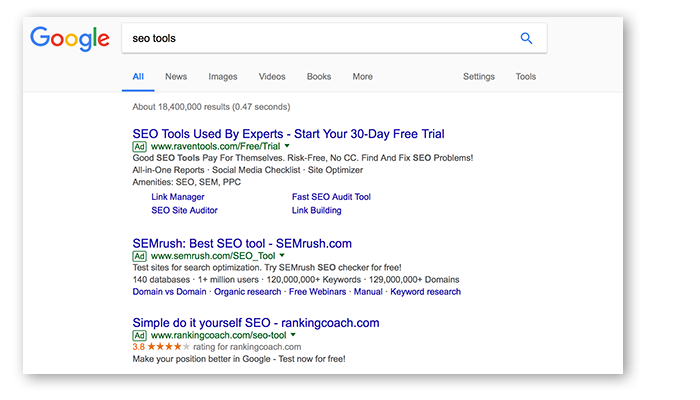
You may not have noticed, but Google has been transforming their small search result “Ad” indicator.

Over the course of AdWords history, Google got rid of the yellow backdrop (sometimes called the sandbox), introduced the small “Ad” icon, changed the icon from yellow to green, and most recently changed the icon again to be an outline; arguably even more indiscernible.

While these new design shifts may seem small, the change holds great significance. Basically, Google is trying to blur the lines between what is a paid and what is an organic search result.

It would seem that Google has done this to intentionally blend and disguise paid ad results with organically listed results, making the difference between the two less obvious. This is likely to increase visits to paid-for ad sites, as many users previously became accustomed to skipping past advertisements – noting the yellow indicator and moving to the organic green results instead.

It is then more important than ever to have engaging content on your web pages, increasing the flow of natural traffic to your site, as well as positioning your brand in a competitive place on Google’s result list.

With great content, organic users will spend more time on your site, increasing your popularity. It is also becoming critical to invest in SEO research, understanding how to make your website competitive with other paid-for advertisements.

As Google continues to improve its algorithms, it is important to keep your website’s content up to date and on trend. More than ever before, businesses must work to understand their customer demographics through detailed analysis, to get a clearer sense of what these users might be searching for. Our web content needs to be informative, helpful, and engaging for our audience, otherwise people just won’t bother reading it.

While it may seem hard to keep up, the team at Treefrog is passionate about keeping on top of industry shifts. Should you need us to help navigate your business through these changes, we’d be happy to help.

Man holding a computer tablet. There is a coffee mug in the foreground.
Digital Marketing

To Be or Not to Be – Social!

Content is arguably one of the most valuable marketing tools for any company. When you produce relevant and shareable content, you engage readers, build trust for our brand, products, and services while informing and inspiring people to new ways of thinking.

Investing in content marketing creates an opportunity to directly and articulately connect with customers and show them why they should choose to work with you over your competitors.

Once you’ve created that content, you need to get it out into the world. That’s where social media comes into play.

Sure, your product or mission may be cool and trendy, innovative and progressive, but what do you have to say as a company or organization? Why should people “like” your Facebook page or follow you on Instagram and Twitter? What makes engaging with your online presence worth their time?

Why Great Social Content Matters

1. Establishing Target Markets Drives Profitability

A good social marketing team will work with you to pinpoint your target market. When it comes to content, it is important to understand the difference between, “who would be interested in this?” and “who do I want to be interested in this?”. When your desired market doesn’t match with the content you are creating, innovation is key.

With an ever-changing marketing landscape, companies must actively look for new ways to reach their demographic. Establishing a true target market, along with collecting data on what those potential clients are drawn to drive profitability and ensures your content is reaching the people who are most likely to use your service or product and creating a connection with them.

2. A Concise Message Is A Message Well Received

Imagine you enter an elevator with the CEO of a potential investor in your start-up business. This is your shot! You’ve got two minutes to explain why your product or business is valuable and worth their interest. What do you say?

This exercise is understandably difficult. It is not an easy task to rein in all of your many creative ideas into one neat package.  However, in the realm of social media, this practice is important. When creating a company biography for Facebook, or writing an “About Us” section on your website, your message needs to be clear and accurate. When these sections are too long, or too vague, people get bored and stop reading! This practice is especially important for use on social media sites like Twitter – where your post-able word count is limited.

Filling your Tweets and Facebook ads with either unimportant or data-intense information can make customers hesitant and less likely to engage. Articulating a healthy balance of informative and interesting content is no easy task, but it is key to your social media success.

3. When Your Clients Feel Important, They Return

Do your content ideas consider the perceptions of your customers? As an owner or manager it can become difficult to detach yourself, seeing your product or business from the outside looking in. It is important to seek a new set of eyes, playing devil’s advocate with any points of disconnect between your company’s mission and what is really being conveyed to potential customers.

It is also important to consider how you can become not only a product provider, but a “friend” to your users. People are more likely to use a product or consult with a company (and people) that makes them feel happy, valued, and secure.

A great way to do this through retweeting or replying to user questions and concerns on your social media pages. Instead of just stating dry information, ask them questions, add some personality to your messages, and show your appreciation for their business. Clients are more likely to engage and be returning customers if they feel important and recognized.

“People want to do business with you because you help them get what they want. They don’t do business with you to help you get what you want.”
– DON CROWTHER (@DON_CROWTHER)

4. Keywords Make A Difference.

Social content cannot rely on creative ideas alone. It is necessary to also compile search engine research data – identifying rich and attractive keywords that will set your business’ content above the rest.

For example, popular hashtags help to link your specific postings to all other posts made under that same hashtag umbrella. If someone is looking for #GreenSocks and you happen to be a company that specifically sells #GreenSocks, you can locate this customer and reach out to them.

Identifying these keywords is essential to your success as they help to increase your online presence, allow users to more effortlessly locate you through search engines like Google, and it helps your customers to see the true value you bring to their specific needs!

5. Advertising Is Changing. It’s Time To Adapt.

Every day we are bombarded by billboards, commercials, and print advertising messages. Due to this over-sell, these types of advertising methods have become less and less effective. This is because customers have become bitter and annoyed by the repetition, and have therefore found ways to avoid them (such as recording their favourite show and fast forwarding over the commercials or by using ad blockers). It is then necessary that companies work towards developing new and intriguing ways to reach customers without unsettling or bothering them, and instead interacting and connecting with them.

One of the ways companies can draw business, without a forward in-your-face sell, is through (you guessed it) – social content marketing! People are more likely to read and share a blog article that they find value in and believe others will as well.

For example: Instead of reading why she should buy shampoo from XYZ company, Sally is more interested to read about,  “The 7 Benefits of Shampoos that contain Coconut Oil” – something that XYZ company specifically includes in their product! Then, when XYZ company shares this blog article, customers read about the benefits of this same shampoo, without feeling like they’re reading a direct advertisement.

“Think like a publisher, not a marketer.”
David Meerman Scott (@dmscott)

6. Consistency & Tone Create A Lasting Effect

Setting the tone for your social media plan is critical. If your brand is funky and hipster, then the lingo you use in your online posts need to mesh with this pre-established foundation. However, if your company is of a more serious or traditional nature, don’t be timid about fostering new ideas that will change up those potentially “dry” stereotypes people may have about you. Yes, your website may be full of important data and statistics, but your social media accounts allow for you to communicate important things with a bit more flare and edge – that’s what they’re there for.

Let’s dive deeper. Static website content is not always great social media content because readers often look past it as “boring”. This is because website and social content often speak to different audiences and have different goals – information vs. engagement. Social media is built to encourage and sustain interaction (and get new leads!), so be mindful of how these helpful tools need to be approached in different ways.

What exactly makes social media content different, you ask? Its tone is consistently creative, often fun, “digestible” (straightforward and not jargon-heavy), and can include an image, infographic, video, or other media component. This type of engaging and creative work takes time, but this is time very well spent. When people see this type of interesting content being produced regularly, they are more likely to engage with the posts and return to see more because they enjoy keeping up to date with a brand that speaks to them.

7. Monitoring Results Increases Customer Satisfaction.

So, here’s where things get tricky. More important than having people engage with your social media accounts, you need to drive referral traffic back to your website – the centre of your digital presence.

Through website analytics you will be able to track how many new people have found your website, as well as how long they have stayed on the page, reading more detailed content and navigating the site to additional pages. Effective social media convinces the engager that you are a company worthy of their time and money and helps to lead them to your website in order to learn more.

“If you make customers unhappy in the physical world, they might each tell 6 friends. If you make customers unhappy on the Internet, they can each tell 6,000 friends.”
– JEFF BEZOS

It is important to monitor your social media engagement results, both the good and the bad. When your company receives a great review on social media, this information can be shared and celebrated across your different sites. When your company receives a bad review, social media gives you a voice to be able to communicate with the unhappy customer and to try to repair the relationship. Opening the dialogue and ensuring that a customers care is of the utmost importance shows great initiative and ownership to other potential clients. This response also tells the client that their opinion matters and that issue will be rectified in some way.

Engaging content is the foundation of any social media engagement strategy. “This is all great knowledge”, you say. “But I don’t have time to write it and I don’t know where to start!”. That’s where we come in. We can help source, write, and curate your content for social media sharing. If you are in need of new content for your websites and social media platforms, contact us today.

“Content is fire, social media is gasoline”
– Ryan Kahn

Close up of hands. One is typing, the other holds a pen.
Digital Marketing

5 Ways a Content Audit Will Revitalize Your Website

Content marketing is all about creating and sharing information online in a strategic way to generate interest in your products or services, develop awareness for your brand, and build trust in you and your company. You can target the information and the way you share it to reach your ideal customers, whether they’re actively searching for you at that time or not.

Generally speaking, the content you share out into the world should bring readers to your website and make them want to connect with you and ultimately do business with you. If you want to engage them and keep them coming back, your content has to be relevant and current.

So, how’s your online content?

Having a comprehensive and engaging online presence has become key for successful marketing, but building quality content takes time. And time can change the relevance of content you’ve written in the past.

When was the last time you really looked at the content on your website? Is there outdated information on it? Are there holes in your content that you need to fill? Is your best content buried and difficult to find? Are you out of content ideas and looking for a way to re-engage? Do you know if your content is bringing visitors to your site and is it resonating with them when they do see it?

Enter content auditing.

A content audit involves reviewing and assessing the information on an existing website to identify flaws, errors, and areas for improvement and growth. An audit can revitalize your online presence by refreshing and re-organizing content, identifying new potential, optimizing search results, and preparing for the future by thinking ahead.

Refresh

Keep them coming back for more with updated content

A content audit will help to ensure your website’s content is up to date and relevant to the marketing goals you are pursuing. If you built your site years ago, and you haven’t worked on it since then, odds are you have content that has expired or is no longer applicable to your current services.

When performing a content audit, content marketers will take note of various ways they can help to refresh your individual pages by adding and highlighting new features, removing or updating outdated information, and looking for opportunities to amalgamate redundant or “thin” content. Search engines aren’t keen on lightweight pages that don’t provide value to users. Sometimes you can combine information from multiple pages to create one high-value page instead. Auditors will also review your content for any grammatical errors or spelling mistakes made by the original publisher.

Having a fresh perspective and a new set of eyes to analyze your content will help to fill in any gaps your content has, as well as to help develop a more user-friendly flow.

Organize

Good content is a good start, but it must be found to be appreciated

It is also a content auditor’s job to find new ways to improve the organization of your website content. You may have the best content going, so it may not be necessary to re-write the material itself, but readers must also be able to find it easily as they navigate your website.

Do you have a dedicated place on your website for blog entries or articles? Where can users access that in your menu structure? Sometimes minor adjustments to how you organize your information and even how you label it can make a big difference in how often readers find it, read it, and connect with you, generating leads for your business.

Discover

Mining for gold in your website content

The day to day of running your business probably includes countless conversations with your clients. They ask questions, and you use your expertise to inform and advise them. You probably don’t realize what a goldmine of content exists in your experience and your day-to-day interactions.

Your website and social media have the potential to have those conversations 24 hours a day when you have the right content. The content marketers who audit your site can help to identify opportunities for new articles and posts that will proactively share the information your customers and prospects are seeking.

These opportunities could include highlighting key advantages in your services pages, or it could mean coming up with new topics for your blog.

A good content auditor will also look ahead to consider all areas for potential growth, including new pages or articles to write, optimizations for your existing content, and opportunities to build connections within your content with linking strategies.

Optimize

Making sure your content finds the people who need it

Content marketing differs from traditional marketing in the way that people tend to seek it out, wanting to consume it, rather than being pressured or forced to consume it. When someone ends up on your website page, it’s usually because they are searching for information related to what you offer. It is then content’s job to keep that potential customer on the page, convincing them of why they should do business with you and not someone else.

However, landing on your page doesn’t happen purely by chance – there is a reason people end up on your website and not someone else’s. A lot of this has to do with SEO or search engine optimization – the process of increasing the visibility of a website or webpage in search engine results for specific keywords.

Your auditor will use their knowledge of SEO and your target audiences and keywords to develop to optimize your content for the right terms in the right way. When done well, there is no “stuffing” of keywords – it’s a subtle blend of the right words, written in a way that users will want to read.

Content marketers also think beyond your website and search results to other ways you share your content. The topic and tone may be adjusted depending on whom you’re talking to and how you’re reaching them, whether through search engine results, social media sharing, or email marketing.

Plan For The Future

Think ahead

A content audit will not only benefit you in the now but will help you to better prepare for the future. Following the completion of your content audit, you will receive a list of recommendations along with a proposed plan to implement the suggestions into your website. It may result in a few content formatting fixes, or it may suggest adding articles or blog entries to your digital presence.

In competitive markets, it is essential that you look ahead. It is important to note that creating engaging content for your website shouldn’t be a one-off event. Content marketers can work with you to format material that can be consistently augmented and updated, such as creating a blog and posting a new content article every week or month. Allowing for regular content updates will keep your business’ online presence fresh, organized, optimized, and relevant as new trends continue to emerge.

Anytime is a good time to spring clean your website content. Let’s talk about your content concerns and put you on the road to content marketing success.

A hand touches an illustration of a computer tablet, making lots of icons fly out
Digital Marketing

Online Advertising: How to Use PPC and Social PPC

Raising awareness, increasing conversions, and growing revenues – it’s your strategic goals that determine how and what digital advertising avenues you should travel along

Using pay-per-click (PPC) ads and social media advertising – aka social PPC – to raise your company’s profile and increase revenues can be highly effective strategies. However, knowing which is best for your campaign hinges on what your goals are, who you’re trying to reach, and what actions you want your targeted audience to take by interacting with your campaign.

Although PPC and social PPC advertising can be complementary, they each serve unique purposes. Think of PPC advertising this way: it’s a strategy to deploy to target a particular search term or woo people who are in the Zero Moment of Truth (the way consumers search for information online and ultimately make purchasing decisions on the spur of the moment).

Highly customizable, PPC ads can target Google’s search network, its Display Network, or both. What’s the difference? PPC ads used on Google search are fine-tuned to appear in results from searches users conduct that are tied to a topic or specific keywords. PPC ads placed on Google’s Display Network use text, images, and video and are more likely to appear alongside blogs, news articles, and websites. Each can drive conversion rates.

This short video will help you understand the differences between various Google AdWords campaigns:

PPC ads on Google search can entice someone to click-thru because they may answer the searcher’s query. Display campaigns, meanwhile, can drive conversions provided the messaging and incentives associated with the campaign are attractive to the intended audience.

Advertising on Social Networks

Social PPC is a newer advertising vertical that businesses are increasingly using to promote themselves on social media. And now, social PPC ads created on Facebook’s platform are not confined to the social network—they also appear on websites and apps. Other social channels such as Twitter, Pinterest, and Instagram are also innovating to provide a more targeted experience.

Social PPC ads are effective at generating awareness by reaching large amounts of people in their leisure time – social media is still widely considered to be a recreational activity. But be advised: social PPC ads, like Google PPC ads, are not the “set and forget” variety. They require ongoing analysis and, sometimes, optimization to achieve your aims. Furthermore, social PPC ads do not necessarily require a landing page. Instead, they can link directly to a website or a mobile app. It depends on what your goals are.

Complementary but Different Strategies

Different types of advertising campaigns call for different tactics and channels. Here are four important points to consider when devising your digital advertising campaign:

  • Think mobile. Whatever type of ad you run, and the landing page or website it links to needs to be optimized for a slick experience on a smartphone or any other mobile device. Why? Because more people conduct searches on mobile devices than they do on desktop computers or laptops.
  • Choose the right keywords. For PPC ads earmarked for search results, relevance matters. Be careful you’re selecting the right targeted keywords, and that your ad’s content and the landing page content are unified in their messages. Be honest and transparent. Done well, your ad’s visibility will rise, and the cost-per-click will decrease.
  • Be socially active. To help ensure your social PPC ad campaign is successful, have active and fully completed profiles on the social networks where you intend to deploy the ad. On that note, as Facebook is the most popular social platform, you may wish to advertise using Facebook Ads. Facebook provides lots of options for how ads are created. They can be designed using images, videos, carousels of images, or be immersive using Facebook Canvas. Facebook also offers complimentary stock images for ads.
  • Use video. With each passing year, the importance of using video for digital marketing and advertising grows exponentially. An estimated 51.9% of marketers believe video provides the best ROI. More importantly, in the second half of 2015 mobile devices drove video ad impressions up to 49% from 38% in the first half of the year.

Using Google or social PPC ads or both are worthwhile to amplify your brand’s message, raise awareness of a cause, or promote a product or service as part of your overall marketing strategy. As a general rule for all types of digital content, ensure your message is informative, concise, readable, and interesting. Monitor the results, and be prepared to make changes on-the-fly to ensure you’re reaching your target audience.

Get the best possible ROI you can with your digital advertising campaigns. Talk to us about how our savvy team of marketers can create, manage, and monitor your PPC advertising campaigns.

A woman's hand write on a notepad on a table
Digital Marketing

What Is Your Strategic Marketing Plan?

Knowing which direction to take your business and how to get there requires a comprehensive and actionable marketing plan

Digital marketing trends come and go as each year passes. Being aware of them and planning to take advantage of them to give your business’s revenue a lift is useful, but concerning your strategic marketing plan, you need to take a broader view and consider both short- and long-term goals and methods.

Your marketing plan is a detailed roadmap your company will travel throughout the year. It should encompass everything including who your customers are, what your content marketing strategy is, the marketing and promotions budget you will adhere to, the campaigns and tactics you will deploy and more.

Seven Essential Steps to Strategic Marketing Planning

Every business is idiosyncratic and requires a clear marketing plan pertinent to its overall revenue goals and aims. Although there is no universal strategy your organization can adopt and follow, there are a series of established and sensible steps you can take to create an annual marketing plan that will suit your needs:

  1. Establish a Practical Promotional and Marketing Budget. Your budget will dictate what you will be able to achieve monthly, quarterly, and annually. Promoting and marketing events, products and services, and your company’s philosophy on doing business costs money. If your company’s marketing budget is modest, you will need to be creative, and allocate funds to the most important initiatives you will plan throughout the year.
  2. Revisit and Refresh Your Customer Personas. Customer or buyer personas are representations of your different customer segments, both real and desired. To get an accurate picture of who your customers are, you will need data derived from existing customer surveys and interviews, as well as other sources such as Google Analytics or Facebook Insights. Broadly defining your ideal customer personas will help your team understand who your customers are, what their needs are, and how your company can help them.
  3. Understand What Your Differentiators Are. What does your business do differently than all of your competitors? What is your unique selling proposition? What are your core values and your company’s key messages? Knowing what’s distinct about your company, its products and services, how they apply to your targeted customer persona segments as well as the messaging you will use for various media types will help you prepare a well-rounded content campaign or editorial calendar.
  4. Detail What Your Marketing Goals Are. What do you hope to achieve in the new year? Determining what your marketing goals are should go hand-in-hand with what your business’s overall goals are. Is that an increase in sales per quarter? Be realistic and ensure your goals are precise and well understood by everyone on your team.
  5. Evaluate Your Website and Marketing Collateral. Does your corporate website look outdated? Is it awkward to navigate? And is it a responsive website? What about all of your digital and printed marketing collateral? Make it an annual exercise to reassess all of your marketing channels and properties and ensure they are targeting the right audiences, and parlaying the right messages.
  6. Review Your Sales Strategy. Do you have a comprehensive and flexible sales strategy with achievable sales targets quarter-over-quarter? Or are you flying by the seat of your pants and making it up as you go? Although it is an important part of a holistic marketing strategy, your sales strategy should focus on increasing sales and meeting your quarterly revenue targets. It should include details about the customer’s journey both pre- and post-sale.
  7. Define Metrics to Measure Performance. You can’t determine success or failure or shift gears if need be without data that validates what worked and what didn’t. Once you’ve identified the key performance metrics you want to track, and the tools and methodologies you’ll use to measure your success, host regular meetings with your sales and marketing teams to decide if any changes are required and how to go about them.

Once you’ve reviewed how your company performed the previous year, and upon completing these steps above, you should be ready to craft a practical marketing strategy for the new year that will help your company meet its objectives.

Does your business need help defining its marketing plans and achieving the goals you want? Let us help. For more than 20 years we’ve been helping businesses of all sizes and in various industries grow their online presences and revenues.

Close up of hands. One is typing, the other holds a pencil.
Branding & Design, Digital Marketing

Why Writing Good Content is Important and How to Start

From your company’s site search engine ranking to the number of quality sales leads you receive, good storytelling and valued content reaps reward

Whether your company’s digital marketing strategy is successful or not depends on one key element: consistently producing and publishing great content.

Online and offline, we are bombarded by an unending stream of corporate messaging and advertising wherever we look or go. Naturally, we ignore content that does not interest us or that we regard as hype.

Entertaining and interesting content that centres on your audience’s interests or needs, meanwhile, spikes engagement levels, builds brand loyalty and trust, strengthens your website’s organic search engine ranking, and lifts your sales figures.

Think about it. You’re a consumer, too. When you’re online, what grabs your attention? Content and messaging rife with corporate jargon, spelling errors, and poor grammar? Or content that clearly and succinctly addresses a challenge you face, is educational, or useful to you in some way?

Can You Tell Your Customers’ Story Effectively?

Fifteen seconds. According to digital content analytics company Chartbeat, that’s about the average length of time visitors to your website spend reading your content.

And don’t be coaxed into thinking if someone socially shares a link to one of your webpages or blogs that they read it first. Some social sharers do, but many don’t. A joint study by researchers at Columbia University and the French National Institute revealed, “though social networks commonly measure a story’s popularity in shares, researchers found that 59% of all links shared in their sample went unclicked, and presumably unread.”

But here’s more promising news: data from the Pew Research Center finds smartphone users will spend an average of one to two minutes reading news articles provided they are well-written and of interest to them. Additionally, having a mobile-friendly website goes a long way toward attracting and retaining mobile-based audiences.

Nevertheless, it still presents you with a formidable challenge. And if you’re still reading this article, consider you need to be able to produce impactful, compelling, and SEO-optimized content that is of interest to your intended audience for a broad range of digital and print properties, including:

In light of the above, there are other important factors to weigh. Can you tell your target customers’ story well? Can you write concisely about how your company and its products and services solve people’s problems? Do you have the time to do it on a daily, weekly, and monthly basis consistently? And do you have the bandwidth and know-how to track the effectiveness of your content marketing efforts?

Admittedly, that last one was a trick question. Determining how strong your content’s performance is (the return-on-investment) at increasing your sales leads and revenues is no simple feat. Why? Because content marketing is a long play, and you need to decide which metrics are important to track.

For example, many companies and publications are taking a different approach to online measurement. By switching from solely tracking the number of pageviews and click-thrus to including time-on-site and other attention-focussed metrics, their goal is to try to infer which content resonates with their audiences most.

Good Storytelling Creates Value

Good storytelling stirs interest and creates meaning, fosters contemplation in its readers, and in turn, becomes valuable to your intended audience. But not everyone is a natural storyteller. And not many business owners or leaders can commit the time to writing engaging content for all of their company’s marketing needs.

You need to be able to weave a compelling tale; to sell without selling. In short, you may need to hire a ghostwriter, aka an anonymous writer, to tell your customers’ story (and subsequently yours) to the world.

Some of the world’s most important literary works were written by anonymous writers. And the practice of hiring a professional writer to write on another’s behalf is as common today for everything from business books to marketing collateral to thought-leadership articles, blogs, and company websites.

But you’re keen to write your company’s content yourself. Okay, what do you need to do? How much time can you commit to writing? And how do you go about writing stories and marketing content that appeals to your existing and prospective customers intellectually or emotionally? Try these tactics:

  • Find the right topics. The notion of brainstorming with others is dead, and besides, there are no guarantees it will work. Does that mean you need to dismiss collaborating with a group of people altogether and go it alone? Not necessarily. Conferring and working with trusted sources to come up with important topics and an editorial calendar, or to discuss how to approach writing about a particular subject can produce great results. Most importantly, think about your customers and the questions they have for your company. Arrange to have an informal discussion with one of your longtime customers to get their thoughts if you’re uncertain. Or tell a story about how you failed at something – reading someone else’s account of how they mucked up badly, but who ultimately learned from the mistake and went on to succeed never gets old. You can also create a list of what are referred to as “evergreen topics”. Evergreen stories are based on broad subjects that have lasting appeal like why content marketing is important.
  • Manage your time efficiently. Just as you would plot the tasks involved in conducting any other aspect of business, build an executable schedule that divides up the work you need to do, and don’t waver from it. As you begin to write, different things will occur to you, so allow for lots of revision and editing time.
  • Research your topic. Once you know what to write about, hop online and find statistics, as well as the supporting or opposing points of views of others and link to them (or cite them accordingly). Depending on what your topic is, and if you can’t find useful sources to cite, you can always get help from a librarian in your community.
  • Write your first draft. Ernest Hemingway is famously quoted for allegedly remarking, “The first draft of anything is shit.” Whether he uttered those words or not, there is truth in the sentiment, and it is this: don’t get emotionally attached to the first draft of anything you write. Let it ferment in your head. Read it aloud. Have others proofread it for errors. Get the feedback of others you trust, and don’t be hurt by their constructive criticisms, mull them over. Then revise your first draft – and second, third, or fourth drafts if necessary.

Any literate person can write, but writing well is hard work, and you need to be damn good to attract and retain an audience, especially online.

It takes a significant amount of time to adequately research, write, edit, and produce good content for different media types and audiences. You need to discover what your brand’s voice is, determine your writing style, and commit to the craft on a daily basis.

In her 1969 autobiography, I Know Why the Caged Bird Sings, American poet, author, and civil rights activist Maya Angelou wrote, “There is no greater agony than bearing an untold story inside you.” I couldn’t agree more. But sometimes, you need a professional writer’s help to tell that tale effectively and generate the reaction you desire.

Are you ready to tell your story to the world? Drop us a line and tell us what your content marketing and storytelling wants and needs are.

close up of power button
Digital Marketing, Web Design & Development

My Website Is Live! So Where Is It?

What you need to know about how Google indexes your website

After the Frogs push the Big Red Button and a client’s brand new website goes live, it’s only a matter of time before the client calls and asks why they can’t see their beautiful, new site. It’s not that the site isn’t there; it’s that the Internet, like all technology, works in mysterious ways. Or maybe it’s not so mysterious if you understand a couple of key technical concepts.

When dealing with any kind of technology, particularly the types that are related to the Internet, patience is definitely a virtue. For reasons we’ll get into shortly, it can take up to 48 hours before everyone online will be able to see your new website.

TTL and DNS and caches, oh my!

There’s a common perception that when a new site goes live, it creeps out over the Internet like pond scum over a lake until it’s completely covered the cyber-ether. Not that we want to compare your awesome, new site to pond scum, but that’s the general belief out there as to how the Internet works. It’s not reality, though.

Not to get too technical, but there’s a concept called Time To Live (TTL) (that’s “live” as in “live on stage” or “going live,” not “live” as in “I live in an expensive condo”). TTL can take up to 48 hours, although some Internet users will be able to see your new site much sooner. The reason has to do with domain names and server addresses.

Think of your domain name like a licence plate and your server like the licence plate number. Someone out there wants to find you on the Internet. They punch in your domain name, but their browser doesn’t know where it is. Your browser has to check with the Domain Name System (DNS), a vast database of all the domain names out there, to get your server’s coordinates. Servers are, of course, found on the Net by a string of numbers, also known as your IP (Internet Protocol) address. Then the DNS tells your browser what the domain name’s server numbers are, and voila, that someone has just been pointed to your website.

Because this takes a few seconds to do (ever notice when you first visit a website that it takes longer to load than subsequent visits?), computers store the information in a DNS cache so the browser doesn’t have to keep pinging the Internet Powers That Be each time you want to visit a website. The cache stores the information for whatever the tech guy has set it to, or more likely, the default of almost all DNS systems, which is – you guessed it – 48 hours.

With changes in servers, this means it’ll take up to 48 hours before someone can find your new website.

Flushing the cache

There is a little trick that will empty your DNS cache so you can instantly see your new website. A DNS cache flush requires some serious technical knowledge, but the Frogs can walk you through the process if you find your patience is wearing thin.

The Google problem

Another question related to websites going live the Frogs often get asked is, “Why is my site not listed on Google?”

If you think 48 hours is a long time to wait, consider that Google may not find your new website for six to eight weeks. Google attempts to query the whole internet every day, which is an impossible task. So it takes them a little bit of time to come around to your neighbourhood, knock on your door, and start spidering your website.

Spidering is a technique used by search engines to spread out across the Web to find every site out there. The main way it does this, though, is by finding links on pages it already knows. A brand new domain name isn’t likely to be linked anywhere, so it can take Google quite some time to find it. There are no links or pathways that lead to your website. Add to that that Google adds a “cooling off” period to make sure you aren’t a spammer or nere’do’well, and your website might take months to get indexed. In fact, new sites will take longer, where older sites will get picked up much faster.

While it’s usually best to let Google find your site through spidering, there are sometimes reasons that clients need their new sites to be found as soon as possible. New domain names can be submitted to Google manually, but even then, it takes about a week before Google gets around to checking it out. Keep this in mind when formulating any marketing plans that revolve around a new site.

Not sure if your site has been indexed yet by Google? Try This!

Go to www.google.com and type in “site:www.yourcompanydomain.com” in the search field. If your site appears in the search, then congratulations! …you’ve been indexed! If it does not, you have a little while longer to wait. Sorry! Try sending Matt Cutts a box of chocolates or something to see if he’ll come around to visit sooner.

Another Tip: Try having another website link to you. Oftentimes we find that this speeds up the process a bit as well, as it creates a pathway to your site from another site that Google has already indexed.

Patience is a virtue

It would be nice if as soon as the Frogs pushed the Big Red Button that everyone could suddenly find it and you’d have a million visitors instantaneously, but the reality of the Internet is that everything takes time.

For a variety of technical reasons mentioned above, your website will not be instantly found by visitors or Google. Have some patience and take some advice from Douglas Adams: Don’t panic.

Push pins on a map
Digital Marketing

6 Things to Do before You Relocate Your Business

Changing business locations demands thorough preparation in both the physical and digital worlds

Businesses relocate for a multitude of reasons including the need to accommodate more employees as a company grows, to save money on the cost of a lease, and to serve their customers more efficiently. But what if your customers can’t easily find your new office online, and as a result, in your community?

While relocating your business can be exciting, a successful move requires a lot of planning including making sure Google, Bing, and other search engines aren’t serving up outdated or duplicate location information about your company. Unfortunately, search engines don’t make it easy to sort out such matters.

With local search being a vital driver of new and repeat business, there’s a lot at risk if search engines and your digital properties have incorrect information. Improper or outdated location information can also be a detriment to your website’s search ranking.

The Office Relocation Checklist

There are six important things you should do in advance of your company’s moving day, including:

  1. Change your physical address online including on your site’s “Contact Us” page and anywhere else your former address appears
  2. If possible, maintain your current business phone number
  3. Ensure all your digital and printed marketing collateral are updated
  4. Notify your customers, business partners, and suppliers
  5. Switch the addresses on your social media profiles
  6. Inform your bank and credit card providers of your new address

It’s also critical to know what former business was occupying your new office location, and ensure Google knows that the former business has closed. And don’t forget to update your office address listing on your Google My Business account.

Don’t let the excitement associated with moving to a new office become a frustrating experience because your customers can’t find you online or on the street. Treefrog’s digital moving package eliminates the risk of missing any necessary steps across all of your web properties and with all search engines.

Scroll to Top