
Author name: Treefrog Editorial Team

Insights from the senior strategists at Treefrog Inc., a full-service marketing agency founded in 1989 in Newmarket, Ontario. We write about marketing strategy, pipeline, revenue operations and AI for growing companies.

Marketing Strategy

Which Social Media Platforms are Best for Your Business?

Whether you are starting a new business, have been in business for decades, or are just starting out in the world of marketing, social media is an ever-changing game.

When was the last time you did an audit on your social media accounts, and how they impact your business?

Regardless of your activity levels on social media, having a plan is essential. As things change globally, social media evolves as well. Now the question begs: Where should I spend my time and money?

Let’s take a look at each platform to see which ones, if not all, are right for your business!

1. Facebook

With over 2 billion monthly users, chances are everyone you know is on Facebook, and maybe even their pets are too! Facebook’s biggest asset is being able to turn your customer base into a family, or a welcomed community.

Creating a Facebook group is very simple, free, and creates an environment for your followers to exchange information and form a sense of community.
Photos and videos are what drives success on Facebook. The key is to stand out and show a different side of your company. Don’t be afraid to step outside the box and get creative with your visuals.

If you have some money set aside for paid ads, then Facebook’s ads manager, with it’s sophisticated targeting options, is a great way to grow your business.

2. Twitter (X)

Twitter is all about timely and immediate information. With approximately 330 million monthly active users, it is a great way to raise brand awareness.

Keep in mind that you have 280 characters to convey your message, once you get the copywriting down packed, with just a simple share or like, your tweet can reach a broad audience fast!

3. Instagram

With a whopping 1 billion monthly active users, it’s hard to pass on this visual platform. If your target audience is younger, then Instagram is the right platform for you. 50 percent of users are 34 years old and under. These users are also very comfortable with the following brands on the platform and are even buying products right from the app.

Quick fun fact: 80% of users follow at least one brand on Instagram.

If influencer marketing is something you are interested in, this is the place to be. Influencer marketing is a content marketing strategy that allows you to promote products, services, or brands by partnering with an influencer.

An influencer is someone who has the power to affect the purchasing decisions of others because of their relationship with their followers. These influencers have a distinct niche, and usually have a following of over 10,000 on Instagram.

Some of the most successful brands are built around influencer marketing.

4. LinkedIn

If you are selling business to business (B2B), then LinkedIn is your best bet! With 303 million monthly users, LinkedIn should not be overlooked.

LinkedIn is a great way to showcase your brand and the knowledge that you have around your business. By building your brand’s authority and sharing insightful content, you will gain connections that can lead to conversations and sales.

Some content examples are blog posts, curated content, quick tips from an industry expert, and infographics with updated statistics.

5. Pinterest

This is one of the social media platforms where the majority of its users are female. If you are in the food, fashion, décor, art, wedding, travel business, or can produce beautiful images weekly, you may find Pinterest very helpful!

Pinterest is a great way to showcase your products. This platform is not for every business, but if implemented correctly, you will be surprised at how many people will come in contact with your beautiful crafted “pins.”

6. Tiktok

The new kid on the block. Since they launched internationally in September 2017, Tiktok has gained over 850 million monthly active users.

Tiktok really wants you to be creative and to have fun. Like other social media platforms, you can use paid advertising, organic content, and influencer marketing to promote your brand. There is a fun way that Tiktok has allowed brands to go viral, and that is hashtag challenges.

A branded hashtag challenge is when a company asks Tiktok users to perform a particular task and tag them using a specific hashtag. The brand usually gives the winning video free products.

Best of all, you don’t have to invest a lot of money in creating high-quality videos. It is all about how creative you can be!

Contact the Social Media Connoisseurs at Treefrog

There are many other social media platforms out there, and it can get overwhelming because they all offer a unique opportunity for your brand. That is why agencies like Treefrog have experts who are constantly studying these platforms and keeping up to date with the latest tools and trends.

Our goal is to provide you with the results that your brand deserves.

That being said, you can also give the social media game a shot. To give you a head start, we have a special treat. A social media posting calendar:

Download it today.

"*" indicates required fields
This field is for validation purposes and should be left unchanged.
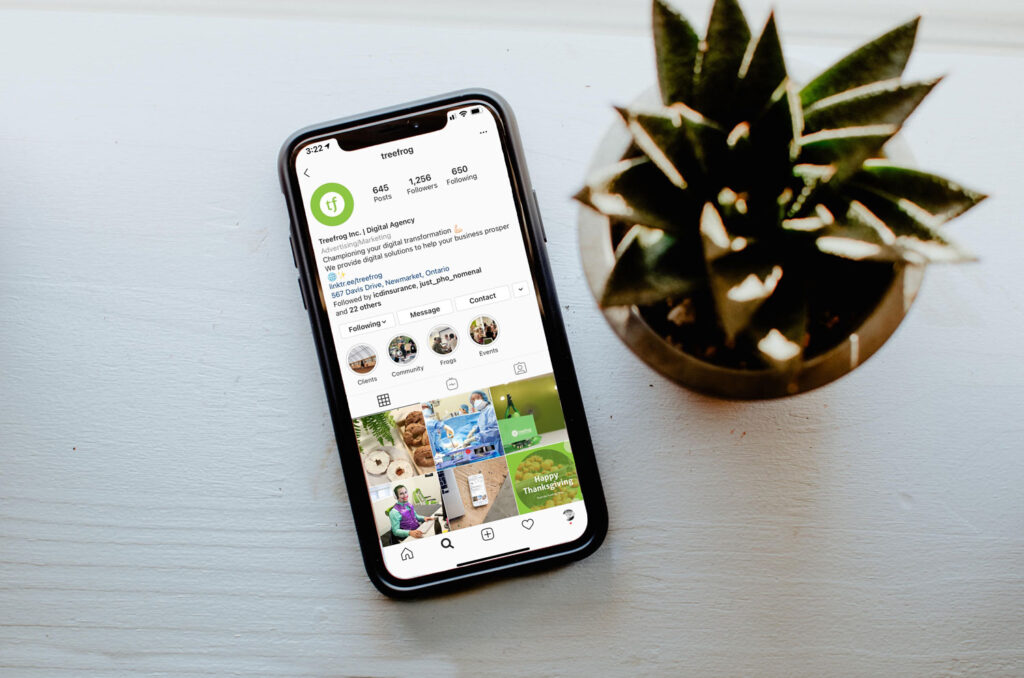
overhead view of iPhone, showing Treefrog's instagram page
Marketing Strategy

6 Factors that Affect the Instagram Algorithm

Are you keeping up to date with the Instagram algorithm? Instagram is continuously evolving, and keeping up with these changes will help you perform better in the platform and create a unique bond with your Instagram community!

Instagram finally broke its silence and put some rumours to rest about how the algorithm actually works. Here are the 6 key factors, as broken down by our social media team at Treefrog:

Let’s learn more about these factors, so you don’t get left behind!

1. How interesting are your posts?

The Instagram algorithm is smarter than you think. The days of trying to trick it are over. Your feed is based on how likely you are to be interested in a particular post, and this is formulated on your actions within the app.

For example, if you are liking, watching, commenting and sharing dog content from your favourite dog influencer, then that type of content will be at the top of your news feed.

To sum it up, the friends that you are interacting with the most, the stories you watch, and even the pictures you are tagged in contribute to your behaviour in the app, which determines who and what pops up in your news feed.

Have you ever wondered why your top stories are always the same accounts? It’s because the same formula applies to Instagram stories as well!

2. Timing is, in fact, everything.

Consider Instagram as the cool kid in class, someone who wants to always be up to date with the latest news and trends. You won’t find them showing you a Halloween post when it’s Christmas season.

Group of friends looking at a smart phone outdoors in the city

That being said, using your Instagram Insights tool will help you see when your followers are the most active on the platform. That’s the time to release your content in order to set yourself up for success. It may seem like a small detail, but it is an essential piece of the Instagram algorithm puzzle.

3. Relationship Goals

Instagram doesn’t want you to miss posts from your friends and family, or favourite brands and celebrities. It values your relationships and doesn’t like one-night stands. Content from accounts you engage with more often will rank higher in the feed. For example, if you search for the same profile often, they will become one of your popular friends, and you will see their content more often.

For a content creator, that means it’s time to roll up your sleeves and get posting. You want your followers to engage with your content and form a relationship.

With this tactic, the more you post, the more followers will see your posts. Keep in mind; quality does trump quantity. The key is to find a happy balance.

We all don’t have the manpower of Gary V. So posting 3 times a week constantly while throwing Instagram Stories into the mix will help you see an increase in your engagement.

4. How frequently are you opening the app?

Take a look at your daily screentime. How many minutes, or should I say hours, have you spent on Instagram today? If you have some self-control and are on the app less often, your news feed will be sorted for what it thinks you will like best!

Close up of a young woman listening to music while riding in a bus

If you are a frequent Instagram visitor, your feed may start to look more chronological. This is because Instagram is trying it’s best to show you the best posts since you’ve last started scrolling.

5. No follower is left behind, well, not really.

Another thing to take into consideration is the number of people you follow. If you follow more people, the app has more content to choose from. This means, you’ll likely see fewer posts from each account, and for many accounts, you may not even see their posts on your feed.

As a business and content creator, the tricky part is to become a part of their Instagram family. That is easier said than done. By the end of this article, you will know how to achieve just that, so keep reading!

6. Usage: Daily or Hourly?

Do you open your Instagram app daily or hourly? It’s pretty straightforward, the more time you spend on the app, the more content you will see, and the deeper Instagram digs into it’s catalog of content to show you posts.

However, if you spend only a few minutes on the app each day, the algorithm will only show you highlights of the day’s posts.

Two restaurant workers take mobile photo of latte

Start Stepping Up Your Instagram Game Today!

Instagram is a great social media platform for visual storytelling. No matter your industry, it’s an incredible online community where businesses can connect with potential customers and grow their business organically. Whether you have a personal account, creator account or business account, Instagram could be the platform for you to grow your online presence.

The key is to educate yourself and stay up to date with trends.

Start applying what you learned from this blog into your Instagram strategy! We’ll help get you started with our free Social Media Calendar, now available for download! Plan out your Instagram content, collaborate with team members, research hashtags and track all your images all in one organized excel sheet.

Download Our Social Calendar Template

"*" indicates required fields

This field is for validation purposes and should be left unchanged.


Don’t Do Social, Be Social!

At Treefrog, we believe that social media strategy is a delicate mix of both art and science. Our social media team combines compelling visuals with data-driven analytics to engage with the audiences of our clients in real time – so that their message gets heard and people are inspired to take action.

If you have any questions, feel free to reach out to the Instagram experts at Treefrog! You can also connect with us via email, on our website or on social media to stay up to date on Instagram tools, tricks and tips!

We can do all the dirty work for you, keep you informed and help your Instagram game reach a new level!

Female executive talking to coworkers at a corporate briefing, sitting at a conference table in a boardroom
Brand Strategy

The Power Of A Strong Brand

A brand is a promise.

Every business wants to connect, to make an impact, and to grow. To do so, a brand must be so closely identified with the industry’s defining characteristic that they become known for it.

There is a very precise science to creating a strong brand and maintaining that strength. As humans, we are bombarded with so many stimuli every second that our brain creates a filter – known as sensory gating – to only take in the information that is deemed valuable. This may seem like an exaggerated statement at first, but think about your morning routine today. You most likely turned off the alarm on your phone, scrolled through social media, showered, ate breakfast, and drove to work. In every single one of these steps, despite your brain’s best efforts to block out all the promotional noise, your choices were affected by the power of strong brands.

So how do you ensure that your brand gets through the filter?

5 Basic Branding Barriers

A strong brand must satisfy the needs and wants of the target audience to last through the ages. Consider the list of characteristics below and see how many boxes your brand checks:

  • Emotive: consumers today are more driven by emotion than necessity, and a brand is the visual conveyance of a feeling that is most closely related to the target audience’s decision-making process.
  • Memorable: 50 per cent of consumers are more likely to click on a particular brand name if that brand name shows up more than once in a search engine. A strong SEO presence is essential.
  • Identifiable: a brand should be visually appealing and streamlined across all platforms. A simple yet powerful logo design can help with this.
  • Accessible: even with a brick and mortar storefront, studies show that 82 per cent of consumers will use their phone to help them make an in-store purchase. Without a digital presence, a brand will suffer.
  • Results-Driven: consumers will not return to a brand that has let them down in the past. Your clients’ success is your success.

The need to get past these “barriers” is what makes graphic design so important. At Treefrog, we have spent years studying the exact science of what makes or breaks a brand. The business world looks very different today than it did 20 years ago. Before digital marketing was ever an option – or even existed – companies were built on recommendations from friends and family. Now, this word-of-mouth has gone digital, and instead of close relations, consumers can get recommendations from millions of people at the click of a button.

Building Brand Recognition

Consumers are far more likely to choose a brand that they recognize over something unfamiliar, even if they don’t know a great deal about the company at the time. This means that even if a consumer has not made up their mind about a brand – and 90 per cent of searchers fall into this category – they are more likely to use a business simply because they know it. Consider the following benefits that come from a powerful, easily recognized brand:

  • Customer recognition
  • Competitive edge in the market
  • Easy introduction of new products
  • Customer loyalty and shared values
  • Enhanced credibility

Business Branding Experts

Are you ready to strengthen your brand and build your business? At Treefrog, we take a top-down approach to helping you develop your brand strategy. Whether it’s logo design, logo maturation, corporate identity or graphic design services, we’re your business branding experts.

Give us a call at 905-836-4442; our team of graphic design and branding experts are ready to help!

Close up of an office table covered in brainstorming notes. Several people are leaning over the notes.
Technology Strategy

The Importance of Scoping

“If you don’t know where you’re going, you’ll end up somewhere else”
– Yogi Berra

At Treefrog, we value client success

As a digital transformation agency, our specialty is helping organizations tap into their full potential in the digital space; whether it’s underdeveloped or underutilized resources to drive change in the company or industry space.

Often when we start the conversation, there are so many unknowns that it can be hard to put a plan in place. For example, if you want to take your product or services online to sell, there are several things to consider:

  • What will the shipping be? By Weight? Location?
  • How will you handle taxes?
  • What about International currencies?
  • Inventory Management?
  • Discounts? Specials?

So the list goes on. Having a trusted partner to guide you through the process is essential. Whether it is an e-commerce system, ERP integration, building a customer portal, app development, augment Reality, or otherwise, we know the pain and uncertainty that can come with a project of this magnitude. Thus, we want to help you identify and reduce risk as much as possible.

To help reduce your risk, Scoping is extremely important in leading us in the proper direction. However, have you ever started a project with a plan and realized a stronger approach along the way? Digital projects can never be planned from start to finish, and they have several unknown variables in the early stages.  So, the best option is to prepare for a goal and make changes along the way to produce ample results.

If you have done renovations to your home, you may be familiar with this concept. At the start of the project, you explain to the contractor your vision, and a blueprint is created. However, once the renovations have begun changes must be made for a perfect result.

Most digital agencies will manage projects using a top-down approach (also known as the waterfall method). This fixed approach can cause projects to be unsuccessful as the plan is so set in stone there is no room for improvement along the way. The scope is often made at the start, with little room for change without a high cost. Often clients will be disappointed when great ideas are ignored to adhere to the timeline and budget. We find this is due to the three constraints faced by any project: Budget, Timeline, and Resources.

Typically referred to as the iron triangle, these constraints faced by project managers are the scope, schedule, and cost. They work interdependently together, and none of them can be adjusted without affecting the other.  For example, if the deadline of a project is moved up, the scope will be changed, as goals may not be achieved.

At Treefrog, we believe following a top-down approach often leads to disappointment and a lack of success. These fixed plans at the start of projects lead to distress, as there is a strict goal to maintain a scope, budget, and time constraints. However, like most things in life, it takes getting your hands dirty to figure out the best solution.

We have found that the following method reduces uncertainties based on continuous collaboration. The Scope/Discovery Process is unique to each client and includes some part of:

  •  Understanding the clients business goals
  • Defining the client’s target audience
  • Creating a list of tasks that will assist the client in achieving goals
  • Outlining in detail what we can offer the client

Although the discovery process helps the initial scope, there is always a cone of uncertainty when starting a new project.  This idea emerged from the engineering industry in the 1950s, but it is highly applicable to today’s digital world. The basic premise of this is that all projects have a large number of uncertainties in the early stages. However, as more hours are put in, and great ideas begin to flow masterpieces are created. The reason for this is, no two projects ever have:

  • The same requirements
  • The same people
  • The same technology
  • The same user audience
  • The same priorities & constraints
  • The same business strategy

We have learned to be agile in our creative process. Thus going through the initial scope and wireframing of a project increases the depth of knowledge, available technologies, budgets, and resources. This gives all involved the time to unpack uncertainties, brainstorm on the grand scope of the project, be upfront and honest with the expectations. Much like an actual Treefrog, we are highly adaptable to change. We want our clients to love what we produce for them— and we want to brag about it too.

Do you have an idea or project that you haven’t fully conceptualized yet? Are you looking for some grounded feedback? Give us a call; we’d love to hear about your idea(s).

Female owner of a small business packing her product in boxes, and preparing it for delivery.
Technology Strategy

Don’t Make These 5 E-commerce Business Mistakes

Owning an e-commerce business can be challenging (to say the least), as many factors that can damage a reputation, a brand, and an end product.

If you wish to be successful online, look like a credible business, and be known worldwide, it is important to avoid making these five e-commerce business mistakes:

1. Under Researching Your Competition

Research, research, and more research is key to starting any business. Understanding the market and studying up on your competition will get you one step closer to owning a successful online brand.

Reading case studies on other e-commerce businesses in your market to see what you may want to do better or differently is a good start. In this process, we suggest that you learn how to conduct a competitive analysis.

What is a competitive analysis?

A competitive analysis is an evaluation of what makes you unique when compared to other competing brands. This process will allow you to more clearly differentiate yourself from the competition and make more informed decisions in your marketing strategy.

How To Conduct A Competitive Analysis

2. Avoiding SEO

Search Engine Optimization helps to generate more organic traffic to your website. Before building an online store, you should understand how search engine optimization works and how to use it to your advantage.

When a website is created with Google and other search engines in mind, it is more successful. In other words, it will have a better chance of being found, viewed, and enjoyed.

The higher your website appears organically on a Google results page, the better and more relevant it has been ranked.

Learning how to use the right keywords for your site is a good start when studying and writing for SEO. At Treefrog, we can help you to improve your SEO with a suite of strategies and best practices. We will also help you create, organize, and optimize your web content so that you will be visible when it matters – when your potential customers are looking for services you provide.

3. Choosing The Wrong Web Platform

When starting a business, it is often confusing which website platform to use. If you use a website platform that fits with your business requirements, it must also be reputable and good quality.

The landing page of a website is the first thing users will see when they enter your site. Some elements a website should have to keep potential customers on your site include:

  • Appealing Design: This will ensure your e-commerce business looks like a professional store, as some web users feel uneasy when shopping online.
  • Easy Navigation
  • Category Pages: If you sell a large variety of products in your e-commerce business, this will organize the items so users can find exactly what they are looking for

At Treefrog, we work in many platforms to ensure our clients receive the best website for their specific needs. Some of these include; WordPress, Shopify, Wix, Magento, Drupal, Leap, and custom systems.

4. Neglecting To Optimize Your Site For Mobile Users

Many people have ditched desktop and laptop computers for their mobile devices, which are easier to handle and use on the go. Therefore, it should be of no surprise that mobile commerce is vastly growing.

A research study conducted through Think with Google states that if people have a negative online experience from a mobile device, they are 62% less likely to purchase from your e-commerce store in the future.

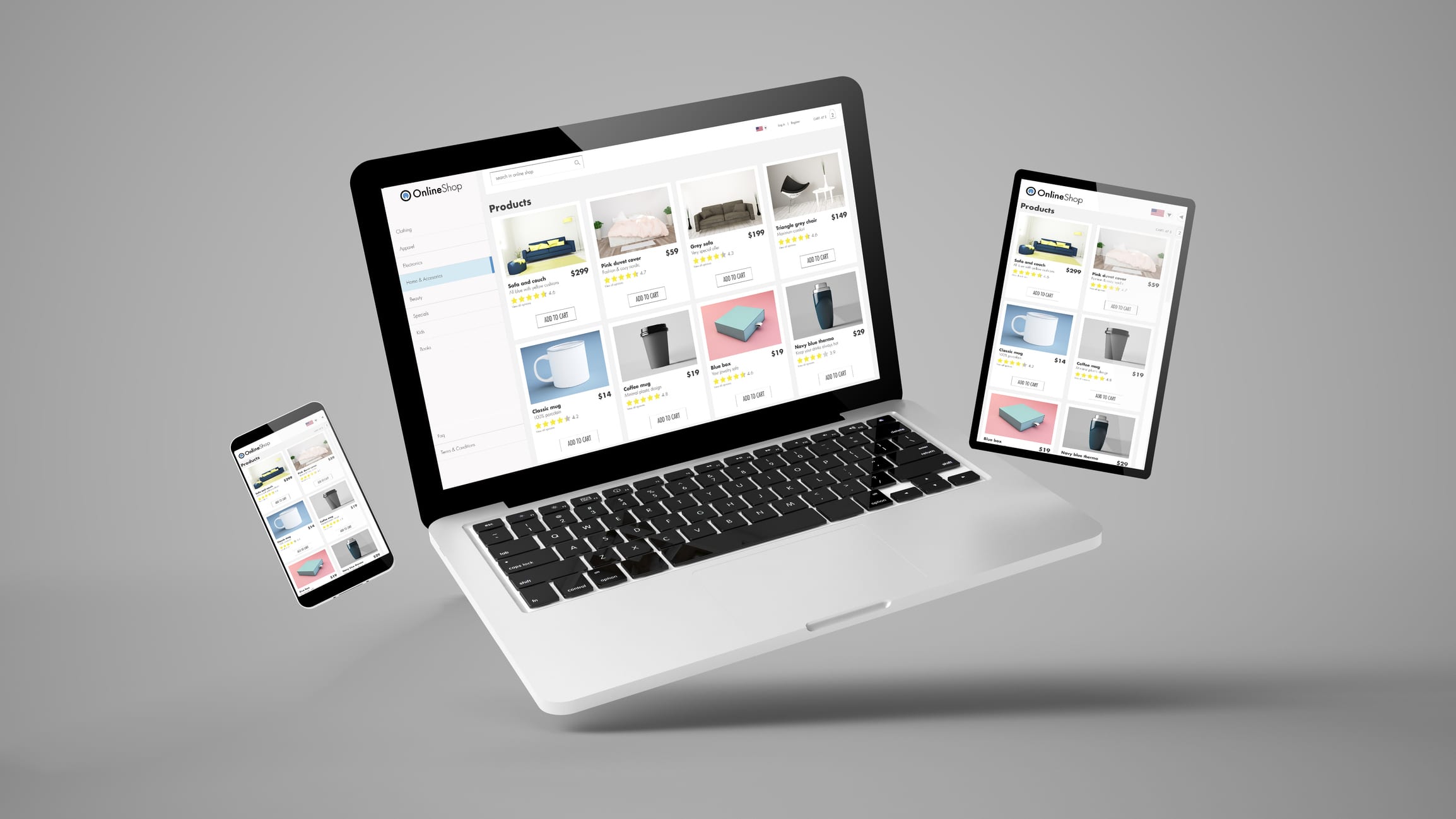
As more people are using their phones or tablets when looking to order furniture, clothing, or the latest gadget, it is essential to make sure your website is responsive (mobile-friendly). Mobile optimization will create a more frictionless buyer’s experience.

5. Settling For Slow

We live in an age where everyone is in a rush; we can now order coffee from our phone, we can choose a self checkout lane at the grocery store, and we expect packages to be shipped in a day.

The quickness of technology may be convenient at times, but we’d argue it has created some very impatient people. This is especially true when it comes to your website.

For example, if someone is waiting more than three seconds for your website’s page to load, it is highly likely they will close the page and look for information elsewhere. Therefore, a slow loading page can profoundly impact a website’s conversion rate, engagement, and brand reputation.

Why is page speed so critical?

It is vital to have a fast-loading page so users can get to where they want to go quickly.

Amazon stated that just one second of leg load time on their website would cause a loss of $1.6 billion in sales each year. That’s billion with a B!

Google has the same issue, stating an addition of 0.5 seconds of loading to its search pages causes traffic to drop by 20%.

The Importance of Page Speed

Connect With Treefrog Inc. Today!

At Treefrog Inc., we understand that starting an e-commerce business is hard and we want to help! Our Frogs are experts in many fields that can be beneficial to your online marketplace.

Visit our website at www.treefrog.ca for more information, or give us a call at 905-836-4442.

Close up of woman holding mobile phone, with her partner cropped on the left.
Marketing Strategy

10 Ways To Get Your E-Newsletter Opened

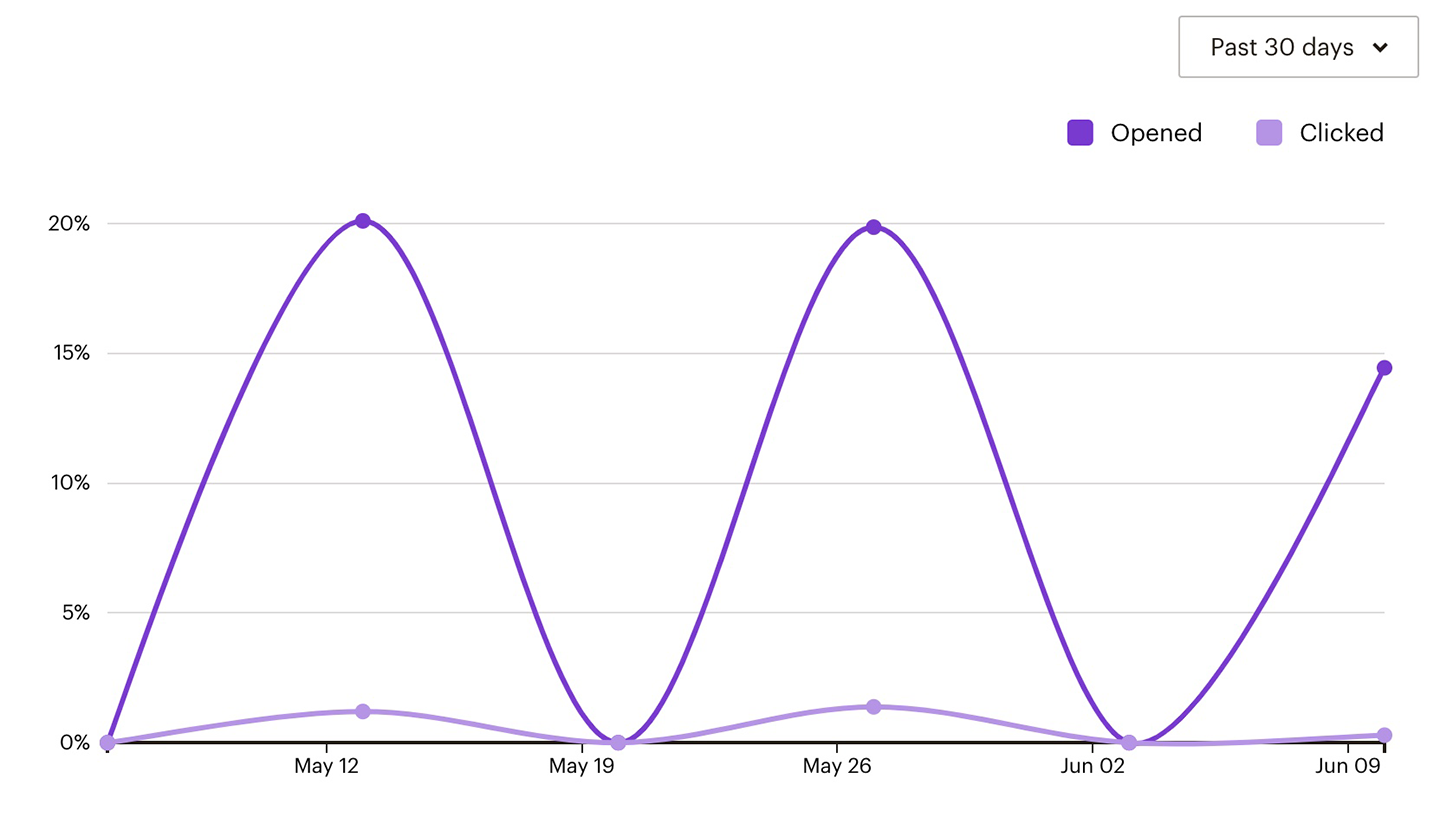
Open rates are arguably the most important stat you need to be tracking when it comes to marketing emails. Sure, your CTR (click-through-rate) is important, but if people aren’t opening your emails at all, they don’t even have the chance to click through!

These days it seems as though everyone is using emails as part of their marketing strategy; thus, audiences are receiving more emails each day than they ever have. In fact, globally there are approximately 269 billion emails sent each day! To help with the mass amount of email people are receiving Gmail has even started auto-segmenting emails into different inboxes: Primary, Social, Promotions, and Spam. This can make it even harder to get in front of the eyes of your target audience.

Fortunately, there are a few things you can do to make your e-marketing stand out! 

Here are 10 ways to improve your email marketing open rate:

1. Send Time

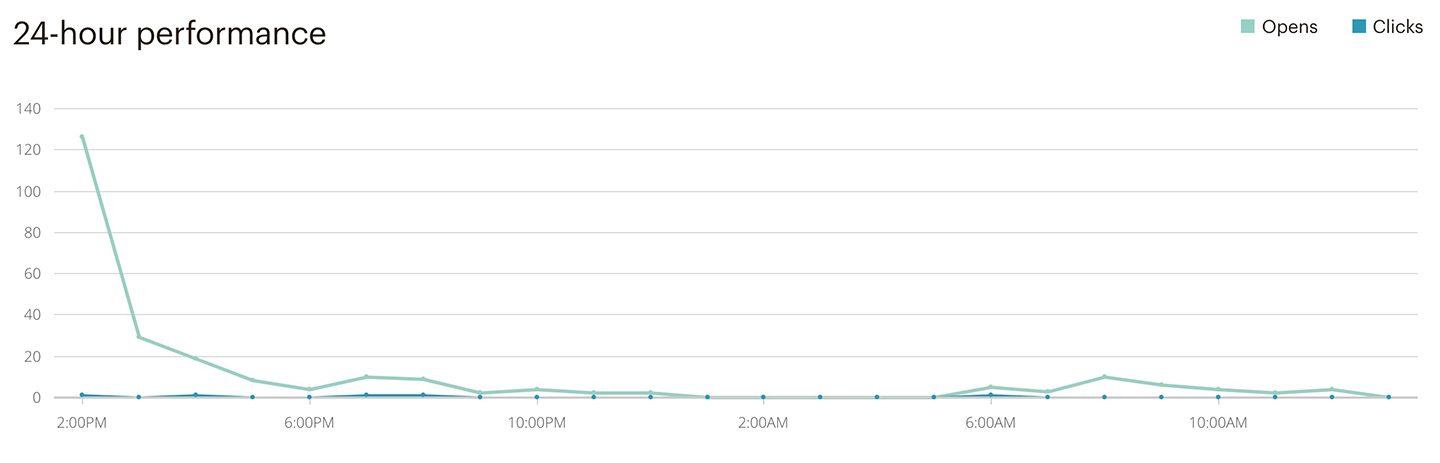
Wouldn’t it be great if you could email subscribers at the exact moment, they were looking at their devices? Investigating the open times of your emails can give you incredible insight not only on the days your emails are seeing the most traffic, but also the time of day your audience is choosing to open them.

Every email list will have a unique send day and time and it’s important to use the data you have at your fingertips to help you discover your optimal send time. If you’re not sure where to start, most people check their emails in the morning when they wake up, at lunch, or in the evening before bed.

2. Engaging Subject Lines

Subject lines are the most prominent piece of information your subscriber has to make their decision on whether to open your email or not. This makes it highly important to use the space provided efficiently and effectively. Putting a special offer, an intriguing question, or creating urgency early in the subject line are all proven ways to increase your email open rates.

According to MailChimp’s email subject lines best practices there are a number of faux pas you should avoid when writing your subject lines. As tempting as these words may be to encourage a sense of urgency, words like “Help”, “Percent Off”, and “Reminder” have been found to be the most common to be caught by spam filters; avoid using them to ensure your email has a chance to get into your audiences inbox.


3. Personalization

With the amount of mass email we receive daily, when we get something that is more personalized it usually sets itself apart, like receiving a letter. Adding tags into your subject lines to include your subscribers name, city or country location can give the added pop to your emails to really catch your readers eye and encourage them to open your e-newsletter.

4. Preheader

The preheader text is the summary text that follows the subject line in the preview in the inbox. This helps the reader have more context about the email before they decide whether to open it or not. The preheader is the perfect place to put a promotional offer or to extend your subject line.

Another way to utilize the preheader is to help your email appeal to a wider audience. If your subject line only applies to a certain group of people, the preheader is the perfect time to pull in those readers that might not normally open an email about the content mentioned in the subject line.

5. Mobile First

Did you know that over half of emails are read on mobile devices now? If you are not optimizing your emails for mobile, you are hurting its chances of being opened before you even send it. To be truly mobile optimized not only does your email content need to be designed to fit and be readable on a smaller screen but your subject line and preheader need to as well.

In a mobile email service provider, you may only have 50 characters to sell your e-newsletters content with your subject line and preheader! This means placing your CTA (Call-to-Action), or keywords at the beginning of the subject line to ensure they aren’t missed.

6. Segmentation

List segmentation is arguably the best way to improve your email marketing open rate, while simultaneously reducing your unsubscribe rate.

If you send a lot of emails on various different topics you may want to consider splitting your email list into different segments depending on demographics and interests when trying to find your optimal send time and day.

7. A/B Test

A/B testing is a great way to see which parts of your email are working and which parts need to be optimized. Understanding how your audience interacts with your email, which trigger words they respond to the most, and which CTA’s get your readers to open your emails are just a few ways A/B testing can help improve your e-newsletter open rates.

Do you get more opens from questions or lists in your subject lines? Here are some other things you can A/B test to improve your open rates are:

  • Your call to action
  • Your preheader
  • Personalization: name vs. location vs. none
  • The sender name

8.  Personalize the Sender Line

Most of the emails people receive are mass marketing emails that have very little personalization and are strictly from companies trying to sell something. Readers are becoming much better at screening these emails based on the sender alone.

If you want to connect with your readers on a more personal level and have them trust that you are only sending them high-quality content, avoid using no-reply emails or generic info@. Instead use your actual name, or a pseudonym if you don’t feel comfortable handing out your actual name on the email.

9. Clean Your Email List

One really easy way to improve your open rate is to stop sending your email marketing to subscribers who don’t open your emails!

It sounds so simple, yet many marketers are more concerned with losing the potential open from someone who hasn’t opened their email in months. The size of a subscriber list is often something email marketers hold near and dear to their heart. Many have a hard time scrubbing the list of unengaged subscribers. You have worked hard at getting those people to even subscribe to your list in the first place, why should you delete them from your database altogether!? After all, they may not be opening your email-marketing right now, but they did at one point and they might again soon, right!? RIGHT!? (wrong!)

10. Stick to a Schedule

As mentioned in tip #1, finding the right send time and day is important to improving your open rate. Once you find that right day and time, stick to a consistent schedule. This helps build recognition with your readers, they are expecting your email at this point and hopefully, they’re looking forward to it! Don’t let them down or confuse them by sending at random intervals.

Now that you have the information to improve your email marketing, where do you start?

If you already have an email marketing software account such as MailChimp or Constant Contact but are unsure how to pull the data for the right day and time, A/B test, or segment your markets, we can help!

If you don’t have any email marketing software, do not be sending mass emails from your personal email, this will not only cause your personal email to be blacklisted but also is against CASL compliancy. Let us start you on the path to email marketing with a branded email template, list curating strategy and content optimization. Call today 905-836-4442 or email.

Closeup of a woman using a mobile phone with a search input field graphic above the phone
Business Strategy

What to Look for When Picking a Digital Partner

Managing a business is hard

Sometimes, you may feel like you are getting pulled in a multitude of directions.  Because of this, your online presence or digital marketing may have taken a backseat to all of the other obligations you have on your plate.  If that’s the case, it may be a good idea to consider hiring a digital agency to assist you in all of your digital marketing needs.

At Treefrog, we understand that digital marketing isn’t one-size-fits-all. No matter what sort of business you have, a digital agency could help you in many areas. But, with so many agencies around, how do you choose which one will best fit your business?

Here are some questions to ask yourself when you are choosing a digital partner

Do They Have A Great Website?

First impressions are everything. In a digital age, a website is usually the first thing we look at to get a feel of what an organization does, and who they are. Digital agencies should be masters of creating an awesome digital presence, and you will be able to see this by taking a peek at their website.

Tip: Before even considering them as a digital partner, make sure their website checks all the boxes: 

  • It is easy to navigate.
  • You can clearly understand what it is they do.
  • The site gives you an inside look at their company culture.
  • You can view profiles of the agency’s team members.
  • The website provides client testimonials and past project examples.

Are They A Credible Digital Partner?

Make sure that you can trust the agency you are partnering with. Determine the agency’s credibility and experience before jumping into a partnership. You can start by reading through client testimonials. If you wish to go a step further, it will not hurt to ask the agency for client references.

Tip: A successful agency with great client relationships will be happy to give you some references to contact. 

Do They Understand Your Needs?

When first meeting with the agency, make sure they offer what you need. Can they offer you many different services that will be unique to your business? Full-service digital agencies should be professionals in:

  • Web design and development
  • Digital marketing (social media, content marketing and search engine optimization)
  • Branding and design
  • Hosting and infrastructure
  • Mobile app development
  • Web application development
  • IoT and Artificial Intelligence
  • Product development

Digital agencies should be able to create a plan that best fits your business, and sticks to your budget and guidelines. Do not settle for cookie cutter advice. The digital agency should create a plan unique to your business.

Tip: Some questions to ask when looking for your next marketing partner: 

  • What happens if my business changes focus? How agile is the plan?
  • How is my budget allocated?
  • How will I know what you are doing?
  • What type of reporting can I expect?
  • What is my level of involvement?
  • Are phone calls and emails billable?
  • How quickly will I see results?
  • How often will I meet or hear from you?

How Is Their Customer Service?

Do you value positive relationships with those you do business with? Absolutely. Nobody wants to simply be a number, having to give your name and account number each time you call in. You want a partner that knows you by name and delivers you great customer service. Should an emergency arise in the business, you want someone to turn to who knows you, your business and the history of your marketing. 

Think Ahead

A digital agency will help you create success for your business online. It is important that they provide value to your business and can work to your unique needs. Pulling a page for our website, here are a few case studies on how digital-marketing isn’t one-sized-fits-all:

Bradley Homes Case Study Reset Zone Case Study

At Treefrog, we understand each and every business has different values, goals and visions, and that a digital partner should be able to represent that. Nobody knows your business better than you do, so it’s important to choose the best digital partner to represent your business.

If you would like to learn more about how we customize our services to your business, please get in touch with us!

Resources:

A green potted plant near a laptop on a wooden table
Brand Strategy

Why The Frogs Are Green

Here at Treefrog, we like to look at the bigger picture. Instead of thinking about the here and now, we see far into the future and understand that the decisions we make today, can greatly impact the next generation of Frogs.

We must share our beautiful world with everyone, and everything that resides here. While we might only live in a small pond we’ve found that a few simple changes can make a BIG difference.

At Treefrog, we are constantly looking for ways to reduce our carbon footprint.

Here are a few little changes that have made a big impact:

We Are Paperless

Saving trees starts with ditching paper. Once upon a time our entire project management office was run from coloured folders and stapled dockets. Moving the team away from the colour folder project system and into project management software was no small task. Our design team moved from sketchbooks and carbon pencils to a Wacom for digital mind mapping. Our Sales team moved to virtual notes directly in our CRM software (Salesforce), ditching the spiral Hilroy’s. Our cleaning team moved from paper towels to washable cloths, and we changed our washrooms to compostable towels.

The production and distribution of paper has a significant impact on the environment. Paper production poses issues on air, water and land. And as frogs, we dislike when deforestation destroys our homes. So we ask… why use paper when we have a virtual environment that can help us produce and deliver documents? And who likes paper cuts anyways? We do not.

We Started a Recycle and Compost Program

When we made the move from 12 Vincent to 567 Davis, we didn’t realize this change would mean giving up the ability to recycle and compost as we moved from a zoned-commercial/residential location to a pure commercial location. Unfortunately, the Town of Newmarket doesn’t offer pick up service for businesses.

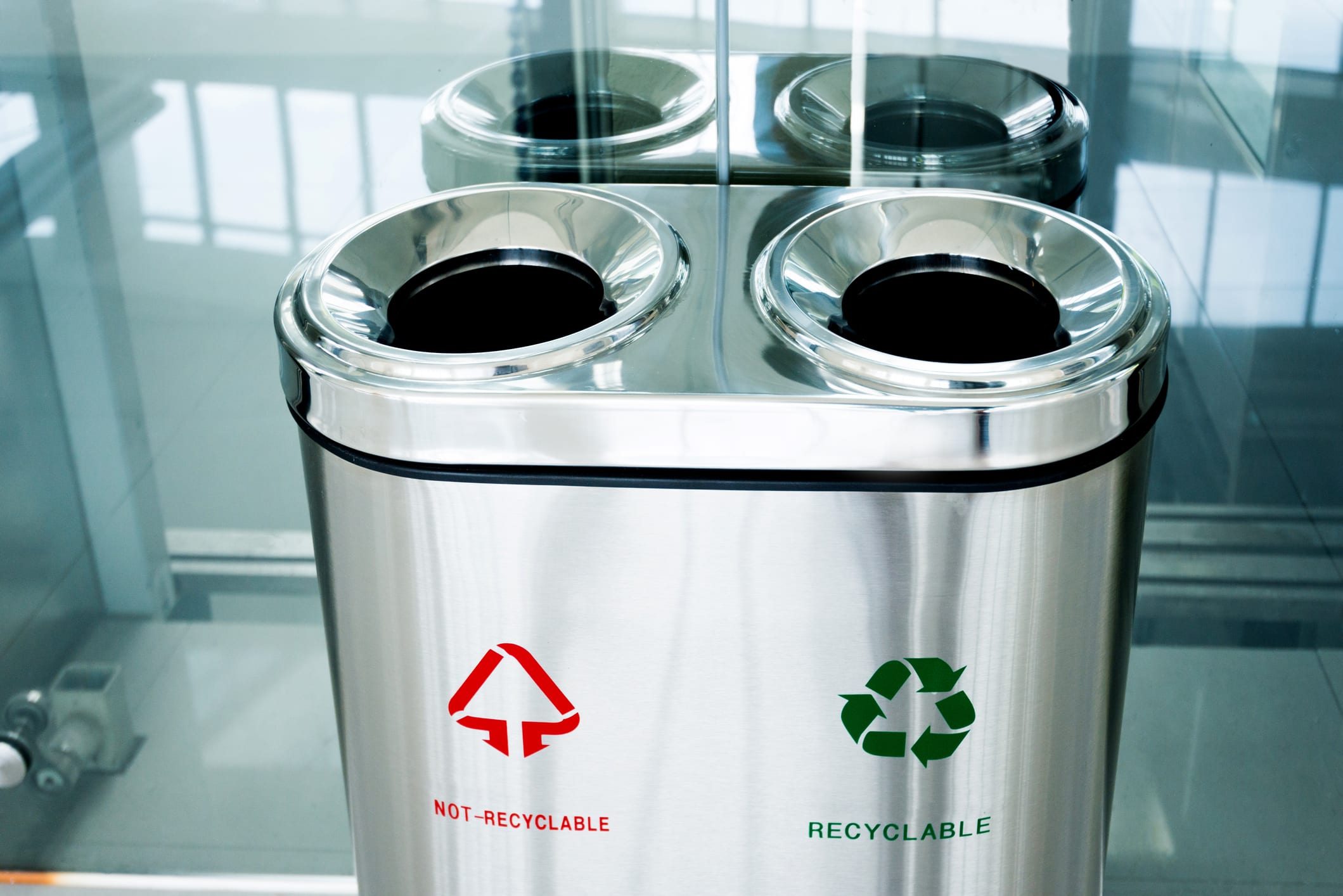
Recyclable and non-recyclable garbage can indoors.

We were faced with an issue of how to maintain our recycling and composting habits – since throwing out cans just didn’t seem like an option for the frogs. For the first few months, frogs would boomerang their lunches until we were able to convince the town to offer us curbside services too.

As Bill Nye the Science Guy would say: “To leave the world better than you found it, sometimes you have to pick up other people’s trash.” But, this was not enough.

The frogs lobbied for these services, and won! We are one of the only businesses in Newmarket with this opportunity, so we do our very best to ensure we are properly recycling and composting.

We Smart Commute

Commuting to work sucks. Especially when you are stuck sitting in traffic. And hello, the prices of gas are crazy!  Speaking of gas, it is extremely harmful to our planet.

That is why Treefrog has implemented a Smart Commute Program. Before Smart Commute opened its doors to under 50 employee employers, we offered our Frogs cash bonuses when they choose to smart commute. This included carpooling, taking public transportation, walking to work (some frogs prefer hopping), or even skipping the drive and working from home1.

We Buy and Grow Locally

You can catch flies with honey. And frogs love flies. So, we go through lots of honey. However, we only buy locally sourced honey for our office. There are many environmental benefits in supporting local honey farmers. Farm-raised bees help to pollinate plants, which is beneficial to local wildlife. In addition, buying local supports honey farmers who are properly caring for and raising the endangered bees.

We also love to grow fruits and vegetables in our Treefrog garden. While having a garden may seem like a small impact, it has huge environmental benefits. Growing your own food can reduce carbon emission and waste. Food travels long distances to arrive at the grocery store, on average it takes over 1500 miles of travel before the fruits and veggies we love get placed in our carts. In addition, growing food can reduce waste as it eliminates the need for packaging such as plastic and cardboard. So, if you are ever passing Davis Drive in the summer, feel free to enjoy a tomato (or two) from our garden2.

We Only Drive Electric

Our Frogs are always on the go, whether we have a meeting with a client, a networking event or one of us is speaking at a workshop or conference; we have an electric car that will get us where we need to go. We invested in two fully electric cars to reduce our carbon footprint and protect our planet. While this might require some extra planning on our part when navigating to and fro, it’s worth the effort knowing that in the last five years we’ve reduced our carbon footprint by 130,000 km through the use of electric vehicles.

Vehicles that run on gas emit toxic greenhouse gases into the environment and pollute our air. Greenhouse gas emissions are the leading cause of climate change.

We Made Small Changes Around the Office

Change starts with the low hanging fruit, and at Treefrog, those are the simple things like batteries and lights.

As a digital marketing agency, it’s no surprise that we go through a lot of battery power. We recently started a new tactic with the goal of minimizing our environmental impact through battery conditioning. We converted all our batteries to brand new, top-of-the-line Eneloop batteries with a life of 2100 charges. So, no more one-time use batteries, only rechargeable!

A pair of rechargeable batteries.

Apart from the batteries, we also have a Nest Learning Thermostat that programs itself and helps save energy. Not only does it save us money on our heating bill, but it also helps us avoid running the air when no one’s home. We also use a combination of compact fluorescent lamp (CFL) lights and LEDs, which are more energy efficient.

These small things make a big difference in saving our planet.  We want Treefrog to live on for many generations, and we hope you do too.

What are you doing in your space to reduce your footprint? We’d love to hear from you!

Resources

https://www.worldwildlife.org/threats/deforestation-and-forest-degradation
https://www.tomsofmaine.com/good-matters/natural-products/the-amazing-benefits-of-local-honey

1 Smart commute bonus is only for in-office commuters.
2 Garden options tend to change from year to year.

Bearded senior using mobile phone outdoors
Creative Strategy

What is SEO or Social Without Content Marketing?

It would be cliché to suggest that the digital marketing landscape is becoming increasingly complex. Marketing and advertising have always been faced with the often-complex problem of knowing what will resonate with potential customers. Digital marketers face the same problem but unlike “traditional” marketing we have access to unprecedented levels of data about our intended audience. Learning as we go, we’re often able to craft content (blogs, articles, images, graphics) that users find valuable. Understanding that value is a nuanced and completely subjective concept, we try to gather and analyse multiple data sets before we ever put pen to paper.

What is contemporary content marketing?

Traditional marketing—think of a television commercial, for example—is based on the concept of interruption. A commercial diverts the viewer’s attention and interrupts them from viewing the “valuable” television program they were watching. Content marketing, in contrast, is based on the idea that trust is garnered through a genuine attempt to offer something that the reader or viewer will want to read, view, watch, or best yet—share.  Content marketing talks “to” them rather than “at” audience.  Depending on the product or service, thoughtful content marketing will help move a potential prospect through the digital funnel towards purchase and beyond towards becoming an advocate.

Unlike traditional advertising, content marketing is a persuasive soft sell and seeks to help the buyer make an informed decision. Sometimes, as digital marketers we attempt to create social proof of a product or service’s benefit through relying on the endorsement of key opinion leaders, or “influencers” in a particular industry. Think about it, it is far more effective if someone you trust endorses that new widget or gadget. This type of content, a kind of digital word-of-mouth, is as traditional as traditional gets—it’s just been given a new lease via content marketing.

The photo was taken indoors in a domestic room by photographing over the model's shoulder.

Traditional Marketing vs Content Marketing

Let’s explore an example: If you’re in the floral business, getting a certain amount of walk-in traffic to your business would be expected if your business is centrally located in town. If you want to reach more customers, you might take out an ad in the local paper and maybe send out some direct mail postcards. Perhaps you decide to exhibit in the annual bridal show and home show. But how do you attract customers outside of these moments?  How do you provide value for the user, even when they are not looking for your services? How will you keep them engaged and your business top-of-mind between purchases?

This could take a variety of forms:

  1. Beautiful images on your social media of recent work
  2. A bi-weekly blog with articles on relevant content such as “Best Flower Arrangements for a Winter Wedding” or “Easy, DIY Flower Arrangements for Your Next Dinner Party.”
  3. A weekly newsletter with a DIY home décor activity
  4. A monthly contest to encourage social media engagement
  5. A monthly donation of flowers to an important local cause

Content like this provides your audience with something they see value in and ensures you’re in front of them long before they are at the point of purchase. And, importantly, it provides an opportunity to build a connection to your brand.

You can’t go wrong creating content of various kinds that your customers see value in. If they see value, likely so will Google. If your content can be the answer to a searched question, you will likely rank higher in search results. Again, it’s about creating something that your customers see value in before you ever ask for the sale.

The beauty of it all?

Your content will sell for you while you’re asleep. It works even when you’re not.

Getting started!

When it comes to producing content, it can be a daunting task. You might have no idea where or how to get started. Remember: quality content, produced frequently will have the greatest effect on your business. To start, explore the topics that resonate with your prospective audience, consider why your audience works with you, what pain points to address or problems you solve, be creative, take a different approach, and have fun.

Today, we are more connected and more engaged than ever with digital media. Creating a space for your customer (and potential customer) to interact with your brand and develop trust at their own pace, will have lasting effects on your business. It is critical to continue to provide this opportunity, even after the sale is complete. Creating opportunity to further the dialogue with your customers will help lead to long-lasting brand loyalty and repeat business.

And if you are to take one thing away from this article…remember: providing something of value takes time and effort but can yield huge returns!

Young woman using a laptop computer.
Marketing Strategy

Why Are There Suddenly Fewer Image & Video Boxes in Google Search Results?

Have you noticed a difference in the way Google is displaying videos and imagery when delivering search results?

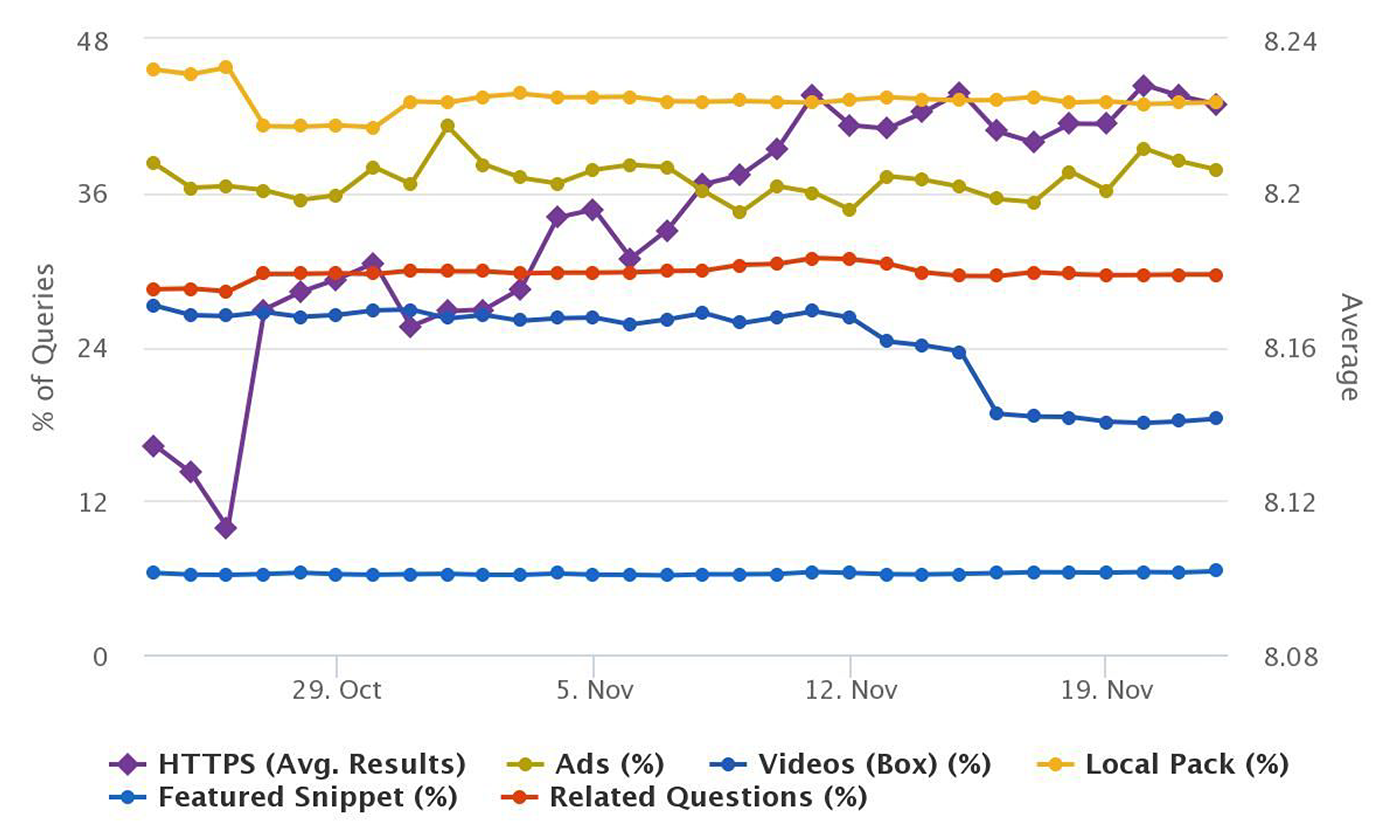
According to Search Engine Land and RankRanger, Google has begun deprioritizing imagery and video search results, lessening the percentage of time that these resources are featured on both mobile and web.

As noted by RankRanger, video carousel results began to drop around November 13th or 14th, 2018 (see dark blue), and have remained consistently low over the past few days.


Source: www.rankranger.com/google-serp-features

At Treefrog, we found this change quite interesting. It also begets the all-important question for us: why are they doing this?

There’s always a data-driven motive behind a decision like this. Here are a few of our theories:

Theory 1: Video and Image Engagement is Declining

Perhaps fewer people are clicking on image and video results.

According to a report by Buffer and BuzzSumo, this is true, at least, for Facebook. In their report, Buffer and BuzzSumo analyzed more than 43 million posts from the top 20,000 brands on Facebook and determined that average engagement per image dropped from 9,370 per post in Q1 2017 to 3,454 per post in Q2 2018.

Although, we haven’t seen any significant data on the types of queries where this is becoming a reality. For example, are images and video being scaled back for informational queries, like “where do I put my brake fluid in a 2011 Hyundai Elantra”? Or are the results affected mostly for commercial-type queries? It’s still rather unclear.

Theory 2: This is a New Strategy to Increase Ad Impressions

Perhaps Google is moving back to having people “dig” for video/image results so it can show more ads when the SERP refreshes.

In other words, instead of showing the thumbnails in universal search, users are expected to click again to specify “Images” or “Videos”. Although this seems uncharacteristic for Google—they’re usually in the habit of lessening clicks rather than adding them.

With recently improved Expanded Text Ads, Google has given us more room to play with as digital marketers (see screenshot) – allowing for extra headlines (^140%) and more descriptive text (^14%). These changes were designed to maximize brand presences on mobile specifically, in response to today’s mobile-first world.

And as our mobile devices have grown in size, we have to ask ourselves, would Google rather replace prime search result real estate with ad space over videos and images? We wouldn’t be at all surprised.

Theory 3: Google Is Refining Video Previews

Perhaps Google is refining the video “preview” feature in SERPs, and they removed the image and video results temporarily to work on them.

We’re not sure if you agree, but the video previews are algorithmically driven at the moment, and not quite ideal. Google is not in the habit of keeping something alive if it isn’t widely adopted. So it could be that they are tinkering with the experience so that people get more use out of the preview feature.

Or, maybe they’re revising it so that it can better determine when to show a video box, when to show an image box, and when to show both (or neither).

Photo sign made by human hands on blurred sunset sky as background

Conclusion

We predict Google will return these results with some enhanced capabilities.

Google is unlikely to remove SERP features completely unless there is indeed a massive decrease in click-throughs from image and video SERP results. It would be strange to do this, given that video and images, especially for informational queries, are still extremely useful.

Another possibility is… maybe they just love messing with people!

Scroll to Top