Insights from the senior strategists at Treefrog Inc., a full-service marketing agency founded in 1989 in Newmarket, Ontario. We write about marketing strategy, pipeline, revenue operations and AI for growing companies.
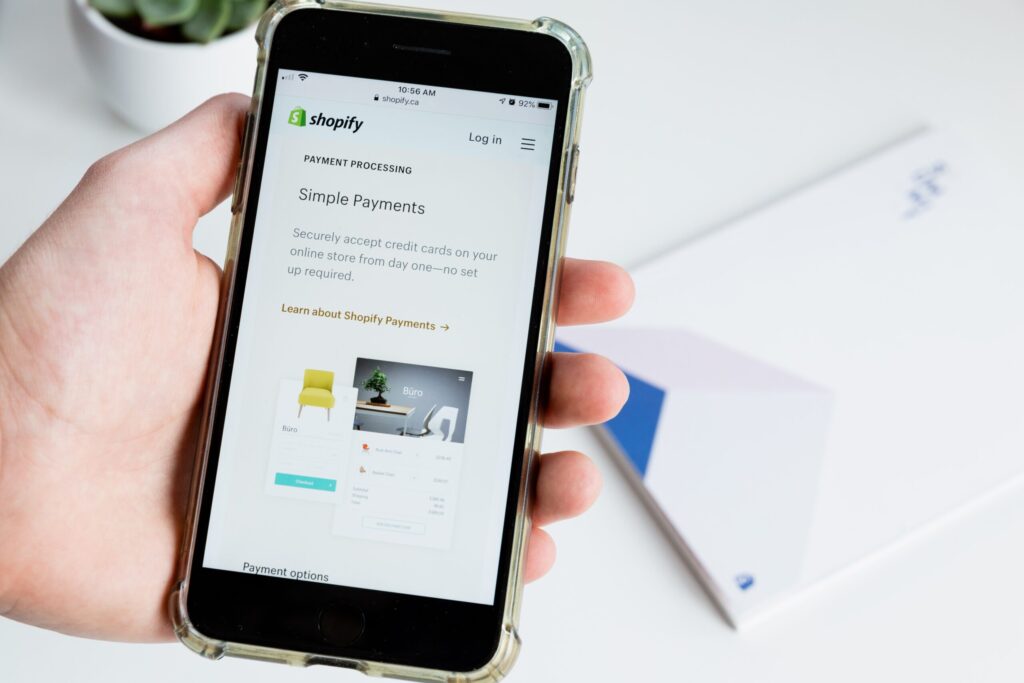
Today, it’s critical to have an online store to reach a wider audience and increase sales. Whether you’re a new company or rethinking your online platform, you need to consider the two best platforms out there, Shopify or Magento. Though Shopify and Magento are often in a battle against each other as the best, they’re both vastly different platforms, and each has its own pros and cons.
When comparing these two platforms to determine which one to use, it can be challenging to decide which one is the best for your business. That’s why today we’re going to tell you the difference between Shopify and Magento, so you can quickly determine which platform is right for your business.
Costs
Firstly, let’s talk about the cost of each platform. Though this shouldn’t be your only deciding factor when it comes to which platform to use, it is something you need to take into consideration.
Shopify is a SAAS software (software-as-a-service), which means users pay monthly fees to host their online store. There are three membership tiers, basic which is $29 a month, Shopify at $79 a month, and advanced Shopify at $179 a month. The downfall of Shopify is that the more you play, the more options you get, like abandoned cart recovery and gift cards.
Magento is a little different, as it costs nothing to use their software. They offer an enterprise solution, which does have a cost to use, though the cost solely depends on your needs.
User Experience
User experience is critical to customer retention and driving sales on your online store, which is why it’s essential to pick a platform that has the best user experience. So which platform has the best user experience?
Shopify is the easier of the two platforms and is the better option for companies that don’t have developers. However, Magento offers many extensions that don’t require any coding, making it just as easy to use as Shopify.
SEO
Search engine optimization (SEO) is critical for your website and online store. It’s how you end up on the front page of Google. If you want your business to increase sales and organic traffic, you need SEO. Both Shopify and Magento rank high for their SEO capabilities.
Though when it comes to SEO, Magento is in the first place. Magento SEO capabilities include headings, meta descriptions, and page URLs and titles. Unfortunately, Magento is not fully optimized for SEO. If you want to fully optimize your online store, you’ll need to hire an agency to help you.
Themes
Designing a beautifully branded website is critical to creating brand awareness and recognition. So it’s essential to find a platform that offers themes that can be easily edited and branded to your liking.
Both Shopify and Magento offer themes, with Shopify offering 69 different themes to choose from. In contrast, Magento offers thousands of themes to choose from. Both have responsive themes, ensuring whether a user is on their phone or desktop, your site will perform flawlessly.
The downfall of Shopify themes is that they don’t allow for many changes to be made to them, whereas Magento allows for more design options. Magento even has a drop and drag option to make design pages quicker and easier.
Conclusion
There are several differences between Shopify and Magento, so whatever you choose, make sure you choose wisely. You want to ensure you select the right platform for your business.
Take Your Business Online
At Treefrog Inc., our Frogs are experts in many fields that can benefit your online marketplace. For more information on how our team can help, give us a call at 905-836-4442.
It’s tempting to think that (successful) brands are only skin-deep. After all, aren’t colours and logos important? Visual branding is essential, but the ultimate goal is to establish a strong brand identity, combining both Branding Elements (logos, colours, shapes, imagery) and a Brand Persona (values, ethos, personality and traits).
While most brands have a handle on basic branding, few brands can claim they have an ‘identity without a Brand Persona. A Brand Persona is what ‘humanizes’ a brand, making it primed to interact with us on a deeper, intellectual and emotional level. Just like it sounds, a Brand Persona is not dissimilar to a person, having a unique ideology, character traits, values, ethos and culture. These aspects make it possible to develop a more profound emotional experience and build a relationship – potentially lasting a lifetime.
As humans, our lives and our relationships are incredibly diverse and complex. At a basic level, though, Maslov described that all humans have the exact fundamental physical and emotional needs to fill. These needs are “physiological,” “safety,” “belonging,” “esteem,” and “self-actualization.” They directly influence our behaviours, manifesting as desires, impulses and decisions. We never make a decision that is not linked in some way back to one of these core needs. We might not always be aware of this, but brands knowingly work hard to leverage this fact and use our emotions – as a gateway to selling us things. Targeting certain desired emotions has long been the specialty of good branding. It was initially used to reduce our anxiety about making buying decisions (thus leading to more significant profit for those companies who branded their products). Branding today still offers to show us what feelings or experiences we can expect: to feel happy, imaginative, loved, sexy, in control, witty, healthy, secure, prepared, strong, etc.
Brand Personas emerged to take things a step further by looking to our rational brain and psychology. They are designed to reach our deepest intellectual thoughts, principles, judgements and beliefs. To illustrate this, consider for a moment that on an interpersonal level, we will rarely develop a connection with people that we find nothing in common with; yet as soon as we discover common ground on something, we feel closer to them and take a greater interest in them.
This concept underpins the development of a Brand “Tribe”; defined as a group of people who align themselves with a Brand Identity as a true reflection
of themselves. Psychologically speaking, Brand Identities are fully developed in mind, just like people. These brands exhibit a detailed ideology and philosophy – they share a world perspective, outlining their values, speaking in a unique voice and showing off their personality. This level of complexity naturally mirrors the complexities we hold within ourselves, both attracting us and deepening our connection.
This is both how and why strong Brand Identities shape our lives, our experiences and eventually come to receive mass-market traction across the world. Far from being a negative situation, the inherent potential for brand identities to positively influence people’s lives and bring commonalities (bridging divides) gives designers around the world their hope and challenge for the future.
Branding Experts
Are you ready to strengthen your brand and build your business? At Treefrog, we can help you develop your brand strategy. Whether it’s logo design, logo maturation, corporate identity or graphic design services, we’re your business branding experts.
Give us a call at 905-836-4442; our team of branding experts are ready to help!
Today, it’s common to think of a “brand” as another word for a logo; after all, many people believe that branding is a term coined from branded livestock on cattle farms. However, the real history of branding goes back much further. The recorded practice of branding began as early as the Babylonian era when leaving a mark on an object was meant to signify ownership or a legacy of that property. It was a way of safeguarding its use against others. The actual term ‘brand’ used today was developed with a new desired purpose. Our intention now is to put a ‘reputation’ onto something for it to be sought-out and ideally stand out from its competitors.
Suppose modern branding aims to suggest a reputation. In that case, the psychology of modern branding is to help quell the anxiety of the consumer. Let’s consider how many choices we face in our daily lives. We can appreciate how this bombardment might affect how easy it is to make decisions.
Despite our vast technological advances and our ever-increasing knowledge, our brains’ decisions are still based upon a reptilian system rooted in a fight or flight mode. What we rationalize in front of us is not the same as what we perceive in this part of our brain, which is why not having a straightforward or easy choice can often make us feel uneasy and exhausted.
Understanding and working around this dilemma is what branding does best. Using visuals to tell an audience what to expect and what desired experience they will have even before their choice is made.
At the end of it all, the uncomfortable truth about branding is that it’s never in the hands of the makers. Those who decide what kind of brand is formed are actually the consumers; it is in their minds where a brand reputation is actually created and propagated.
Since the consumer gets to decide whether the brand reputation has true merit or not, branding must balance what is true and idealized. The promise vis-a-vie the packaging or other touch-points and interactions must all be delivered upon. This is how the brand earns its ‘reputation,’ albeit a positive or negative one. It is vitally important that every business understands that their brand is constantly being branded, either for better or worse. Although it is put out by companies, it is ultimately cemented by the experience of the customer.
Where art thou, logo?
Where does a logo fit in the experience of branding, and how important is it really? If we can think of branding like a person (we are all our own personal brand already). In that case, a logo is its face, a means of recognizing and remembering a unique identity and experience among the crowd. At its core, a logo’s purpose is to take a complex emotional experience across many different interactions and to distill it into something simple and easy to remember, like a single name and/or shape.
Business Branding Experts
Are you ready to strengthen your brand and build your business? At Treefrog, we take a top-down approach to helping you develop your brand strategy. Whether it’s logo design, logo maturation, corporate identity or graphic design services, we’re your business branding experts.
Give us a call at 905-836-4442; our team of graphic design and branding experts are ready to help!
Nowadays, consumers are looking for more and more customization in their online shopping experiences. Businesses not only need to offer great shipping and return policies, but customer service and customization are key. That’s why adding product configurators to your website is critical to helping you grow your online sales.
Product configurators provide customers with the ability to customize their products at the touch of their fingertips. You are helping them to purchase a product exactly how they want it. What exactly are the benefits of having a product configurator on your website, and how does it help you increase your revenue. We’ll be answering those questions and more in this article.
What are Product Configurators
A product configurator is an interactive software that allows the customer to choose certain product features defined by the business. The product configurator then validates it and enables the customer to move onto the next step.
A product configurator takes a collection of parameters, characteristics, and rules determined by the business. Though it seems simple, it’s a complex software full of regulations that the product configurator will use to validate whether this selection is allowed before allowing the customer to put their choice into the cart. This form of customization allows the user to purchase the item exactly how they want it, but it also helps your business in many different ways.
Benefits of Product Configurators
Reduce Lead Times
When you allow customers to build a product themselves, it will be unique and designed exactly how they want. This will help move the customer through the buyer’s journey faster and allow your sales reps to sell quicker. It will help your sales representatives have all the information they need to send out quotes faster and send orders to the manufacturing team.
Increased Customer Satisfaction
Providing customers with a product designed precisely to their liking automatically helps to increase customer satisfaction. Due to the simplicity and the ability to have a custom product, it increases customer retention and satisfaction. Customers are more likely to return to a business that they had a good experience with versus one they didn’t.
Ensures Correct Orders
How many times have you purchased something, and it’s been incorrect or missing key components? Probably too many times to count. When you have a product configurator, it helps ensure that orders are fulfilled correctly and on time because the invoice is directly sent to the manufacturing team. This will also help to increase customer satisfaction instantly.
Are you Ready?
Are you ready to take your business to the next level? Treefrog has a roadmap and team to get you there. Through our process, we will learn about your goals to help build a time-based, realistic, results-oriented system complete with training and deployment for your team. We are here, guiding you through every step of the way. Our process works with you – to make you and your business better, smarter, and faster.
Give us a call at 905-836-4442; our team of experts is ready to help!
All companies go through periods of growth, and in these growth stages, not every brand can endure the growing pains that may or may not require changes to your brand. Many companies believe that a brand is just your name and logo when in reality, it’s so much more than that, it’s your entire brand identity.
This is why many companies put off rebranding their business. However, by rebranding sooner rather than later, you can save yourself a lot of trouble in the long run. If you’re unsure whether or not you should rebrand, we’ve compiled a list of sure signs it’s time to rebrand. Keep in mind that just by searching for this blog, you already might know the answer you’re looking for.
1. It’s Been More Than Five Years Since You Branded
When was the last time you branded or rebranded your company? If you can’t remember, it’s probably time to start considering a rebrand. A lot can change in a year, which means your brand is becoming more outdated and irrelevant with each passing year. Remember, branding is not all about mood boards and logos, it’s also about your buyer personas. So rebranding is critical to keep updated with your brand’s aspects, not just your design elements.
2. Your Company is Switching Gears
If your company is beginning to expand into other markets or switching gears entirely, it’s time to consider a rebrand. The rebranding will help your new target market resonate and relate to your brand. Consider this; you’re a jewelry business. Suddenly you decided to expand into clothing. Your current brand might not reflect this new aspect of your business. If that’s the case, it’s likely time that you begin the process of rebranding.
3. Poor Reputation
All companies can go through a period of negative reputation, and some companies come out of it more robust. In contrast, others can feel the effects for years to come. If you’re still feeling the results of a poor reputation that you can’t shake, it’s time for a rebrand. Rebranding your company can help consumers see you in a positive light, especially if it’s done correctly.
The Red Ocean is a huge problem with companies today. Suppose your company has a generic logo, name and brand colours. In that case, you’re not standing out, you’re blending in, and its negativity is affecting your brand. The quickest way to stand out and start rebuilding is an overhaul and rebrand of your business. This will help you showcase why your company is different and better from your competitors.
Business Branding Experts
Are you ready to strengthen your brand and build your business? At Treefrog, we take a top-down approach to helping you develop your brand strategy. Whether it’s logo design, logo maturation, corporate identity or graphic design services, we’re your business branding experts.
Give us a call at 905-836-4442; our team of graphic design and branding experts are ready to help!
Selling online is a big step to take for your business. It can help you grow your business in ways you could not have imagined. Taking such a massive action requires time and research to ensure you’re picking the best platform for your business.
When picking a platform, you need to consider how customizable it is, the cost of getting started, and where your audience is? However, the number one thing you need to consider is how much they’re taking off your product’s sales. All of this can seem overwhelming and time-consuming, which is why we’ve done the hard part for you. We’ve compiled a list of four e-commerce platforms and covered all the things you need to know about each platform. So let’s get started!
Wix
Wix is an excellent place for beginners to start. It’s low cost and very easy to use. Wix also has a library of pre-made templates to help you get your online store up and running quickly. Don’t be fooled though, Wix still has some downfalls, such as being weak for search engine optimization (SEO) and e-commerce only being available to those with paid plans. You will also need to pay additional fees for integrations and add-ons. These are just things to keep in mind when picking a platform for your online store.
Shopify
Shopify is a Canadian platform and is a great budget-friendly option. It’s more complicated than Wix but still comes with professional themes. Shopify also has a variety of apps and add-ons, which helps with functionality. Like any online platform, they do come with some cons that should be considered. Shopify is limited to what you can do and is a higher price point for enterprise-level plans. Also, there are transaction fees for specific payment gateways. Shopify also makes it challenging to pull external data sources. We love using Shopify, but it’s critical to note that they do take a percentage of your sales, which means it’s good to look at options later down the road as the business begins to grow.
Big Commerce
Big Commerce comes with a lot of features that the previous platforms don’t give you. It’s also fully hosted and easily scalable. However, Big Commerce price lockdowns force you into enterprise accounts when you exceed a certain amount of income. It also lacks robust content management. You’ll have to decide if the pros outweigh the cons on this platform.
Woocommerce
Woocommerce comes with a lot of pros to it. For one thing, it’s free and open-sourced. It’s also highly customizable and comes with lots of support. Woocommerce also integrates with many other platforms and payment gateways. In all, Woocommerce gives you a lot of control and doesn’t take a cut of the profits. This is all great, but unfortunately, it does come with some cons. Since Woocommerce is created for WordPress, you’ll need a WordPress website. It also requires extensions for large-scale product inventory, and attachments can be expensive.
Whether you’re just starting or you’ve been selling online for years, selling online is a vital part of your business’s growth. That’s why having in-depth knowledge of all the e-commerce platforms will help you decide which platform is best for your business. We recommend that you keep researching, and if you have questions about e-commerce that Google can’t help you with, you can always contact the experts at Treefrog.
Connect With Treefrog Inc. Today!
At Treefrog Inc., we understand that starting an ecommerce business is hard, and we want to help! Our Frogs are experts in many fields that can be beneficial to your online marketplace. For more information on how our team can help, give us a call at 905-836-4442.
2021 is almost here. At this time of year, people are so focused on Christmas; they neglect to think about how to prepare their business for the new year.
Businesses need to start thinking ahead to the new year and asking themselves, what drives sales and interest in our product or services? The simple answer is a marketing strategy.
Out of all of the years we’ve done this, this is the year to share one of our most valuable tools for planning upcoming marketing. Right now is the perfect time to reflect on your business. Ask yourself what worked and what didn’t and what you should focus on in the new year to grow your business?
Treefrog’s Marketing Strategy Planner for 2021
Use this plan as your guide to marketing your business in the new year. It’s simple, free and easy to use. We’ve done all the work for you, and all you need to do is fill in the dates you want to complete the job.
At the very least, it’s a lot easier to decide what marketing activities aren’t part of your plan for 2021, so you don’t waste any energy wondering what could have been.
If we can help you with your strategy or any other tactics in 2021, let us know! We can help you design, build and execute your plan once it’s been intelligently reviewed and aligned with your budget and business goals for the next decade.
Fill out the form below and your copy of the 2021 Marketing Strategy Planner will be emailed to you.
Whether you’re starting a new business or have been in the business world for years, you’ve likely heard the term “buyer persona” at one point or time. Though, what exactly is buyer personas, and why is it so critical for your business?
We’re going to unpack that in this blog and explain why it’s critical to create and understand these personas.
What is a Buyer Persona
The term persona derives from Latin and originally referred to a theatrical mask. Actors wore masks to assume a persona or character. Think of the classic comedy and tragedy masks we still see in reference to the theatre today.
In the marketing world, personas are in-depth profiles of a brand’s target consumers. Rather than create a false identity, marketing personas seek to show the most realistic portrait of a consumer possible as a means of better understanding their needs and the best way to communicate with them.
Most brands will have more than one consumer persona because different individuals may support the brand, while others may heavily influence consumers, and these influencers need personas as well. For example, a typical business-to-business sales process might include the H.R. Director endorsing a product to the V.P. of H.R., who in turn seeks the approval of the V.P. of finance, who then seeks the approval of the CEO. Each of these individuals will have different needs for the product based on their position, and it is essential to understand how each will respond to the brand proposition. That is why personas are as relevant to B2B brands as those selling to the general public.
How are Buyer Personas Used
Personas are not new to the marketing world. In the beginnings of modern marketing in the 1960s (think Madmen), ad agencies used to write in-depth target customers’ profiles, giving them names and families and backstories.
Today, however, personas are even more critical because they have empowered consumers and democratized marketing. Brands now engage in conversations with their customers and prospects via digital and social platforms in addition to traditional media.
In life, we tailor our conversation based on what we know of the individual we are addressing; we talk to our Mom differently than our best friend. The same is true in marketing. We need to tailor our message to suit the audience, and as previously noted, a brand may have several audiences. This is not to suggest that a brand should be inconsistent in its approach. A brand, like a human being, communicates based on a set of characteristics and values. You will tell Mom you love wine just as you will tell your best friend. You will express it differently to each.
Why Buyer Personas are Important
1. Personas will help you narrow down your target audience
Buyer personas are critical to your business, as they’re the guiding force on how to market your business to your target audience. They’ll give you insight into how your target market thinks. Thus, helping you to tailor messages to your specific target audience.
2. Buyer personas will help to determine the strategic decisions you make
Buyer personas will help to determine the strategic decisions you make. You will know how your personas will react to marketing campaigns, how to best deliver information to them and what type of content is most valuable to them. A persona takes away the guesswork when it comes to your marketing activities.
3. Insight into Audience Behaviour
Buyer personas are critical to your business, as they’re the guiding force on how to market your business to your target audience. They’ll give you insight into how your target market thinks. Thus, helping you to tailor messages to your specific target audience. It should be noted that buyer personas are a constant work in progress and should be updated frequently. As your target audience grows and changes, your buyer personas should as well.
Conclusion
Buyer personas are in-depth profiles of a brand’s target consumers. They’re critical to your business and your efforts to attract and retain customers. For your business to grow and succeed, you need buyer personas.
Buyer Persona Experts
Are you ready to strengthen your brand and build your business? At Treefrog, we take a top-down approach to helping you develop your brand strategy. Contact us today to learn more about our branding services or get an instant brand quote.
Treefrog specializes in helping companies ensure their websites are AODA compliant.
Does your organization or business fall under any of the categories below?
Businesses and non-profits with 50 or more employees
Municipalities
Libraries (all public and those private libraries with 50 or more employees);
Public-sector organizations; and
Public and private-sector educational institutions (regardless of staffing)
If so, by June 30, 2021, the expectation, as outlined in AODA, is that all websites and web content must be accessible, as per WCAG 2.0 Level AA compliance metrics.
Also, businesses and organizations with over 20 employees must file an accessibility compliance report with the Government of Ontario by June 30, 2021, which was recently extended from Dec 30, 2020.
Businesses and nonprofits must meet the standards of Accessibility rules in Ontario. The Province of Ontario’s website has a full list of accessibility rules and guidelines that should be followed and any critical updates.
What are the top 5 Accessibility Compliance Issues?
1. No alt-text on images
Simply stated, all images require an alt tag.
If an image discloses information that helps understand the message, you must provide alternative text that describes the information.
For more complex images, like a graphic, table, pie chart, etc, your alternative text must summarize the image’s content.
Logos are an exception, but they should have null alt text to allow adaptive technologies to skim over them.
Including backlink on your website is a great way to strengthen your SEO, but with the new AODA rules, you have to be more careful. If you are using terms like “click here” or “learn more,” unfortunately, that is not enough. You now must explain where the link is going before it gets clicked. For example, an acceptable alteration would be “Learn more on how to be AODA compliant.”
You should also avoid opening links in a new window, and you should avoid having multiple links directing to different locations that share the same text.
In some cases, having a particular colour combination can be challenging for someone to see. In the case of a dark background, you need to make the fonts lighter and when you are using a light background, you need to make the fonts darker.
Your contrast ratio should be 4.5:1 for standard text and 3:1 for large text. According to WCAG 2.1, the large-scale text must have at least 18 point or 14 point bold font size.
4. Social media platforms
In essence, social media platforms should be used to supplement your webpage. If you do link your social media content to your website, it must also be accessible to the best of your ability.
5. Audio and video
All prerecorded audio and video must have closed captions and a text transcript. The text transcript must be as descriptive as possible.
The user must have full control over the video, which means they should be able to pause, stop and rewind all audio and video files.
What’s the next step?
Do your research and make sure you are compliant. In case you aren’t taking this seriously, you could receive a fine of up to $100,000 a day if your website doesn’t align with AODA standards. This is a risk you do not want to take.
Visiting the Government of Ontario’s website can help with gathering information, but if you seem to be overwhelmed by the situation, don’t worry. Thankfully our team of web design experts can help you avoid any unforeseen charges.
ERP integration connects your ERP (the system that runs inventory, pricing, orders and invoicing) to your website or online store so data moves between them automatically. Customers see live stock, their own pricing and their order history online, and your team stops re-keying web orders into the ERP. It works with most ERPs, including SAP, Epicor and SYSPRO, and with older, legacy systems.
This guide covers how ERP integration works, what it does for your customers and your team, how a project runs, how to prepare your people and what it costs.
What is ERP integration?
Your ERP holds the facts about your business: products, stock levels, customer accounts, pricing, orders and invoices. Your website is where customers look for those facts. Without integration, the two are kept in step by hand, or not at all.
Integration takes the data from both systems and combines it into a single source of truth. That data is then synced back to each system, so what customers see on the website always matches what the ERP says. The same combined data can then drive reporting, automation and better service.
What can you connect between your ERP and your website?
Inventory and availability: live stock levels, restock dates for out-of-stock items and accurate delivery estimates by warehouse.
Pricing: list prices, customer-specific pricing and time-limited promotional pricing, changed once in the ERP.
Orders and quotes: web orders and quote requests flow straight into the ERP, with no re-keying.
Customer accounts: invoices, order status, order history and one-click re-orders in a customer portal.
Product information: specifications and photos that stay accurate everywhere they appear.
CRM data: contacts, buying patterns and service tickets alongside order history.
What are the benefits of integrating your ERP with your website?
Customers get accurate stock and delivery dates
Few things lose a customer faster than checking out, then learning the item is on backorder for months. With an integrated ERP, the website shows when stock is low or gone, picks the right warehouse at checkout and gives a realistic delivery date. Customers can plan and order on their own schedule, whether you sell B2B or B2C.
Pricing changes once, everywhere
Change a price in the ERP and it changes on the website. Customer-specific pricing, down to individual products, becomes manageable through logins and portals, and you can run time-based pricing for a customer group during a campaign or season.
Your team stops re-keying orders
If people are typing web orders or quote requests into the ERP, they are compensating for systems that can’t talk to each other. That manual work invites errors, slows invoicing and fulfilment, and makes it harder to capture clean customer data. Automating it frees your best people for work that needs their judgment, which matters when key roles are hard to fill.
Customers serve themselves
A customer portal lets buyers see invoices and order status, re-order past items without picking the wrong part, and update their own account details. That takes routine questions off your sales and service teams.
You can notify customers about what matters to them
Ask your customers what they want to hear about in real time: back-in-stock alerts, shipping updates, price changes, quote responses, new products. Any change that exists in your ERP or web data can trigger a message, and the same data powers personalized product suggestions, customer-specific promo codes and abandoned-cart emails.
You see what happened, and what’s coming
With web and ERP data in one place, monthly, quarterly and annual revenue reporting is current and accurate, and you can tie it to quoting and browsing activity. When customers use your quoting tools to quote their own customers, you also get an early view of demand further down the channel, which makes forecasting more reliable.
B2B customers can quote their own customers
In B2B, one of the most useful things you can do is help your customers serve theirs. An integrated platform can let a dealer or contractor take your quote, add their own materials, labour and markup, and send it on, which speeds up their turnaround and keeps your products in the deal.
You can grow without adding admin
Once routine processes are automated and customers have the information they need, you can add sales channels, product lines or new markets without a matching rise in order entry and data wrangling. A clean, combined data set is also the foundation for analytics and AI tools later.
Should you connect your ERP to your CRM as well?
Often, yes. A CRM on its own shows contacts and the sales conversation. Linked with your ERP, it also shows what each customer browses, buys together, searches for and can’t find. That fuller picture helps sales guide buyers, tailor product suggestions and spot gaps in your range.
Why spreadsheets aren’t a substitute for integration
Many businesses bridge the gap between the ERP and the website with spreadsheets. It works at small scale, then breaks. Versions multiply as files are passed around, nobody can see changes as they happen, each sheet is built around one person’s logic, and a single slip of the hand can alter critical figures without anyone noticing. Integration replaces that copy-and-paste layer with a system that updates itself, controls who can change what and keeps one version of the truth.
Which ERP systems and web platforms can be integrated?
Treefrog’s process is platform-agnostic on both sides. We have integrated ERPs such as SAP, Epicor and SYSPRO with web platforms such as Shopify, Magento and WordPress, and in many cases we already have modules built that shorten the project. If you’re still choosing an ERP, our Epicor vs SAP comparison is a good place to start, and for the store side see Shopify vs Magento.
How does an ERP integration project work?
Every project is different, but the steps are consistent:
Scope. We document what data needs to move, between which systems, and why. The scoping document is yours to keep.
Platform review. We look at the systems holding the data and decide the best way to move it in and out.
Data analysis. We check the format, completeness and accuracy of your data. Some of it usually needs cleaning first.
Solution design. We design what customers and staff will actually use, such as a price list, a quote request tool or a customer portal, so it works well and looks right.
Build, train and launch. We build in phases, train your team before go-live and keep improving after launch.
How do you prepare your team for an ERP integration?
New systems change people’s day-to-day work: processes, responsibilities and how they deal with customers. Adoption can’t be left to chance. Four things make the biggest difference:
Get leadership aligned first. Every leader should back the project before it’s announced, so the message is consistent across the business.
Find internal champions early. They don’t have to be on the project team. They need to be people others listen to.
Share the benefits for end users early. Short updates at team huddles or town halls build understanding before launch day.
Build training into the schedule. Plan it, don’t assume it. Hands-on practice in a test environment builds confidence, and regular check-ins after launch catch what needs improving.
Can an older ERP or website be integrated?
An older ERP can usually be integrated. Legacy systems and databases still hold valuable data; they just make it harder to reach. Integration puts that data to work now, without the cost and disruption of an ERP upgrade, and buys you time to plan the upgrade properly when you’re ready.
An outdated website is a bigger obstacle. If it isn’t collecting useful data and isn’t easy to use, integration won’t fix that, so the website may need work first. A modern, usable site is a prerequisite for getting value from the integration.
How much does ERP integration cost?
Cost depends on the systems, the data and what you want customers to be able to do, so it’s set during scoping. Large projects can be phased: start with the module that pays back fastest, then use the return to help fund the next phase. Phasing keeps each step affordable and lowers the risk.
Frequently asked questions about ERP integration
What is ERP integration?
ERP integration connects your ERP system to your website or online store so inventory, pricing, orders, invoices and customer data sync automatically between them, without manual re-entry.
Do I need to upgrade my ERP before integrating it with my website?
Usually not. Legacy ERPs can be integrated, which lets you use the data you already have now and plan an upgrade on your own timeline.
Which ERP systems can Treefrog integrate?
Treefrog’s process is platform-agnostic. We have integrated ERPs including SAP, Epicor and SYSPRO with web platforms including Shopify, Magento and WordPress.
What is the difference between ERP integration and CRM integration?
ERP integration syncs operational data such as stock, pricing, orders and invoices. CRM integration adds the customer relationship side: contacts, sales activity and service tickets. Connecting both gives the fullest view of each customer.
How much does an ERP integration cost?
It depends on the systems and scope, which is why the price is set during scoping. Projects can be phased so the first phase starts paying back before the next one begins.
Talk to Treefrog about ERP integration
If you’re not sure where to start, we’ll help you find the gaps between your ERP and your website and the integration that will pay back first. Contact us or call 905-836-4442.