
Marketing Strategy

The plan that turns strategy into demand: channels, campaigns, funnels, targets and measurement. Articles on marketing planning, lead generation, SEO, paid media, social and email.

Marketing Strategy

AI Changed Search. Now No One Knows What Matters

The short answer: AI Overviews and chat answers mean buyers often get what they need without visiting your website, and early research suggests organic traffic declines of 15 to 64 percent depending on query and industry. SEO isn’t dead, but traffic is no longer a reliable scoreboard. Your site increasingly acts as a source that informs AI answers, so measure the outcomes that drive the business, not visits alone.

A lot of marketing managers are quietly (or not so quietly) panicking because they are suddenly looking at the SEO work they poured into their websites and wondering what good it was if the reward no longer results in a visit, but a Google snippet, an AI Overview, or an answer that never requires someone to actually land on their site.

You Did Everything Right

And still you end up asking the same uncomfortable questions. If Google answers the question directly, how do I get people to my website? If someone asks the same question in ChatGPT, do we even show up? Is there anything I can actually do to influence how I get found by AI? Oh, and the most obvious question of all: When exactly am I supposed to find the time to figure this out while still running campaigns, reporting on performance, updating the site, and answering leadership when they ask how I’m going to solve this problem?

You’re Not Alone

This anxiety is not isolated. Nearly 90 percent of businesses say they are worried about losing organic visibility and search traffic as AI changes how people find information online. The most common fear is simple and blunt, not being able to get my business found online at all. Close behind that is the fear of a total loss of organic traffic, followed by growing frustration around traffic attribution just as pressure to prove ROI continues to increase.
What makes this worse is that the fear is not hypothetical anymore. Early research into AI powered search experiences, including Google’s AI Overviews, suggests that traditional websites can see anywhere from a 15 percent to as much as a 64 percent decline in organic traffic depending on the type of query, the industry, and how much of the answer gets surfaced before a click is ever required. Even when brands still rank well, the behavior around those rankings has changed, and visibility no longer guarantees visits in the way it used to.

Traffic Was the Scoreboard

This is the part no one really prepared marketers for. 

  • SEO did not suddenly stop working, but the feedback loop that made it feel manageable and predictable has started to break down. 
  • Traffic used to be the scoreboard. Rankings moved, clicks followed, leads came in and you had a chart to prove it!
  • Now the scoreboard is harder to read, and in some cases it feels like it has disappeared altogether.

Here’s Our Take On It

From an agency perspective, the conversations have changed too. Clients are no longer just asking how to rank higher or what keywords to target next, they are asking whether their website still has a job if search engines and AI tools are answering questions on their behalf. They want to know why they still show up in search but see fewer leads, why being visible feels emptier than it used to, and whether all the foundational work they invested in still matters.

The uncomfortable truth is that there is no clean, universal answer yet, and anyone claiming they have fully solved AI search is either very early or selling you something that does not exist. 
What we do know is that search is no longer a straight line from query to website to conversion.

Your website still matters

What seems to be changing is not the importance of having a strong website, but the role it plays. Your site is not always the destination anymore. Sometimes it is the source that informs an answer, influences a decision, or builds familiarity without a click ever happening, which is harder to measure, harder to explain internally, and harder to budget for using the same frameworks we relied on in the past.

SEO is not dead, but it does mean that SEO alone is no longer enough to carry the full weight of growth expectations. The work still matters, but the way success shows up is shifting, and that shift is what so many marketing teams are struggling to get their arms around right now.

If you feel like the ground is moving under your feet, it is, and clinging to old metrics will not make it stop. What matters now is being clear about what outcomes actually drive the business, testing what influences those outcomes in a world shaped by AI, and being willing to admit when familiar tactics are no longer pulling their weight.

Frequently asked questions

Is SEO dead because of AI search?

No. SEO still matters, but it can no longer carry the full weight of growth expectations on its own. The foundational work is the same; how success shows up has changed.

How much traffic do AI Overviews take from websites?

Early research into AI-powered search, including Google’s AI Overviews, suggests traditional websites can see organic traffic declines of anywhere from 15 to 64 percent, depending on the type of query and the industry.

Does my website still matter if AI answers questions directly?

Yes, but its role is changing. Your site isn’t always the destination. Sometimes it’s the source that informs an answer, influences a decision or builds familiarity without a click ever happening.

What should marketers measure now that traffic is less reliable?

Be clear about which outcomes actually drive the business, test what influences those outcomes in AI-shaped search, and retire tactics and metrics that no longer pull their weight.


Marketing Strategy

Faster Funnels Outperform Bigger Funnels

The short answer: Growth rarely stalls because of lead volume; it stalls because of speed. Faster funnels remove friction between stages through quick follow-up, clear qualification, consistent messaging and supported decisions. HubSpot data shows contacting inbound leads within five minutes makes them up to nine times more likely to convert, and Bain found better sales cycle efficiency can drive 10 to 20 percent revenue growth without more leads.

When growth stalls, most organizations instinctively try to fix the top of the funnel.

More campaigns + More channels = More leads. Right? 

The logic feels sound. If revenue isn’t increasing fast enough, the assumption is that there simply isn’t enough activity feeding the system. But here’s the thing: in practice, growth rarely breaks because of volume. It breaks because of speed.

Companies that outperform their peers don’t win by doing more. They win by moving faster.

The Illusion of Scale at the Top

A growing funnel looks impressive when you see lead counts rise, traffic increases, dashboards show upward trends.  A lot of activity creates confidence, even when revenue doesn’t follow.

This is why bigger funnels feel like progress.

Faster funnels are harder to see. They require looking at how quickly opportunities move, where they stall, and how long it actually takes for intent to turn into revenue. Those answers are less comfortable because they expose friction instead of celebrating activity. We all know the drill. You launch a massive lead-gen campaign, the pipeline dashboard looks great for a month, and then…crickets. The work isn’t happening on the front end; it’s happening in the messy middle.

So, most teams just optimize what’s easiest to measure and quietly accept inefficiency deeper in the funnel.

What a Faster Funnel Actually Means

A faster funnel doesn’t mean pressuring buyers or cutting corners. It means removing unnecessary friction between stages. You know, the stuff that makes your team groan.

Funnel speed is influenced by a small number of critical factors:

  • How quickly inbound interest is followed up.
  • How clearly leads are qualified.
  • How consistent the messaging is from first touch to close.
  • How efficiently decisions are supported.

Most organizations focus almost entirely on increasing the number of leads entering the funnel and far less on how effectively those leads move through it.

Salesforce research shows that 79 percent of marketing leads never convert into sales, often due to poor qualification and slow follow-up. Increasing volume without addressing speed simply increases waste. It’s just more garbage in, more garbage out.

Speed Creates a Measurable Advantage

Speed matters more than many leadership teams realize.

McKinsey research has found that companies with faster decision-making and execution cycles are up to twice as likely to achieve above-average financial performance. The advantage doesn’t come from just having better ideas. It comes from shortening the distance between insight and action.

Slow funnels create hidden costs:

  • Deals stall while buyers wait for clarity.
  • Sales teams spend time chasing low-intent opportunities.
  • Marketing budgets increase to compensate for inefficiency.
  • Forecasting becomes unreliable.

None of these problems are solved by adding more leads.

Where Funnels Commonly Slow Down

In most organizations, funnel friction shows up in predictable places.

Handoffs between marketing and sales are unclear.

Follow-up takes days instead of hours.

Messaging changes between funnel stages.

Decision-makers enter the process too late.

HubSpot data shows that companies that contact inbound leads within five minutes are up to nine times more likely to convert them than those that wait longer. Speed at moments of intent creates outsized returns.

Yet, many organizations accept slow response times as normal because the sheer volume of leads hides the problem. It’s easier to blame the lead quality than the internal process.

Why Faster Funnels Compound Growth

Speed compounds in ways volume doesn’t.

Faster movement produces faster feedback. Faster feedback improves targeting and messaging. Clearer messaging shortens sales cycles. Shorter cycles free up capacity. That capacity fuels the next stage of growth.

Bain & Company has found that companies that improve sales cycle efficiency can drive 10 to 20 percent revenue growth without increasing lead volume at all.

This is why faster funnels outperform bigger ones. They improve performance across the entire system, not just at the top.

Why Bigger Funnels Feel Safer Than Faster Ones

Improving funnel speed requires coordination.

It forces alignment between marketing, sales, and leadership. It exposes unclear ownership and deferred decisions. It requires teams to work together instead of optimizing in separate silos.

Bigger funnels allow teams to stay in their lanes. Faster funnels require shared accountability.

That’s why many organizations delay addressing speed. Not because it’s unclear what to do, but because it’s uncomfortable.

What High Growth Teams Measure Instead

Organizations that prioritize funnel speed track different signals:

  • Time to first response
  • Time between funnel stages
  • Opportunity aging
  • Win rates by segment
  • Time from intent to revenue

These metrics don’t flatter. They inform.

Gartner research shows that organizations that actively manage funnel velocity are significantly more likely to hit revenue targets than those that focus primarily on top-of-funnel metrics.

Bigger Funnels Create Activity. Faster Funnels Create Growth.

A large funnel can hide inefficiency for a long time. A fast funnel cannot.

In competitive markets, the company that learns and moves faster wins, even if it starts with fewer opportunities.

Growth isn’t about how much demand you generate. It’s about how effectively you convert intent into outcomes.

Frequently asked questions

What is a faster sales funnel?

One with less friction between stages, not more pressure on buyers. Speed depends on how quickly inbound interest is followed up, how clearly leads are qualified, how consistent messaging stays and how efficiently decisions are supported.

How fast should you respond to inbound leads?

As fast as possible. HubSpot data shows companies that contact inbound leads within five minutes are up to nine times more likely to convert them than those that wait longer.

Where do B2B sales funnels usually slow down?

Unclear handoffs between marketing and sales, follow-up that takes days instead of hours, messaging that changes between stages, and decision-makers entering the process too late.

What funnel metrics should B2B teams track?

Time to first response, time between funnel stages, opportunity aging, win rates by segment and time from intent to revenue. Gartner research shows teams that actively manage funnel velocity are significantly more likely to hit revenue targets.

Marketing Strategy

Why “More Leads” Feels Safe and Growth Doesn’t

The short answer: More leads feels safe because lead counts are easy to report, but volume rarely produces growth. Adding leads to a high-friction funnel overwhelms sales, buries strong opportunities and amplifies inefficiency, and most B2B marketers already rank lead quality above quantity. Measure momentum instead: response time, speed from first conversation to opportunity, where deals stall and time to revenue.

When growth slows, the first instinct in many organizations is to ask for more leads.

It is a familiar request. It feels practical. It gives teams something tangible to pursue and something easy to report on. Lead counts go up, dashboards look healthier, and it appears as though momentum is building.

But in many cases, nothing meaningful actually changes.

Revenue does not accelerate. Sales cycles do not shorten. The pressure inside the funnel quietly increases, even as the numbers at the top look better than ever.

This is why “more leads” feels safe. And it is also why it so often fails to produce growth.

The Comfort of Measurable Activity

Leads are attractive because they are visible. They are easy to count and easy to explain in a meeting. When asked what marketing is doing, a rising lead number provides a quick answer.

Growth, by contrast, is harder to summarize. It is not just about how much activity exists, but about how efficiently that activity converts into revenue. It forces questions that are less comfortable to answer.

  • Are we attracting the right buyers or just more buyers
  • Do we know where deals stall and why
  • Is our message clear enough to move decisions forward
  • Are sales and marketing aligned on what qualified actually means

Those questions do not fit neatly into a single metric. They require examination of systems, not just performance.

So teams default to volume.

What the Data Actually Says

Interestingly, most experienced marketers already know this instinct is flawed.

Multiple industry studies over the last few years show that a strong majority of B2B marketers now believe lead quality is more important than lead quantity. In surveys from sources like HubSpot and Demand Gen Report, improving lead quality consistently outranks increasing lead volume as a priority.

Yet behavior has not fully caught up to belief.

Organizations still reward teams for top-of-funnel growth, even when downstream conversion remains flat. This creates a disconnect. Activity is rewarded. Outcomes lag behind.

When More Leads Make Things Worse

There is a point where additional leads stop being neutral and start becoming harmful.

Sales teams get overwhelmed and slow their follow-up. Strong opportunities get lost among poor-fit ones. Marketing hears complaints about quality, while sales leadership pushes for even more volume to compensate.

Internally, teams become busy instead of effective.

This is not a people problem. It is a systems problem. Volume is being added to a funnel that was never designed to handle it.

According to research from Gartner, one of the most common reasons revenue teams underperform is not lack of demand, but friction between stages of the buying journey. Adding more leads into a high-friction system simply amplifies inefficiency.

Why Growth Feels Riskier Than Volume

Growth forces decisions.

It requires choosing which customers matter most and which ones do not. It demands clarity around positioning and tradeoffs around focus. It exposes operational weaknesses that volume can hide.

That makes growth feel risky.

Volume, on the other hand, allows organizations to delay those decisions. It creates the illusion of progress while avoiding structural change.

But avoiding decisions does not remove risk. It just defers it.

Over time, the cost shows up as stalled revenue, burned-out teams, and missed market windows.

The Shift From Volume to Momentum

Companies that grow consistently do not obsess over how many leads they generate. They focus on how quickly and predictably those leads turn into revenue.

They pay attention to things like:

  • How long it takes to respond to inbound interest
  • How quickly leads move from first conversation to real opportunity
  • Where deals slow down or drop out
  • How long revenue takes to materialize after intent is expressed

These are not vanity metrics. They are indicators of momentum.

Momentum compounds. Faster feedback improves messaging. Clearer messaging shortens sales cycles. Shorter cycles free up capacity. That capacity fuels the next stage of growth.

Volume without momentum creates noise. Momentum, even at lower volume, creates leverage.

Why This Matters More Than Ever

Markets are moving faster. Buyers are more informed. Competition is rarely limited to a short list anymore.

In that environment, the companies that win are not the ones with the biggest funnels. They are the ones that learn fastest and act fastest.

Speed of learning beats scale of activity.

This is why so many high-performing organizations are rethinking how they measure marketing success. They are shifting attention away from raw lead counts and toward conversion, velocity, and cost of delay.

A Better Question for Leadership Teams

Instead of asking how many leads were generated last quarter, a better question is this:

How efficiently are we turning interest into revenue, and where are we slowing ourselves down?

That question leads to better decisions. It exposes real constraints. And it creates the conditions for sustainable growth.

More leads will always feel safe. Growth rarely does.

But the organizations willing to choose clarity over comfort are the ones that build real momentum, not just bigger dashboards.

Ready to Build Real Momentum? Book a 15-Minute Strategy Session to align your sales and marketing efforts on high-velocity growth.

Frequently asked questions

Is lead quality more important than lead quantity?

For most B2B companies, yes. Surveys from sources like HubSpot and Demand Gen Report show improving lead quality consistently outranks increasing lead volume as a priority for B2B marketers.

Can more leads hurt growth?

Yes. Past a point, extra leads overwhelm sales, slow follow-up, bury strong opportunities among poor-fit ones and create friction between marketing and sales.

What should replace lead volume as a marketing KPI?

Momentum indicators: how long it takes to respond to inbound interest, how quickly leads become real opportunities, where deals slow down or drop out, and how long revenue takes after intent is expressed.

What should leadership ask instead of how many leads were generated?

How efficiently are we turning interest into revenue, and where are we slowing ourselves down?

how to write for seo
Marketing Strategy

SEO Copywriting in 2022: How To Write Articles That Rank

In the history of Treefrog, and indeed of the Internet, there was a time when you might have asked: “Should you hire a website pro or do it yourself?” For there was a time when building your own website was a real option. But in 2022 this vocation has become very professionalized, including SEO writing. DIY websites have gone the way of log cabins. Quaint, yes – and historically significant. But there are reasons that people stopped building that way! 

The History of Writing

More about SEO writing after we chase a little deeper down this rabbit hole. There were times when writing was on tablets! The ancient Sumerians etched onto wet clay with sharp sticks, then burned the clay tablet in a fire so that the content would never be lost. Then writing changed again, as Codex came into common use. Hey, the Nile was the first “papyrus valley” – long before Silicon Valley was opened up.

In 2022, websites are an integral part of the rapidly growing ecology of IT. Have you ever marvelled at how fast search engines like Google can answer your questions? Do you use other social media platforms like Facebook or Gettr? Do you tweet, or post your photos on Instagram? We all watch videos on Youtube. We upload our songs to Spotify. This virtual universe is spreading out fast from the initial Big Bang of email.

How to Write For SEO

Believe it or not, these social media dots are all being connected. No more is each website a stand-alone “silo”. For example, the way that your website is built will determine how fast it advances to the head of the queue on Google. This goal is becoming a paramount concern as businesses move towards the “new normal” of trading on the Internet. That move to trading on-line is Treefrog’s core business. Treefrog is no longer just a website builder, it has moved far beyond that. Clients who want to migrate to trading on-line need heavy doses of SEO writing, embedded in their websites.

The Fundamentals of SEO

Businesses want to be at the top of the list that Google presents when you ask it a question. The determinant of who floats to the head of that line-up is built into an optimal website, in terms of Google’s internal scoring system. DIY website builders probably do not understand this critical link as well as Treefrog does. This is not about “trade secrets” as much as about expertise and integration. In 2022, a website must connect very well with the other dots in the IT universe. Treefrog deploys skilled SEO writers in its overall team of technicians. There is more to creating content for websites that just good writing. This now involves a working knowledge of how search engines work.  SEO means “search engine optimization”. Writing website content involves both copywriting and some critical technical calculations as well. Check out our article on the basics of SEO to help you get started.

Building Your Story

It’s sort of like building a really fine restaurant out in the middle of nowhere. You may serve the very best cuisine and wines, but nobody knows it’s out there. They say that the three most important criteria when starting a restaurant are 1. Location 2. Location and 3. Location. Likewise, a website will be most visited when it is easy-to-read and interesting, while certain keywords and “tags” are also embedded in the text. Search engines are robots, after all. They count. If those hidden signals are not there in the content, you have a restaurant serving great food in a terrible location.

Getting to the front of the Google line-up can make a huge difference to your business volumes. And search engines are very predictable – if you know how to get to the front of the queue. There are many tricks, different devices and tips to make this happen. Their importance should not be underestimated.

SEO Formatting and Headings

Reading an article online is similar to reading a newspaper article. Remember newspapers? They are specifically formatted to guide your eyes and make it efficient for the reader to understand without effort. Digital articles, such as the one you’re reading if you had made it this far, are designed to be read on a scrolling screen. Do not write long running paragraphs and use descriptive headings to guide the reader. Keep it simple. 

Create a table of contents. Use one H1 tag for your title and multiple H2 tags for your headings. You will also notice this article links various keywords to other articles we have written on SEO. This is known as passing SEO equity to other pages on our website, but more importantly, it keeps the reader engaged so they stay on your website longer.

Natural Writing Makes Great SEO Articles. Do Not Force Keywords (Stuffing).

A good website is but one cell in a broad honeycomb – it is not a stand-alone. What defines “good” in IT terms is that Google will direct customers to that URL first. So there is more to writing great articles for websites than meets the eye. It also involves embedding signals that help search engines to award the URL priority over competitors. You can dive deeper into this topic with our top 4 SEO tips.

For example, did you know that the “keyword” in this article is “SEO writing”. And that the three other tags are “SEO, writing”, and “content”? Guess what? The keyword is repeated four times. The three tags are repeated twelve times. That’s what the search engines count amongst other signals. Hopefully you found this article interesting and informative as well?

Writing mistakes that hold content back

Every business publishes content now, but much of it never earns a reader’s attention. You have only seconds to show someone they’re in the right place, especially on a phone. These are the most common problems we see:

  • Spelling and grammar errors that make the business look careless.
  • Jargon and buzzwords instead of the words customers actually use.
  • Nothing new to say and no practical answer to the reader’s problem.
  • One-off pieces that aren’t part of a wider content plan.

A few rules fix most of these. Proofread, read the piece aloud and have someone else check it before it goes live. Write with authority, because nobody knows your products and customers better than you do. Promise only what you can deliver. Use plain language rather than strings of keywords. And keep it tight: go deep enough to be useful, but cut anything that doesn’t earn its place.

A simple process for writing articles that rank

  1. Pick topics your customers care about. Start with the questions they ask your sales and support teams. If you’re unsure, talk to a long-time customer. Mix timely pieces with evergreen topics that stay relevant for years, and plan them in an editorial calendar.
  2. Research before you write. Gather facts, data and other points of view, and link to or credit your sources.
  3. Schedule the work. Treat writing like any other business task. Block the time and leave room for revisions, because new ideas surface once you start.
  4. Write a first draft, then revise. Don’t get attached to draft one. Let it sit, read it aloud, get feedback from people you trust and rework it as many times as it takes.
  5. Find your voice. A consistent brand voice and writing style make your content recognizable across your website, emails, social posts and sales material.

Not everyone has the time or the distance to do this well. When you’re close to the business, it’s easy to overlook the details that impress customers most. That’s when a professional writer can help tell your story clearly.

Turn single articles into content campaigns

Individual articles work harder when they’re part of a campaign: a focused, longer-term series built around one topic. A campaign isn’t a sales pitch. It answers the questions your audience has and shows your expertise. A heating and cooling company, for example, might run a campaign every fall on how homeowners can prepare for winter and lower their energy bills.

Before you start, decide what the campaign is for, whether that’s more leads, more email subscribers or a different perception of your company. Then turn the question around and ask what the reader gets out of it. Keywords help people find the content, but they can’t make it worth reading.

Measure what matters

Pageviews and shares only tell part of the story, since many links get shared without being read. Look at engagement too: time on page, visits to key product or service pages, search visibility for your target topics, new subscribers and the leads that follow. Content is a long game, so review the results, adjust and go again.

email marketing
Marketing Strategy

Four Effective Email Marketing Techniques

In recent years, email marketing has gone down due to social media and paid ads. In reality, email marketing is still regarded as one of the most efficient ways to reach your customers today and increase sales. To make sure you’re using the proper techniques to generate click-throughs and increase sales, read on to find out about the four email marketing techniques you need to be using right now.

Subject Lines

Subject lines are everything. When an email shows up in your customer’s inbox, the first thing they read is the subject line, which will determine whether or not they open it. Many companies know the importance of headlines but forget that using generic headlines, like 75% off body care, tends to get your emails sent straight to the trash folder. Your customers love a good sale, but they also want value. The key to subject lines is to keep them short and vague.

An excellent example of this was President Obama’s email fundraising campaign when he used subject lines such as “Hey” and “Wow.” This approach contributed to Obama raising $690 million for his campaign. Keeping your subject lines short and vague will increase your open rate instead of getting sent straight to the trash.

email marketing

Exclusive Content 

Your customers subscribed to your mailing list for a reason. More than likely, they probably thought by signing up, they would get exclusive content that was just for them. So offer them something that is just for email subscribers. They will not only feel valued and appreciated as a customer, but they will likely stay subscribed and click through your emails more frequently. 

Retail stores do this well when sending out exclusive coupons and early sale access to their mailing lists. You can do something similar to this, but make sure it’s something you know your subscribers would be interested in.

Personalization 

A little personalization can go a long way into making a customer feel valued, whether using the customer’s name in the greeting of the email or focusing on your customer’s purchasing history or demographics.  

For example, Wayfair sends personalized emails based on suggested products or deals. This makes the email personable and makes me more inclined to open their emails to see what discounts might interest me. Keep in mind that too much personalization can also deter customers, so make sure not to overdo it.

mobile friendly

Mobile Friendly

Everyone has a cellphone, which means that the most common product used to check your email is through your phone, especially when consumers are out of the office. According to Hubspot 2017 Marketing Statistics, “two-thirds of emails are read on either smartphones or tablets.” So when the emails you send out are not mobile-friendly, that customer is likely to delete them or, even worse, unsubscribe. Before sending out an email to subscribers, ensure it is optimized for mobile and watch your click-through rate soar.

Conclusion

Social media is a great tool to reach your customers, but you can’t neglect email because it’s not going away anytime soon. There are various techniques to use when it comes to effective email marketing, so test different ones and find out what works for you. Good luck!

Plan every send before you hit the button

Email is still one of the most direct ways to stay in touch with customers, partners and suppliers, but sending without a plan wastes it. Before each campaign, settle these points:

  • One goal per email. Leads, sales, event sign-ups or awareness. Pick one and build the message around it. Mixed messages end up in the trash.
  • The right audience. Not every message suits every subscriber. Segment your list by interests, demographics or purchase history so people only get what is relevant to them.
  • The right time. Your email platform’s open data shows which days and times your audience reads. Once you find a window that works, send on a consistent schedule so subscribers know when to expect you.
  • Something worth opening. A useful article, a practical tip or an offer they can’t get elsewhere.
  • One clear call to action. Make the next step obvious. Too many buttons, flashing GIFs or a cluttered layout look like spam and push people away.

More ways to lift your open rate

  • Use the preheader. The short preview text after the subject line gives readers context. Use it to extend the subject line, mention an offer or appeal to subscribers the subject line doesn’t speak to.
  • Front-load the important words. Phone inboxes show only a short slice of the subject line and preheader, so put the key message or call to action first.
  • Send from a person. Readers screen emails by sender. A real name gets more trust than a no-reply or generic address.
  • Watch for spam triggers. Pushy, urgent wording and heavy discount language are more likely to be filtered out of the inbox.
  • A/B test. Test one thing at a time: subject line style, preheader, sender name, personalization or the call to action. Keep what wins.
  • Keep the design clean and on brand. Sharp images, consistent brand colours and a reusable template look professional. Pixelated images and messy formatting look like spam, even when they aren’t.
  • Clean your list. Stop mailing people who haven’t opened in months. A smaller, engaged list beats a big, silent one.

Why people unsubscribe

Picture getting an ice cream promotion on your phone while you wait for a bus in a January cold snap. Poorly timed, irrelevant messages are one of the biggest reasons people leave a list. The others are just as avoidable:

  • You email too often. The right frequency depends on your list and the quality of what you send, but few people complain about getting too little email.
  • Every email is a sales pitch. Promotions have their place, but a constant stream of “buy now” teaches people to tune you out.
  • The content is repetitive. If each email feels like the last one, there is no reason to keep reading.
  • It doesn’t work on a phone. Assume most subscribers will read on a small screen and design for it.

Tailor each message to the channel too. Copy that works on your website or in a brochure usually needs reworking for an inbox.

Get permission first: CASL

Canada’s Anti-Spam Legislation (CASL), in force since July 1, 2014, requires consent before you send commercial electronic messages, unless you have an existing business relationship with the recipient. It covers texts and other electronic messages as well as email. In practice:

  • Only mail people who have agreed to hear from you, and remove contacts whose consent you can’t confirm.
  • Make it easy to unsubscribe in every email. People who opt out improve the quality of your list.
  • Offer plenty of ways to sign up, such as forms on your website and at events.
  • Send through a proper email marketing platform, never in bulk from a personal inbox, which risks your address being blacklisted.

Digital Marketing Experts

At Treefrog Inc., our Frogs are experts in many fields that can help your business increase leads and sales. For more information on how our team can help, give us a call at 905-836-4442.

Marketing Strategy

Which Social Media Platforms are Best for Your Business?

Whether you are starting a new business, have been in business for decades, or are just starting out in the world of marketing, social media is an ever-changing game.

When was the last time you did an audit on your social media accounts, and how they impact your business?

Regardless of your activity levels on social media, having a plan is essential. As things change globally, social media evolves as well. Now the question begs: Where should I spend my time and money?

Let’s take a look at each platform to see which ones, if not all, are right for your business!

1. Facebook

With over 2 billion monthly users, chances are everyone you know is on Facebook, and maybe even their pets are too! Facebook’s biggest asset is being able to turn your customer base into a family, or a welcomed community.

Creating a Facebook group is very simple, free, and creates an environment for your followers to exchange information and form a sense of community.
Photos and videos are what drives success on Facebook. The key is to stand out and show a different side of your company. Don’t be afraid to step outside the box and get creative with your visuals.

If you have some money set aside for paid ads, then Facebook’s ads manager, with it’s sophisticated targeting options, is a great way to grow your business.

2. Twitter (X)

Twitter is all about timely and immediate information. With approximately 330 million monthly active users, it is a great way to raise brand awareness.

Keep in mind that you have 280 characters to convey your message, once you get the copywriting down packed, with just a simple share or like, your tweet can reach a broad audience fast!

3. Instagram

With a whopping 1 billion monthly active users, it’s hard to pass on this visual platform. If your target audience is younger, then Instagram is the right platform for you. 50 percent of users are 34 years old and under. These users are also very comfortable with the following brands on the platform and are even buying products right from the app.

Quick fun fact: 80% of users follow at least one brand on Instagram.

If influencer marketing is something you are interested in, this is the place to be. Influencer marketing is a content marketing strategy that allows you to promote products, services, or brands by partnering with an influencer.

An influencer is someone who has the power to affect the purchasing decisions of others because of their relationship with their followers. These influencers have a distinct niche, and usually have a following of over 10,000 on Instagram.

Some of the most successful brands are built around influencer marketing.

4. LinkedIn

If you are selling business to business (B2B), then LinkedIn is your best bet! With 303 million monthly users, LinkedIn should not be overlooked.

LinkedIn is a great way to showcase your brand and the knowledge that you have around your business. By building your brand’s authority and sharing insightful content, you will gain connections that can lead to conversations and sales.

Some content examples are blog posts, curated content, quick tips from an industry expert, and infographics with updated statistics.

5. Pinterest

This is one of the social media platforms where the majority of its users are female. If you are in the food, fashion, décor, art, wedding, travel business, or can produce beautiful images weekly, you may find Pinterest very helpful!

Pinterest is a great way to showcase your products. This platform is not for every business, but if implemented correctly, you will be surprised at how many people will come in contact with your beautiful crafted “pins.”

6. Tiktok

The new kid on the block. Since they launched internationally in September 2017, Tiktok has gained over 850 million monthly active users.

Tiktok really wants you to be creative and to have fun. Like other social media platforms, you can use paid advertising, organic content, and influencer marketing to promote your brand. There is a fun way that Tiktok has allowed brands to go viral, and that is hashtag challenges.

A branded hashtag challenge is when a company asks Tiktok users to perform a particular task and tag them using a specific hashtag. The brand usually gives the winning video free products.

Best of all, you don’t have to invest a lot of money in creating high-quality videos. It is all about how creative you can be!

Don’t Overlook YouTube

YouTube often gets left out of social media plans because people think of it as a video library. It’s a social platform too: people subscribe, comment, share and come back for more. It is also one of the largest search engines in its own right, so a useful video can keep pulling in viewers long after it’s posted. Product demos, how-to videos and answers to common customer questions all work well there.

What the channels that do well on YouTube have in common:

  • Consistency. They post on a predictable schedule for a clearly defined audience.
  • An angle. They have a reason to watch that sets them apart from every other channel in their industry.
  • Decent production. You don’t need a studio, but clear sound, good lighting and a steady camera matter.
  • A human feel. Candid, relatable videos usually beat polished corporate pieces. A bit of personality goes a long way.
  • Two-way engagement. They reply to comments, engage with related channels and share their videos across their other social profiles.

How to Choose Your Platforms

You don’t need to be everywhere. Start with where your customers already spend time and what each platform is good at.

  • Facebook works as a social hub: a place where people can message you, browse products and photos, and join a community around your brand.
  • X (formerly Twitter) suits timely updates and fast customer service, but only if you reply and engage rather than broadcast.
  • LinkedIn reaches people in work mode, so it fits companies selling to other businesses and anyone sharing industry insight or hiring.
  • Instagram, Pinterest and TikTok reward strong visuals. Make sure whoever runs them has a good eye and can produce photos and video to a consistent standard.

Pick one or two platforms you can do well, set a realistic posting rhythm and review the results before adding more.

Contact the Social Media Connoisseurs at Treefrog

There are many other social media platforms out there, and it can get overwhelming because they all offer a unique opportunity for your brand. That is why agencies like Treefrog have experts who are constantly studying these platforms and keeping up to date with the latest tools and trends.

Our goal is to provide you with the results that your brand deserves.

That being said, you can also give the social media game a shot. To give you a head start, we have a special treat. A social media posting calendar:

Download it today.

"*" indicates required fields

This field is for validation purposes and should be left unchanged.
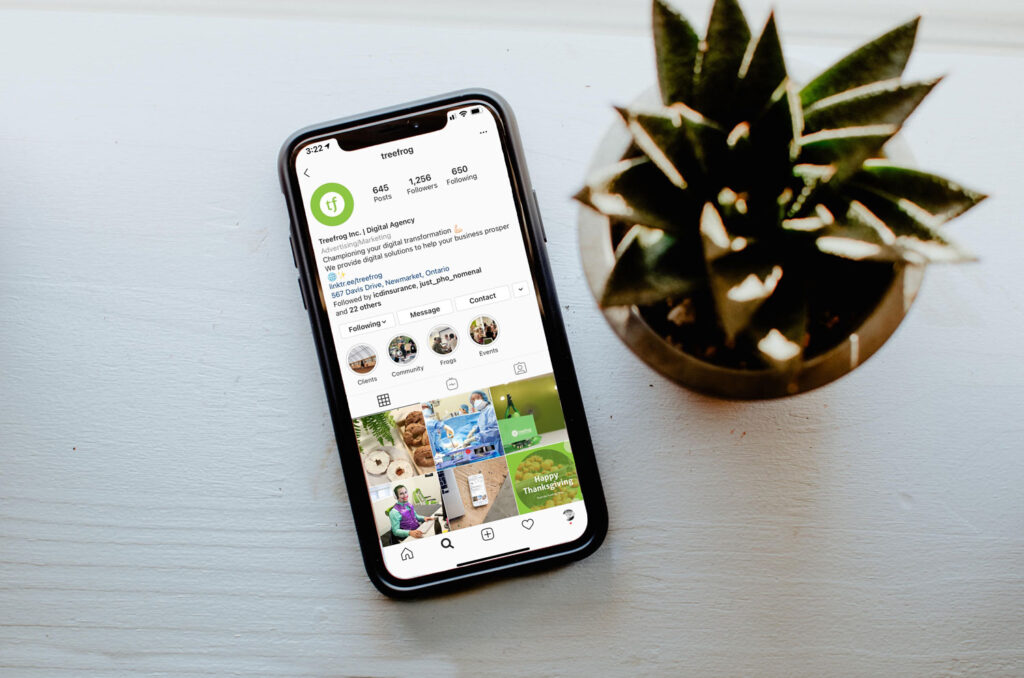
overhead view of iPhone, showing Treefrog's instagram page
Marketing Strategy

6 Factors that Affect the Instagram Algorithm

Are you keeping up to date with the Instagram algorithm? Instagram is continuously evolving, and keeping up with these changes will help you perform better in the platform and create a unique bond with your Instagram community!

Instagram finally broke its silence and put some rumours to rest about how the algorithm actually works. Here are the 6 key factors, as broken down by our social media team at Treefrog:

Let’s learn more about these factors, so you don’t get left behind!

1. How interesting are your posts?

The Instagram algorithm is smarter than you think. The days of trying to trick it are over. Your feed is based on how likely you are to be interested in a particular post, and this is formulated on your actions within the app.

For example, if you are liking, watching, commenting and sharing dog content from your favourite dog influencer, then that type of content will be at the top of your news feed.

To sum it up, the friends that you are interacting with the most, the stories you watch, and even the pictures you are tagged in contribute to your behaviour in the app, which determines who and what pops up in your news feed.

Have you ever wondered why your top stories are always the same accounts? It’s because the same formula applies to Instagram stories as well!

2. Timing is, in fact, everything.

Consider Instagram as the cool kid in class, someone who wants to always be up to date with the latest news and trends. You won’t find them showing you a Halloween post when it’s Christmas season.

Group of friends looking at a smart phone outdoors in the city

That being said, using your Instagram Insights tool will help you see when your followers are the most active on the platform. That’s the time to release your content in order to set yourself up for success. It may seem like a small detail, but it is an essential piece of the Instagram algorithm puzzle.

3. Relationship Goals

Instagram doesn’t want you to miss posts from your friends and family, or favourite brands and celebrities. It values your relationships and doesn’t like one-night stands. Content from accounts you engage with more often will rank higher in the feed. For example, if you search for the same profile often, they will become one of your popular friends, and you will see their content more often.

For a content creator, that means it’s time to roll up your sleeves and get posting. You want your followers to engage with your content and form a relationship.

With this tactic, the more you post, the more followers will see your posts. Keep in mind; quality does trump quantity. The key is to find a happy balance.

We all don’t have the manpower of Gary V. So posting 3 times a week constantly while throwing Instagram Stories into the mix will help you see an increase in your engagement.

4. How frequently are you opening the app?

Take a look at your daily screentime. How many minutes, or should I say hours, have you spent on Instagram today? If you have some self-control and are on the app less often, your news feed will be sorted for what it thinks you will like best!

Close up of a young woman listening to music while riding in a bus

If you are a frequent Instagram visitor, your feed may start to look more chronological. This is because Instagram is trying it’s best to show you the best posts since you’ve last started scrolling.

5. No follower is left behind, well, not really.

Another thing to take into consideration is the number of people you follow. If you follow more people, the app has more content to choose from. This means, you’ll likely see fewer posts from each account, and for many accounts, you may not even see their posts on your feed.

As a business and content creator, the tricky part is to become a part of their Instagram family. That is easier said than done. By the end of this article, you will know how to achieve just that, so keep reading!

6. Usage: Daily or Hourly?

Do you open your Instagram app daily or hourly? It’s pretty straightforward, the more time you spend on the app, the more content you will see, and the deeper Instagram digs into it’s catalog of content to show you posts.

However, if you spend only a few minutes on the app each day, the algorithm will only show you highlights of the day’s posts.

Two restaurant workers take mobile photo of latte

Start Stepping Up Your Instagram Game Today!

Instagram is a great social media platform for visual storytelling. No matter your industry, it’s an incredible online community where businesses can connect with potential customers and grow their business organically. Whether you have a personal account, creator account or business account, Instagram could be the platform for you to grow your online presence.

The key is to educate yourself and stay up to date with trends.

Start applying what you learned from this blog into your Instagram strategy! We’ll help get you started with our free Social Media Calendar, now available for download! Plan out your Instagram content, collaborate with team members, research hashtags and track all your images all in one organized excel sheet.

Download Our Social Calendar Template

"*" indicates required fields

This field is for validation purposes and should be left unchanged.


Don’t Do Social, Be Social!

At Treefrog, we believe that social media strategy is a delicate mix of both art and science. Our social media team combines compelling visuals with data-driven analytics to engage with the audiences of our clients in real time – so that their message gets heard and people are inspired to take action.

If you have any questions, feel free to reach out to the Instagram experts at Treefrog! You can also connect with us via email, on our website or on social media to stay up to date on Instagram tools, tricks and tips!

We can do all the dirty work for you, keep you informed and help your Instagram game reach a new level!

Young woman using a laptop computer.
Marketing Strategy

Why Are There Suddenly Fewer Image & Video Boxes in Google Search Results?

Have you noticed a difference in the way Google is displaying videos and imagery when delivering search results?

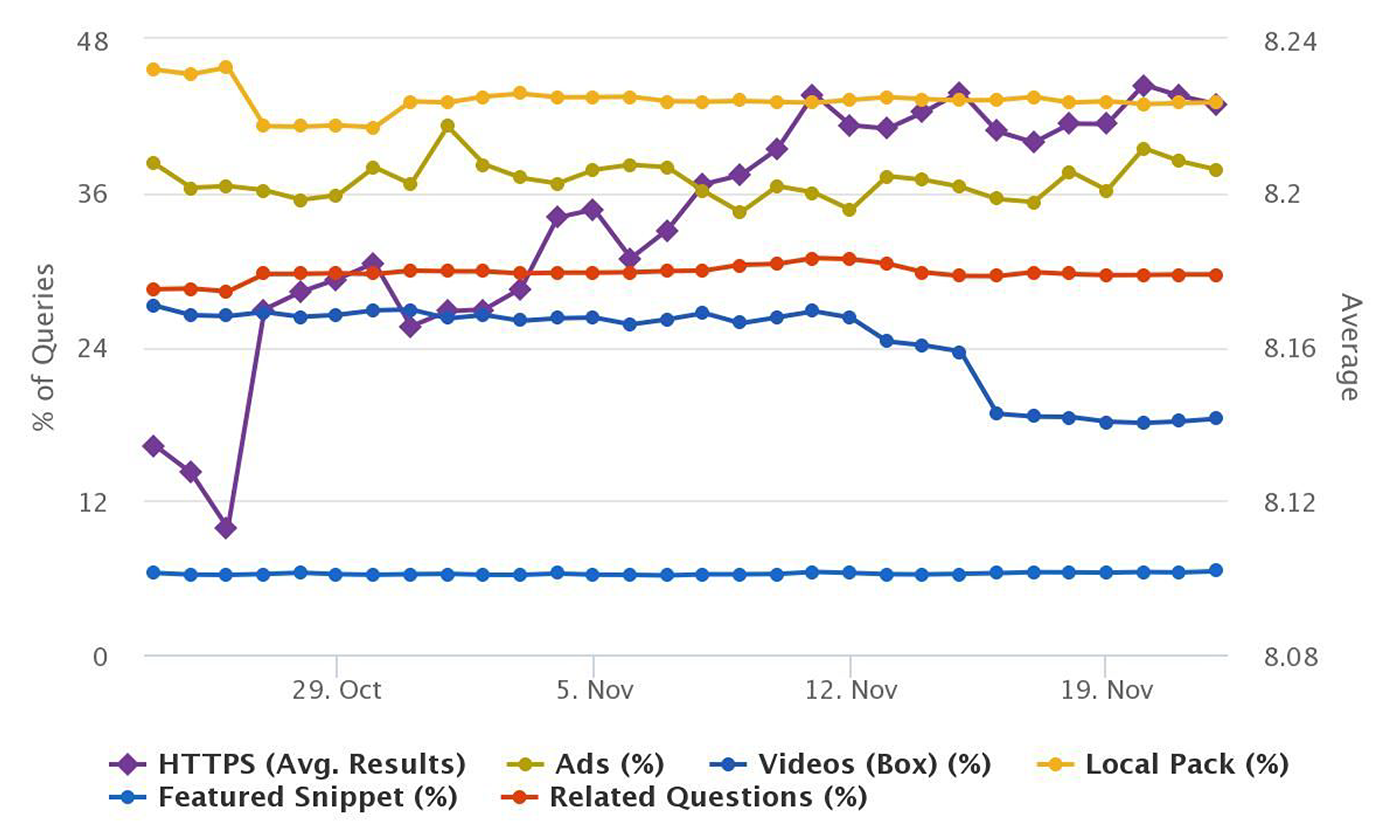
According to Search Engine Land and RankRanger, Google has begun deprioritizing imagery and video search results, lessening the percentage of time that these resources are featured on both mobile and web.

As noted by RankRanger, video carousel results began to drop around November 13th or 14th, 2018 (see dark blue), and have remained consistently low over the past few days.


Source: www.rankranger.com/google-serp-features

At Treefrog, we found this change quite interesting. It also begets the all-important question for us: why are they doing this?

There’s always a data-driven motive behind a decision like this. Here are a few of our theories:

Theory 1: Video and Image Engagement is Declining

Perhaps fewer people are clicking on image and video results.

According to a report by Buffer and BuzzSumo, this is true, at least, for Facebook. In their report, Buffer and BuzzSumo analyzed more than 43 million posts from the top 20,000 brands on Facebook and determined that average engagement per image dropped from 9,370 per post in Q1 2017 to 3,454 per post in Q2 2018.

Although, we haven’t seen any significant data on the types of queries where this is becoming a reality. For example, are images and video being scaled back for informational queries, like “where do I put my brake fluid in a 2011 Hyundai Elantra”? Or are the results affected mostly for commercial-type queries? It’s still rather unclear.

Theory 2: This is a New Strategy to Increase Ad Impressions

Perhaps Google is moving back to having people “dig” for video/image results so it can show more ads when the SERP refreshes.

In other words, instead of showing the thumbnails in universal search, users are expected to click again to specify “Images” or “Videos”. Although this seems uncharacteristic for Google—they’re usually in the habit of lessening clicks rather than adding them.

With recently improved Expanded Text Ads, Google has given us more room to play with as digital marketers (see screenshot) – allowing for extra headlines (^140%) and more descriptive text (^14%). These changes were designed to maximize brand presences on mobile specifically, in response to today’s mobile-first world.

And as our mobile devices have grown in size, we have to ask ourselves, would Google rather replace prime search result real estate with ad space over videos and images? We wouldn’t be at all surprised.

Theory 3: Google Is Refining Video Previews

Perhaps Google is refining the video “preview” feature in SERPs, and they removed the image and video results temporarily to work on them.

We’re not sure if you agree, but the video previews are algorithmically driven at the moment, and not quite ideal. Google is not in the habit of keeping something alive if it isn’t widely adopted. So it could be that they are tinkering with the experience so that people get more use out of the preview feature.

Or, maybe they’re revising it so that it can better determine when to show a video box, when to show an image box, and when to show both (or neither).

Photo sign made by human hands on blurred sunset sky as background

Conclusion

We predict Google will return these results with some enhanced capabilities.

Google is unlikely to remove SERP features completely unless there is indeed a massive decrease in click-throughs from image and video SERP results. It would be strange to do this, given that video and images, especially for informational queries, are still extremely useful.

Another possibility is… maybe they just love messing with people!

Close up of hands playing an electric guitar
Marketing Strategy

5 “Boring” Companies That Are Rocking It On Social Media

Most people tend to think that social media only works for companies in industries that have a target audience of social media-motivated Millennials and Gen X-ers. It’s often believed that only “fun” and “young” industries, like Go Pro or Red Bull, can really rock social media… but this just an assumption.

While it’s true that some industries do lend themselves better to social media, there are some “boring” companies who have dared to show what makes them unique and are connecting with users as a result.

Struggling to figure out how you can make your industry, product, or service seem exciting on social media? Check out how and why these seemingly “boring” companies are truly killing it when it comes to making their content more appealing to their audience.

1. Magna International

Some companies are at a natural disadvantage when trying to leverage their products as visually appealing social media content. However, Magna International, a massive ‘behind-the-scenes’ automotive supplier, has spiced up their Instagram content by choosing to focus on the finished product they helped to make.

Why?

There’s no denying that a cherry red Lykan HyperSports car is going to get much more attention and likes than a photo of a high-pressure vacuum casting. By focusing on the beautiful cars designed using their mechanical parts, Magna’s social content becomes more visually pleasing and yet remains relevant to what they do.

2. MailChimp

Email automation platforms are exciting, right? Uh, not so much.

However, while creating quality visuals for MailChimp might seem like a challenge, the company expertly leverages social media for something other than advertising their software.

How?

MailChimp uses Instagram to show off their lighthearted company culture and to attract young talent to their team. MailChimp uses the image-based platform to meet their hiring and recruitment goals, even though an email marketing social page might not seem glamourous or “worth the follow” to most users.

3. SAS Software

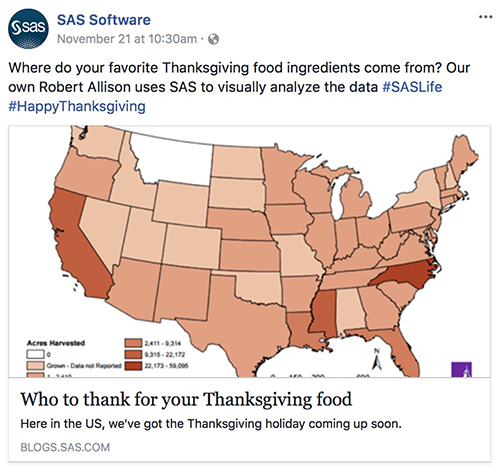
Software analytics company SAS is smart about the content that they post on Facebook. Rather than strictly posting about things related to their niche market, they branch out into other topics that are fun but not entirely off base.

How?

In their Thanksgiving-themed Facebook post (see below), SAS managed to relate the hugely popular American holiday with data analytics; giving a regional breakdown of where popular holiday foods are sourced. A very clever connection!

4. Mr. Clean

Cleaning products probably don’t get you excited, but Mr. Clean is trying to change that by posting hilarious GIFS and memes on Twitter.

Why?

Mr. Clean has chosen to add a “sexy” and humourous flare to their line of cleaning products to attach some fun and youthfulness to their “tough” cleaning image. As a result of their use of funny GIFS and memes, they are able to connect with the next generation of cleaners and have earned nearly 30,000 followers on Twitter to date. Wow!

5. General Electric

General Electric has managed to breathe life into their social media content, not just for their consumer products, but for their business-to-business products as well.

How?

To make their Facebook content more engaging, General Electric avoids tech jargon in favor of staggering facts about the capabilities of their products (which acts as an attention grabber). Compliment this with edgy visuals, and you’ve got a business-to-business company that is finding success on multiple social platforms, not just LinkedIn.

Struggling to figure out how to make your social media content engaging? At Treefrog, our social media team specializes in providing out-of-the-box digital marketing solutions for companies of all types and in all industries. Leave it to us. We’ll take your social media presence from “meh” to “that’s amazing!”.

Request a free quote or give us a call at 905-836-4442 today!

Business man taps on a computer tablet. Various tech related graphics are superimposed.
Marketing Strategy

How To Leverage A Digital Presence Analysis – Part 1

Part One: Using SWOT Analysis to Review Your Digital Presence

Having a digital presence once upon a time meant that you had a website. Today, digital presence covers so much more than just a website; it includes your brand’s targeted keywords, strategized content, analytics about your online visitors, e-commerce and lead conversions, engagement on social media, and beyond. The lines are continually blurring between what defines “marketing”, and what defines “digital marketing”. Soon enough, these will be considered the same thing, because any business who is not considering digital as part of their overall marketing mix is missing the boat.

When it comes to understanding your digital presence, it’s important to first evaluate your goals over time by asking a few questions:

  • How do customers research your product?
  • Where can customers buy your product? 
  • What do people think about when they see your brand?
  • What target market are you trying to reach?
  • How does your digital presence measure up against your competitors?

These are just some of the questions you need to be asking. Once we’ve started to establish a clearer understanding of our digital presence, it’s helpful to conduct an assessment of a “where are we now” overview. This can be effectively done by conducting a tried-and-true method: a SWOT analysis.

Let’s dig in: 

SWOT Digital Presence Analysis

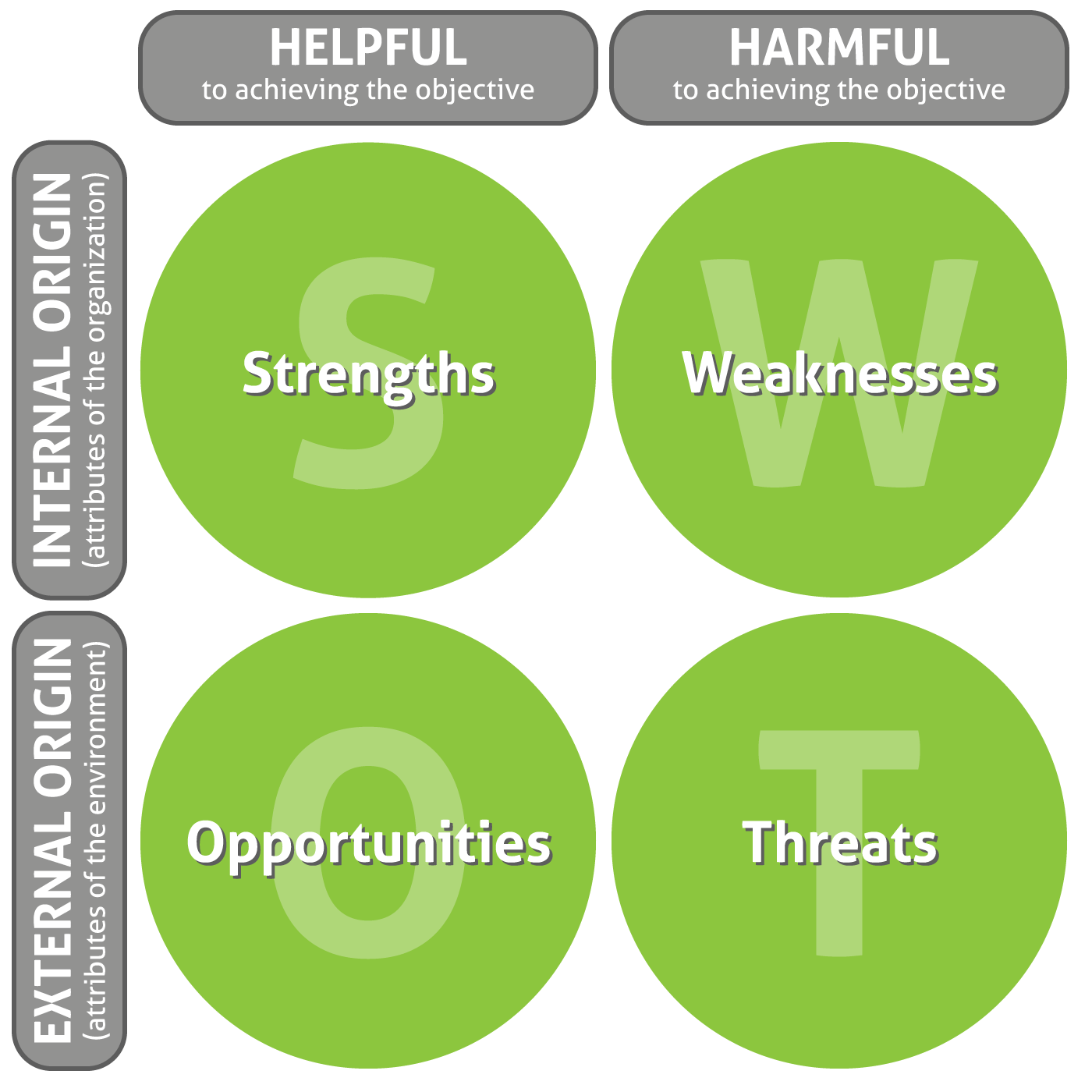
There are a number of ways to approach an assessment of your digital presence, and one insightful approach is to apply SWOT to your digital presence. SWOT stands for:

  • Strengths
  • Weaknesses
  • Opportunities
  • Threats

By leveraging the SWOT analysis method, you’ll be able to take a deeper look into what your brand is doing right online and what your brand is doing wrong. Below we examine some of the items you should consider when analyzing your online presence.

Strengths

What is your digital presence doing well

Odds are your digital presence isn’t completely terrible – unless it simply doesn’t exist or you haven’t touched it in months. To identify your strengths, it’s important to leverage available tools that can help you understand how people are currently using your website, such as Google Analytics. You should also be leveraging your social media account analytics to get a sense of how people perceive your brand. Make an effort to ask both your clients and those who have never interacted with your brand for feedback. It is best to remove your personal bias when examining what works and what doesn’t.

Strength Examples:

  • You have a social media posting schedule and you are engaging your audience.
  • You have a clear budget to make some improvements.
  • You have a marketing resource that can dedicate time to improving your digital presence, whether in-house or a third-party provider.

Weaknesses

What is your digital presence lacking?

Much like your strengths, you’ll be able to gain insight into your weaknesses by reviewing data and asking for external feedback. After years of attachment to your brand, you can become too narrow-minded when it comes to truly understanding the pain points of your presence. By asking outsiders to review your brand for the first time, you’ll have a much clearer understanding of the first impression your company is giving, and also the information that is not being articulated well.

Weakness Examples:

  • Your website is outdated, difficult to navigate, and possibly boring.
  • You can’t remember the last time you added new content to your site. Existing content has poor grammar, broken links, references to events that are years old… in other words, digital cobwebs.
  • You haven’t posted anything on social media in months (or years).
  • You don’t rank well on search engines where you should (yet your competitors do).

Opportunities

What opportunities would have a positive impact on your digital presence?

When it comes to your digital presence, there is always room for improvement. Now that we’ve looked at your weaknesses, we can use them to create a list of opportunities. Companies should never quit looking for new possibilities, even if they think things are just fine. Why be great when you can be innovative and set the bar as high as you can for all other companies in your industry? Not to mention you want to remain top of mind to your customers and be a bright, shining beacon to new prospects. Keep in mind also that digital changes quickly—what works today may just not work tomorrow.

Opportunity Examples:

  • Optimize calls to action on your website will create clear pathways from users to the information they need, and ultimately to you (a.k.a. leads!).
  • Leverage the content you have to connect with clients on social media to build long-lasting relationships and referrals (more leads!).
  • Create new content that answers the questions you hear from clients – let your website and social media be your 24-hour-a-day salesperson (did we mention leads?).
  • Technology is advancing all the time, and there are new channels and features to leverage.

Threats

What factors could threaten the success of your digital presence?

With change comes risk. However, never changing can pose even greater risks. By neglecting your digital presence, you face the threat of becoming irrelevant, stagnant, and forgotten. It is important always to stay ahead of the curve and to take risks and expand capabilities and knowledge to reduce threats.

Threat Examples

  •  Competitors have a better online presence with better brand recognition, more followers, and higher rankings.
  • Your budget for improvement is limited.
  • Your internal team doesn’t have the time or marketing knowledge to build your online presence.
  • You don’t have any metrics to tell you what’s working and what isn’t.

Leveraging SWOT

Once you have identified your company’s strengths, weaknesses, opportunities, and threats, you should then be able to outline appropriate objectives to reach your goals. In other words, you need to know where you are and where you want to go before you can start determining a plan of how to get there.

To learn more about Digital Presence Analysis’ and how to leverage your SWOT findings to achieve your goal, check out ‘Part Two’ of our DPA coverage on Persona’s.

To get your SWOT Analysis started, contact Treefrog Inc. today. By identifying your brand strengths, weaknesses, opportunities, and threats, we’ll help you to identify the areas of your business that require the most attention. Once you have a clear understanding of where you’d like your digital presence to go, we can also help to design and implement a roadmap that will help you to achieve your goals.

Part Two: Turn Your SWOT Findings into Buyer Personas

A SWOT tells you where you stand. Personas tell you who you’re trying to reach. A buyer persona is a fictional profile of the people most likely to buy from you, built from research rather than guesswork. It is not a target market, a job title or a specific real customer. It’s a picture of how a type of buyer thinks and decides.

It helps to think of the buyer journey as a short story:

  • Persona: who the main character is, what they do, and what frustrates or motivates them.
  • Scenario: where the story happens (online, in a store, on a job site) and how they behave there.
  • Goal: what they want from the purchase and what would make it a success.

How to Build a Persona

Start with your best existing customers. Ask who they are, what questions they ask and why they’re a good fit. Then dig into budget, daily routine, where they spend time online and what draws them to a brand. Customer surveys, interviews, your website and social analytics, and industry data are all good sources. When you recruit people for interviews, make it clear it isn’t a sales call and make it easy for them to say yes.

Once your personas are written, use them to decide which channels you’ll use, what language you’ll speak in and what content each persona needs. Review them regularly, because people’s priorities change as their careers and lives do.

Part Three: Build a Content Campaign

With your SWOT and personas in hand, a content campaign ties content, SEO and social media together around one goal. For example, a footwear brand featuring a different shoe each month might plan blog posts, emails, social posts, short videos, keyword optimization, paid ads and print pieces for each launch, with the messaging adjusted to the audience for that specific shoe.

Before you start, check your website: is the existing content still relevant, is the site easy to use, and is each page optimized with proper titles, descriptions and keywords? Create content you own wherever you can, and fill the gaps between your own pieces by sharing useful content from other credible sources. Then track views, engagement and conversions in your analytics so you know what’s working.

Digital Presence Analysis Checklist

  • Run a SWOT analysis of your digital presence.
  • Build buyer personas.
  • Brainstorm campaign ideas.
  • Create a content calendar.
  • Write and optimize the content.
  • Plan how you’ll promote and share it.
  • Publish and share.
  • Measure the results and adjust.

Call us at 905-836-4442 to learn more. 

Scroll to Top