Shopify

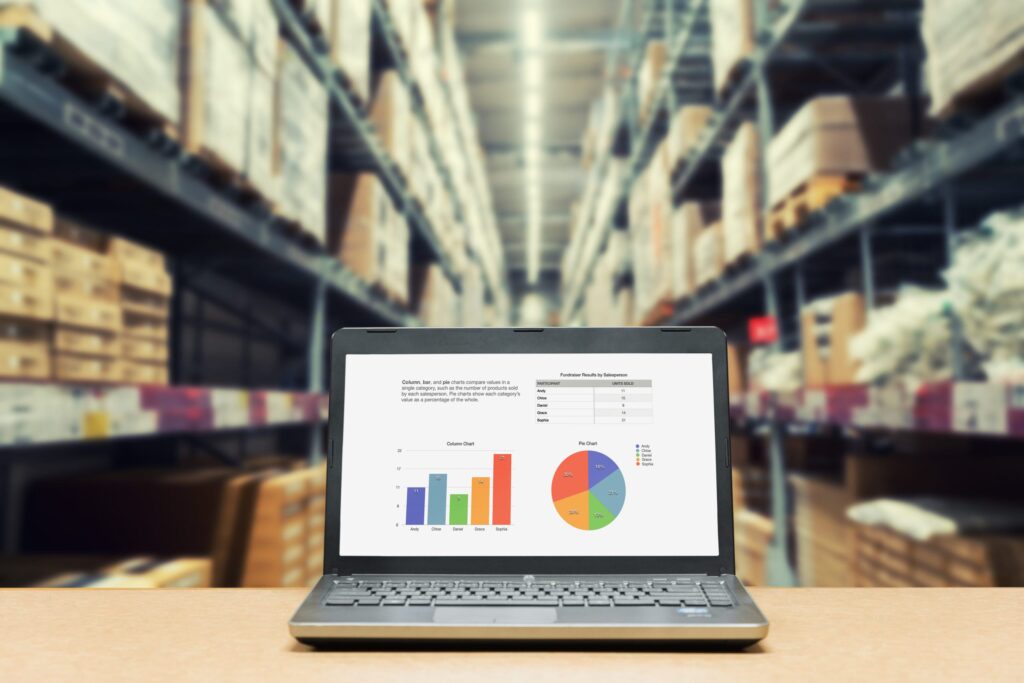
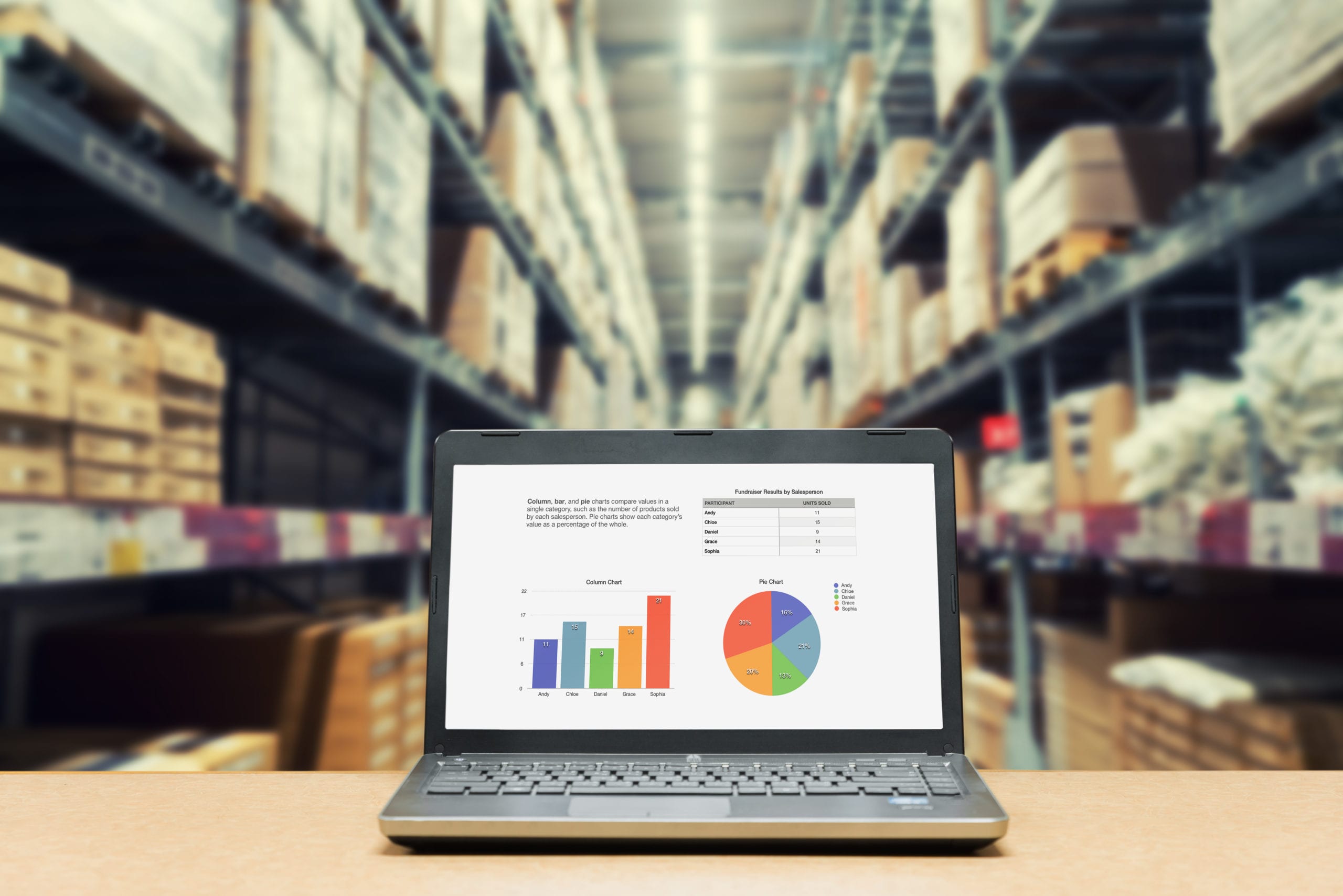
Laptop with analysis of sales onscreen, on a table with blurred warehouse cargo in the background.
ERP-Web Integration

10 Reasons to Integrate your ERP with your Web Platform

One of Treefrog’s special sauces is our experience and skill integrating ERPs with web technologies. We have experience with numerous ERPs (for example, SAP, Epicor, SYSPRO, etc.) and many web platforms (for example, Magento, Shopify, WordPress, etc.).

What benefits to closing the gap between your ERP data and your web platform look like?

Here are some examples;

1. Synchronize Inventory

Inventory levels that are accessible to your customers, along with stocking dates for out of stock products, photos and specifications that are always accurate empowers your customers to plan, to make decisions and to take action whenever and however it suits them, whether you’re selling B2C or B2B.  Combine this information with web analytics can help you gain visibility into what products your customers are browsing, what items they’re purchasing together and what products they’re searching for that you don’t yet have.

2. Synchronize Pricing

Synchronizing your web information with your ERP data means making pricing changes once and only once.  Customer-specific pricing, even on a product-by-product level, becomes much more manageable through customer portals and logins.  Pricing levels can even be time-based for a specific category of customer for the duration of a marketing campaign or seasonal promotion. 

3. Ditch Data Entry 

Are your users manually re-entering web data into your ERP?  Sales Orders? Quotes requests?  Your manual processes, wherever they exist, are completely unnecessary!  They are compensating for the inability of your systems to move data between them.  This makes room for error, is an unproductive use of your people’s time and makes it difficult to capture customer information and track sales analytics.  Every company we work with is finding it harder to fill key positions.  Why not leverage the time of your best people toward high-value activities?  By automating those that don’t require their judgment and intellect, you free up capacity and make their work experience more fulfilling.

4. Know What’s Happened (Revenue analytics) 

Capturing your web data and ERP data in one place means more visibility into monthly, quarterly and annual revenues, quoting activity and browsing activity.  Not only does integration enable more accurate and detailed revenue reports, you can now combine this revenue data with other customer data to help you understand what your customers are thinking and doing.  Now, you can understand what’s working for your customers and what isn’t, enabling to you respond.

5. Know What’s Coming (Revenue Forecasting)

When a customer requests a quote from you today, where does that information go?  More importantly, when a customer sends a quote to their customer for one of your products, do you even know about it?  Our ERP-web integrations bring visibility to the entire sales channel, not just the first link in the chain (your direct customer).  When you know what kind of activity your customers are up to with their customers, you can more reliably anticipate what’s coming for your business.  

6. Notify Customers

If you asked your customers what they’d like to be notified of in real-time what would they say?  In-stock notifications? Shipping notifications?  Price changes? Quote responses? New products?  Notifications can significantly impact the experience of your customers, and with web-ERP integration, you have options.  You can notify them on almost any change in data that you choose, as long as it exists in either your web data or your ERP data. 

7. Help your Customers Help their Customers

In the B2B world, the most impactful difference you can make in the life of your customer is enabling them to positively impact their customers.  What if your B2B customer could take a quote you’ve given them and convert it into a quote for their customer, by adding their own materials, labour and markup?  Simplifying the quoting process for your customers means faster turnaround for their customers.  What if you could directly tie-in to the distribution systems of your customers?

8. Support Growth

Once you’ve automated processes and put key information directly in the hands of your customers, you’ve created an infrastructure that enables growth without creating additional demands on your people – to answer questions, enter orders or pull together data from multiple sources to answer key questions.  

9. Be Flexible

With the integration of your ERP and web data, you create flexibility.  Your have the flexibility to add new online or traditional sales channels, add new product lines, new markets (local or international) or any combination of these three opportunities without sacrificing operational efficiency or overall performance.

10. Be Future Ready

Technology is changing at an increasing pace.  Creating the infrastructure for your front-end and back-end data to work together enables you to leverage other emerging technologies for even more opportunities – with IoT, big data predictive analytics, AI, VR.  Once a central reservoir is in place, capturing all your key data, we can leverage that data to make use of other forms of technology.

11. Leverage your Legacy ERP

ERP upgrades are hard.  Hard on cash flow, hard on your people, and hard on your customers and suppliers.  They are the change that every business dreads, but cannot avoid.  Integrating data between your web and ERP can buy you time by putting the data you already have to work for you…while you plan for the upgrade you know you ultimately need.

If you are unsure where to start with integrating your ERP into your digital platform, we would love to chat. We have helped several organizations identify gaps and solve major issues in your company’s efficiency and growth opportunities. Contact us today. We’d love to chat!

Female owner of a small business packing her product in boxes, and preparing it for delivery.
Digital Marketing, Web Design & Development

Don’t Make These 5 E-commerce Business Mistakes

Owning an e-commerce business can be challenging (to say the least), as many factors that can damage a reputation, a brand, and an end product.

If you wish to be successful online, look like a credible business, and be known worldwide, it is important to avoid making these five e-commerce business mistakes:

1. Under Researching Your Competition

Research, research, and more research is key to starting any business. Understanding the market and studying up on your competition will get you one step closer to owning a successful online brand.

Reading case studies on other e-commerce businesses in your market to see what you may want to do better or differently is a good start. In this process, we suggest that you learn how to conduct a competitive analysis.

What is a competitive analysis?

A competitive analysis is an evaluation of what makes you unique when compared to other competing brands. This process will allow you to more clearly differentiate yourself from the competition and make more informed decisions in your marketing strategy.

How To Conduct A Competitive Analysis

2. Avoiding SEO

Search Engine Optimization helps to generate more organic traffic to your website. Before building an online store, you should understand how search engine optimization works and how to use it to your advantage.

When a website is created with Google and other search engines in mind, it is more successful. In other words, it will have a better chance of being found, viewed, and enjoyed.

The higher your website appears organically on a Google results page, the better and more relevant it has been ranked.

Learning how to use the right keywords for your site is a good start when studying and writing for SEO. At Treefrog, we can help you to improve your SEO with a suite of strategies and best practices. We will also help you create, organize, and optimize your web content so that you will be visible when it matters – when your potential customers are looking for services you provide.

3. Choosing The Wrong Web Platform

When starting a business, it is often confusing which website platform to use. If you use a website platform that fits with your business requirements, it must also be reputable and good quality.

The landing page of a website is the first thing users will see when they enter your site. Some elements a website should have to keep potential customers on your site include:

  • Appealing Design: This will ensure your e-commerce business looks like a professional store, as some web users feel uneasy when shopping online.
  • Easy Navigation
  • Category Pages: If you sell a large variety of products in your e-commerce business, this will organize the items so users can find exactly what they are looking for

At Treefrog, we work in many platforms to ensure our clients receive the best website for their specific needs. Some of these include; WordPress, Shopify, Wix, Magento, Drupal, Leap, and custom systems.

4. Neglecting To Optimize Your Site For Mobile Users

Many people have ditched desktop and laptop computers for their mobile devices, which are easier to handle and use on the go. Therefore, it should be of no surprise that mobile commerce is vastly growing.

A research study conducted through Think with Google states that if people have a negative online experience from a mobile device, they are 62% less likely to purchase from your e-commerce store in the future.

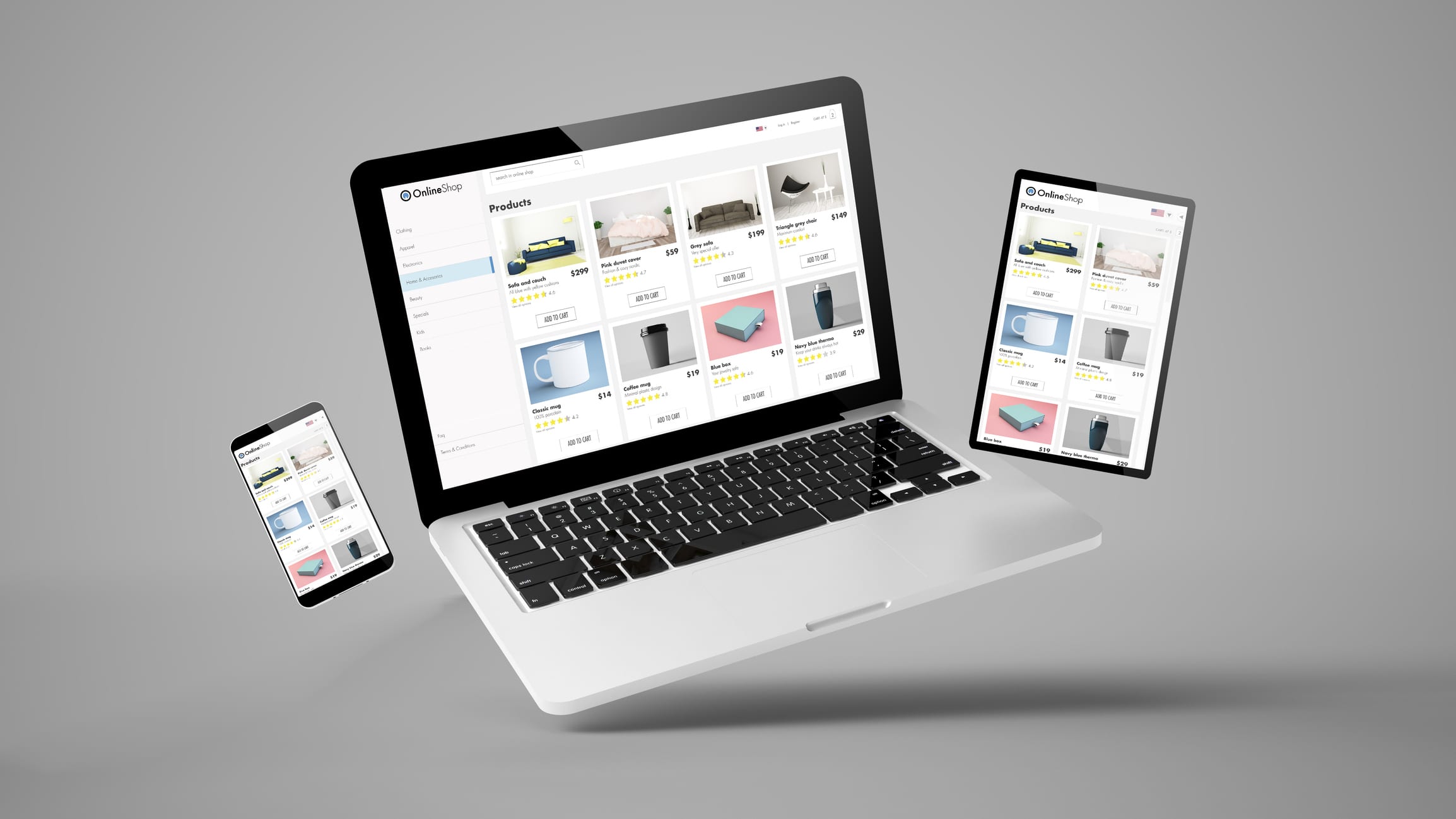
As more people are using their phones or tablets when looking to order furniture, clothing, or the latest gadget, it is essential to make sure your website is responsive (mobile-friendly). Mobile optimization will create a more frictionless buyer’s experience.

5. Settling For Slow

We live in an age where everyone is in a rush; we can now order coffee from our phone, we can choose a self checkout lane at the grocery store, and we expect packages to be shipped in a day.

The quickness of technology may be convenient at times, but we’d argue it has created some very impatient people. This is especially true when it comes to your website.

For example, if someone is waiting more than three seconds for your website’s page to load, it is highly likely they will close the page and look for information elsewhere. Therefore, a slow loading page can profoundly impact a website’s conversion rate, engagement, and brand reputation.

Why is page speed so critical?

It is vital to have a fast-loading page so users can get to where they want to go quickly.

Amazon stated that just one second of leg load time on their website would cause a loss of $1.6 billion in sales each year. That’s billion with a B!

Google has the same issue, stating an addition of 0.5 seconds of loading to its search pages causes traffic to drop by 20%.

The Importance of Page Speed

Connect With Treefrog Inc. Today!

At Treefrog Inc., we understand that starting an e-commerce business is hard and we want to help! Our Frogs are experts in many fields that can be beneficial to your online marketplace.

Visit our website at www.treefrog.ca for more information, or give us a call at 905-836-4442.

Man making an online purchase on his computer tablet
Digital Marketing, Web Application Development, Web Design & Development

Choosing the Right Small Business E-Commerce Solution

Should you integrate an out-of-the-box hosted platform with your website? Or is a customized on-premise solution a better option?

Your website is a contemporary extension of your business but with more important details about you, your employees, and how your products and services help solve your customers’ problems. In a hyperconnected world fuelled by e-commerce, the onus is on business owners and leaders to determine what the best e-commerce solution is to build into their sites.

Whether your company focuses on the business-to-consumer (B2C) or business-to-business (B2B) market (or both), the questions you need to answer are the same: Should you pick a hosted, out-of-the-box software-as-a-service (SaaS) solution? Or go for a more customizable on-premise platform?

Whichever way you choose to go, the solution should be a unified, user-friendly platform that is scalable and which integrates an online store with accounting, point-of-sale, inventory and subscription management tools, and other finance-related functions.

There are, of course, a number of elements you will need to consider, including:

  • If taxes are based on the location of the shipping warehouse or the shipment’s destination
  • Are shipping charges determined by a package’s weight, size, or destination? Or do you charge a flat fee?
  • Inventory control and management
  • Do you need to connect point-of-sale systems from bricks-and-mortar locations?
  • Cross-border customs clearance
  • Fluctuating currency exchange rates
  • Product discounts or seasonal specials
  • Overall reporting and metrics

“Here is a simple but powerful rule: Always give people more than they expect to get.”
– NELSON BOSWELL

Which E-Commerce Platform Is Best for Your Business?

When it comes to picking an e-commerce solution, the good news is there are options aplenty.

For most small businesses on tight budgets, Shopify has emerged as one of the most popular. Treefrog has integrated Shopify’s and other platforms with many of our clients’ sites, but we also provide custom-built e-commerce solutions.

Although Treefrog can integrate your site with any e-commerce platform you want, most of our clients that have selected a hosted solution have chosen one of the following platforms:

  • Shopify. Possibly the most popular and widely used e-commerce and shopping cart platform used by small- and medium-sized businesses today, this Canadian company’s solution features a broad range of options. It is easy to set up, has an intuitive user interface, add-on apps, 24/7 support, and its API integrates seamlessly with enterprise resource planning (ERP), customer relationship management (CRM), and other software.
  • Volusion. This platform features a comprehensive set of shopping tools, round-the-clock support, a user-friendly interface, extensive security features, and a mobile-responsive storefront. Volusion integrates seamlessly with Amazon and eBay, and through its social store builder tool, you can list your products on Facebook. It’s scalable, but the basic version sets a limit on the number of monthly transactions by restricting bandwidth, meaning service charges may apply if you exceed it.
  • Bigcommerce. This feature-rich solution includes many customizable templates, is easy to use and has an intuitive user interface, 24/7 support, no transaction fees, and has smooth integration with several e-newsletter services and Alibaba. It too is mobile-responsive and provides in-depth metrics and reporting.
  • Magento CE. An open source e-commerce platform that is available in four variations, the Magento Community Edition is an out-of-the-box solution that you must host on your server, or with its partnering company, Zoey. It includes bundled features including smooth integration with Google Analytics, in-depth sales reporting, and many third-party integration options but it is not PCI-compliant. Existing small business users provide community-based support.

Additional Things to Consider for Your Website

Once you’ve determined which e-commerce solution suits your business best, and taking a 360-degree view of your company and its online presence, there are other considerations to weigh:

  • A payment gateway. If you’re going to establish an online e-commerce platform, you will also need a payment gateway to facilitate online credit and debit card transactions. A payment gateway is an e-commerce enabler. It’s vital, and it provides a secure link between your site and the banking system. In essence, it provides a merchant-centric, single, automated portal to manage online financial transactions cost-effectively, quickly, and easily. It also makes it easy and flexible for your customers to buy from you online.
  • Readable, compelling content. If “content is king” then context must be queen. The importance of producing content online regularly cannot be denied, but to be regarded as a thought leader in your industry, your content needs to be persuasive, well-written, and it must provide value to your intended audience, or they will pay it no mind.
  • Search engine optimization (SEO). A widely used methodology to drive website traffic organically through the use of high-quality content, SEO maximizes your site’s content to rank well in search engines like Google, Bing, and Yahoo!.
  • High-quality images and design. There is no shortage of cheap, do-it-yourself (DIY) website builders available online promising anyone can create a professional-looking site in mere minutes for free or for only a few bucks. Lest we forget, you most often get what you pay for in this world. A well-designed website with high-quality images lends credibility to your business. A less-than-stellar online presence will hurt your business, not help it.
  • Using social media tools. More than 2 billion people use social media networks like Facebook, Twitter, YouTube, and LinkedIn on a daily basis. Since sales success requires cultivating relationships, your website should incorporate the use of social media tools, and social media marketing should be a part of your overall marketing efforts. Social tools will also help drive traffic to your website.

Do you have questions about e-commerce platforms and which one is best for your business?  Let’s talk. We can help you determine whether or not you need a custom-built solution or an off-the-shelf platform. Our expert programming team have experience customizing and integrating several e-commerce solutions with our clients’ websites.

Scroll to Top