
ERP-Web Integration

epicor vs SAP
ERP-Web Integration

Epicor Integration vs SAP Integration: Which is the Better ERP Software for Your Business

Enterprise resource planning (ERP) software is critical for businesses to compete in today’s competitive business environment. With the industry becoming more competitive, it can be hard to decide which ERP software is the best for your business.

We’ll be putting Epicor Integration and SAP Integration up against each other to see which one is the better software for your business. Take a read-through of the pros and cons of both software to decide which one is right for your company.

Software Overview

Epicor Integration

Epicor is a premier enterprise system ideal for manufacturers, distributors, and professional service providers. Epicor is tailored for industry-specific functions and has a full range of services, including supply chain management, accounting, and invoices paid and received. Ideal for mid-market businesses, Epicor is your unified, integrated software solution.

SAP Integration

SAP ERP business software has four decades of experience. Its intelligent technologies and leadership in business processes make it the perfect choice for any business. SAP is not just for large companies. Many small and midsize companies also use this software.

Functionality

Though both of these platforms have various functionalities, Epicor beats SAP when it comes to certain functionalities. Epicor has shown more financial, HR, inventory, purchasing and quality management functionality than the industry average and SAP Business One platform. This makes Epicor the superior platform for functionality, though that doesn’t mean SAP won’t work for you. SAP only falls short for manufacturers and distributors.

Simplicity

Both systems will require training and effort on your part, but it is well worth it for the benefits your business will receive from integrating one of these platforms. Epicor is seen as the more straightforward platform to learn, as it doesn’t require the in-depth coding that SAP does, and you can often achieve your goals with minor customization. SAP is a great platform. Still, it does require customization and coding that make it less user-friendly.

Ownership Cost

Ownership cost depends on the amount of customization and coding you will need. Since SAP requires a lot of customization, it is not the cheapest program to use. This also makes it not ideal for small businesses. Epicor, on the other hand, is more cost-effective due to its functionality and easy-to-use platform. Making Epicor ideal for small to midsize companies looking to expand their business cost-effectively.

Conclusion

Both platforms are powerhouses in the ERP industry, and both have pros and cons, so before you choose one, make sure you do your research. Whatever platform you choose for your business, you will notice a massive difference in your business and growth.

Are you Ready?

Are you ready to take your business to the next level? Treefrog has helped a variety of companies integrate their online store with their ERP. Let our team of experts help your business. We are here, guiding you through every step of the way.

Give us a call at 647-370-4602; our team of experts is ready to help!

ERP-Web Integration

How to Enhance Online Sales with Product Configurators

Nowadays, consumers are looking for more and more customization in their online shopping experiences. Businesses not only need to offer great shipping and return policies, but customer service and customization are key. That’s why adding product configurators to your website is critical to helping you grow your online sales.

Product configurators provide customers with the ability to customize their products at the touch of their fingertips. You are helping them to purchase a product exactly how they want it. What exactly are the benefits of having a product configurator on your website, and how does it help you increase your revenue. We’ll be answering those questions and more in this article.

What are Product Configurators

A product configurator is an interactive software that allows the customer to choose certain product features defined by the business. The product configurator then validates it and enables the customer to move onto the next step.

A product configurator takes a collection of parameters, characteristics, and rules determined by the business. Though it seems simple, it’s a complex software full of regulations that the product configurator will use to validate whether this selection is allowed before allowing the customer to put their choice into the cart. This form of customization allows the user to purchase the item exactly how they want it, but it also helps your business in many different ways.

Benefits of Product Configurators

Reduce Lead Times

When you allow customers to build a product themselves, it will be unique and designed exactly how they want. This will help move the customer through the buyer’s journey faster and allow your sales reps to sell quicker. It will help your sales representatives have all the information they need to send out quotes faster and send orders to the manufacturing team.

Increased Customer Satisfaction

Providing customers with a product designed precisely to their liking automatically helps to increase customer satisfaction. Due to the simplicity and the ability to have a custom product, it increases customer retention and satisfaction. Customers are more likely to return to a business that they had a good experience with versus one they didn’t.

Ensures Correct Orders

How many times have you purchased something, and it’s been incorrect or missing key components? Probably too many times to count. When you have a product configurator, it helps ensure that orders are fulfilled correctly and on time because the invoice is directly sent to the manufacturing team. This will also help to increase customer satisfaction instantly.

Are you Ready?

Are you ready to take your business to the next level? Treefrog has a roadmap and team to get you there. Through our process, we will learn about your goals to help build a time-based, realistic, results-oriented system complete with training and deployment for your team. We are here, guiding you through every step of the way. Our process works with you – to make you and your business better, smarter, and faster.

Give us a call at 905-836-4442; our team of experts is ready to help!

ERP-Web Integration

Amplify Your Online Store with Your ERP

When it comes to online stores, you can have many administrative tasks that can leave you distracted, which can subtract from the customer experience and have less time to focus on the store itself. That’s where an ERP (Enterprise Resource Planning) integration can come in handy. Having your ERP integrated with your online store can take those tasks and remove the need for non-value-added tasks such as entering orders, invoicing, sending to fulfillment and much larger time-consuming tasks, such as vendor orders and overall doing the work for you. Thus, allowing your staff and yourself to refocus on protecting and growing revenue.

Liberating your staff from non-valuable work will allow them to serve your existing customers better and acquire new customers. Aligning your business data is extremely important, especially when creating a positive experience for your customers. This is key for customer retention and acquisition. So how exactly does connecting your ERP benefit your online store, and what does it mean for your business? We’ll answer all of these questions and more in this article.[vc_single_image image=”3984″ img_size=”full” alignment=”center”]

ERP Management Made Easy

Running a business is complex; with all the various moving parts and a constantly changing environment, it can be hard to keep track of it all. This evolving complexity is amplified by the need to digitize your business. That’s where your ERP integration comes in. When your ERP is adequately integrated with your online store, it can help simplify the management of your business, increase visibility into your customers’ buying habits, and create a tailored experience for the customer.

With a well-integrated system, you can say goodbye to delayed or incorrect billing, manual data entry errors, and administrative headaches. It can help with correct billing, shipping and inventory and helps to ensure management processes are maintained in all components of your business. Your integrated platform will allow you and your team to focus on the value-added tasks that will protect and grow the business. Thus making it easy to manage your business and allow you to focus on growing it.

Improved Online Revenue Tracking

When you integrate your ERP with your online store, it can help you have more detailed, up-to-date, and accurate revenue tracking. No longer will you need to sit and pour over months of revenue data. Instead, your ERP will continuously update in near-real-time to help provide insight into your monthly, quarterly and annual revenues. Thus, helping your business become more agile, efficient, and ready for today’s business environment challenges.

Shipping and Availability

Have you ever ordered something you desperately needed, checked out, only to receive an email later that day that it is on backorder and won’t be delivered for 3-6 months? Maybe you have, or perhaps you’re purchasing from vendors that have integrated their inventory with their ERP systems.

When it comes to shipping and availability, your ERP integration is key to providing the best possible experience for your customers and is with you through all the stages. For instance, when customers are shopping, and inventory is selling quickly, the ERP will let the customer know when supply is low or empty. When it comes time for the customer to purchase, it will determine the warehouse to ship the product and provide the customer with an accurate delivery time. When your ERP is correctly integrated with your online store, the benefits are endless. Still, one of the most significant benefits for your customers (and your business) is accurate shipping and availability estimates. Providing this to customers increases their positive experience, increasing their chances of purchasing from your online store again.

Overall, when businesses integrate their ERP with their online store, they create a tailored experience for each customer. This also allows for better visibility and the added benefits of automated data entry— allowing employees to proactively serve customers, enhancing their expertise, further limiting the need for employee input.

Learn More Today!

Are you ready to take your business to the next level? Treefrog has a roadmap and team to get you there. Through our process, we will learn about your goals to help build a system that works for your business. Our process works with you – to make you and your business better, smarter, and faster.

Give us a call at 905-836-4442; our team of experts is ready to help!

ERP
ERP-Web Integration

Enhance Customer Experience with an ERP Integration

Customers expect the same experience, whether they’re shopping at home or in person. Customers expect consistent, relevant and personalized engagements. Unfortunately, if businesses are not equipped, they’ll be missing out on sales opportunities to their competitors. Providing an outstanding online experience is the only way companies can compete with big e-commerce giants such as Amazon.

That’s why enhancing your customer experience through your ERP is critical. For businesses to be competitive and provide a similar experience as Amazon, they need to provide an easy and seamless customer experience. Having an ERP can directly help you enhance your customer’s experience and allow you to increase revenue. Here are a few ways that having an ERP can help with customer retention.

ERP

“It allows for more accuracy, and it saves on administrative time, so allows companies to reach a greater customer base.”

Centralized Data in One Place

An ERP system is there to help support operations and reduce manual work. It pulls together critical data around financials, customers, orders, inventory and more. An ERP must have accurate, detailed information on every aspect of your business. For example, should inventory levels be accessible to customers, along with stocking dates for out-of-stock products, photos, and consistently accurate specifications? The ERP system also logs all transactions, so customers can look through their order history to re-order those products without potentially ordering the wrong items.

ERP technology allows organizations to collect massive amounts of data that they can use to improve the customer experience, thus allowing for a seamless customer experience. Thus empowering your customers to plan, make decisions and take action on their schedule, relieving some of the pressure on your sales and service teams.

Integrating ERP Software with a CRM

Linking your ERP with a CRM (Customer Relationship Management Tool) can enhance your insight into the customer experience and buying patterns. It can track the progress through the buyer’s journey and display contact information, order history, and tickets. CRM tools play a huge role when it comes to enhancing customer experiences. When linked with an ERP,  it can help you gain visibility into what products your customers are browsing, what items they’re purchasing together and what products they’re searching for that you don’t yet have. 

Better Together: Alone, a CRM cannot give you this much data but, when integrated with your ERP, the data becomes unstoppable. Knowing a client’s past behaviour or preferences will help to guide them through the buyer’s journey. This leads to increased sales, catered product suggestions, and enhanced customer experience, building longevity and loyalty in your customer base.

Maximize Customer Engagement

If asked about what they would like to be notified of in real-time, what customers say? In-stock notifications? Shipping notifications? Price changes? Quote responses? New products? Personalized messages can significantly impact the experience of your customers. ERP systems provide detailed data that can empower businesses to design customer acquisition and retention experiences online.

It allows companies to offer personalized marketing materials, such as product suggestions, customer-specific promo codes and cart abandonment emails. Organizations can notify customers of almost any change in data they choose, as long as it exists in either the ERP data. Overall, this will increase customer conversion and retention by always putting the business at the forefront of the customer’s mind. Thus, helping to create brand awareness and move the customer through the buyer’s journey.

Are you Ready?

Are you ready to take your business to the next level? Treefrog has a roadmap and team to get you there. Through our process, we will learn about your goals to help build a time-based, realistic, results-oriented system complete with training and deployment for your team. We are here, guiding you through every step of the way. Our process works with you – to make you and your business better, smarter, and faster.

Give us a call at 905-836-4442; our team of experts is ready to help!

ERP-Web Integration

How to Plan for an ERP – Web Integration

When looking to enhance or adopt an ERP system, merely telling employees and expecting adoption can be narrowly focused. For someone in the organization, possibly an entire department, their day-to-day activities will change. There will be changes in business processes, job responsibilities, customer interactions; managing this change cannot be left to chance.

Having a plan can help your team slowly adapt to these changes and allow for a seamless transition. It can also help to ease the anxieties departments may be feeling. Coming up with a plan can be difficult, and that is why we are sharing four tips on how to internally plan for an ERP – Web integration.

“Change has a bad reputation in our society. But it isn’t all bad – not by any means. In fact, Change is necessary in life – to keep us moving, to keep us growing, to keep us interested. Imagine life without Change. It will be static, boring, dull.”
– Dr. Dennis O’Grady

1. Manage from the Top Down

Before embarking on any digital transformation project with your ERP system, ensure every person on your leadership team buys into it. This will help position the project internally with leadership stakeholders and align internal communication throughout the organization, creating excitement and kick-off for positive adoption.

2. Identify Internal Project Champions

The earlier you share the change, the more time people have to adapt. It’s essential to have some positive project champions to start spreading the word and creating excitement for the launch. Your champions are not always going to be on the project management team; however, they can be connected or are communication leaders in the organization.

3. Start Early with End User Benefits

Sharing the value and end-user benefits early in the project will accelerate the adoption on launch day. You can do this by hosting short informational sessions at weekly huddles or monthly town halls. These small actions are vital to the integration process and result in higher launch adoption.

4. Build Training into the Schedule

Training the end user might seem like common sense; all too often, this critical stage is either assumed or rushed. When you plan your training sessions, identify the end-users strengths to maximize the sessions, provide reinforcement and ensure they understand, you are setting the stage for success. If possible, hands-on training in a sandbox environment is ideal and reduces anxiety. This will also build confidence in the end-users for when the system goes live.

Integrate Your ERP System into Your Website

Your ERP and digital properties are not a set and forget post-launch. It is beneficial to schedule regular workshops and sessions with customers and employees to consider how the system is working and what could use improvement or increase productivity.

When considering an ERP-integration, get buy-in from every person on the leadership team, find early champions to spread the word, build internal excitement, share end users benefits early, and plan to train your team (not just once).

At Treefrog, we pride ourselves on helping organizations launch ERP-to-Web integrations, walking you through the entire process while applying these four principles to your organization. Let’s talk, human-to-human, we would love to share how.

Two businessmen looking at a digital tablet
ERP-Web Integration

Everything You Need to Know About ERP to Web Integration

Do you wish that your website provided a more seamless experience for your customers? If so, you may benefit from integrating your ERP with your website. While the process may seem complex, the reward can be transformative for your business.

Below we will help you to understand what ERP to Web integration is, why it is vital for your organization to close the gap and how doing so can help you increase revenue and customer retention for your business.

Two businessmen looking at a digital tablet

How does ERP to web integration work?

The act of integrating an ERP to a web platform is a complex process that can result in many benefits for organizations and their customers. Essentially we take the data from your two systems – your ERP and your website – and combine it into a single reservoir of data. Once the data is combined, we can sync the data back to your two systems, so your back-end is now consistent with your front-end. We can also use this new, single source of data to reduce manual work, enhance analysis and provide a significantly improved experience for your customers.

Which ERP systems can Treefrog work with?

By following a well-proven process, Treefrog is agnostic with the platforms that our development team can develop against; this applies to both an ERP as well as the web platform or application it will integrate with. In many cases, we have technology and modules already built that allow us to deploy quicker on systems.

Group of businessperson. Graphics representing business concepts

How does the ERP to web integration process work?

While each project has elements of uniqueness, Treefrog has a proven process that has allowed you to see success after every engagement.

Step 1: Scope

The first thing we do is scope your project. We create a detailed overview of what data needs to be integrated and, most importantly, why. We want absolute clarity around what you are hoping to accomplish through integration. The final document is a piece of intellectual property that is yours to keep.

Step 2: Platform Review

Once we understand your goals, we need to understand your platforms. What systems are currently holding the data we need to combine? What is the best way for us to move that data into and out of the data reservoir?

Step 3: Data Analysis

Next, we have to look at your data to understand what format it is in and the level of completeness and accuracy of that data. Some data probably needs to be cleaned up before it can be useful in the data reservoir.

Step 4: Solution Design

Lastly, we design the solution. Maybe it’s a beautiful price list, a customized quote request or a stunning customer portal. Whatever it is you’re after, this is where we get our designers involved to ensure your solution is not only functional but visually inspiring.

How can ERP to web integration help my business?

ERP to web integration benefits multiple aspects of a business. More specifically, it benefits your customer, which benefits your business. An ERP to web integration helps customers through the buyer’s journey. It helps them to gain the ability to see invoices and order status, as well as place new orders and modify account information. This improved relationship will drive up recurring revenue, improve client satisfaction and retention, decrease operational costs, and improve revenue forecasting and financial stability.

Close-up Of A Businessperson's Hand Analyzing Bill On Digital Tablet Over Desk

Can my old ERP system still be integrated with my website?

Yes. There are many businesses that are working off older ERP technology – maybe legacy systems with legacy databases and limited integration capabilities. We believe you can experience the best of what the web can offer your customers while still using an older ERP. Upgrading your ERP is an option that is time-consuming and expensive. Integrating, using the team at Treefrog, will provide you access to every benefit discussed while staying on the current version of your ERP.

If my website is outdated, can it still be integrated with my ERP?

While an old ERP system is still collecting a lot of data when you process a transaction, the age of your ERP system doesn’t make that data unusable; it just makes it difficult to get at. However, if your website is outdated, there’s a good chance it’s not collecting much data right now, and there’s a good chance it’s not very user-friendly. Both of these are prerequisites to success, and ERP-Web integration being a value-added project for you.

How much would an ERP to web integration cost?

Our process allows organizations to phase in large projects over a longer period. Through our scoping process, we identify the steps required for every module, including options to start small and grow the project. Once the requirements are pieced together, we sit down with our client to match the expected returns and benefits to the project. While there is still a cost incurred, it is much lower when priced in phases and will provide a return to help fund the remaining components of the integration strategy.

ERP Experts at Treefrog

If you still have more questions about ERP to web integration or want to know where to start with integrating your ERP into your digital platform, we would love to chat. We have helped several organizations identify gaps and solve major issues in your company’s efficiency and growth opportunities.

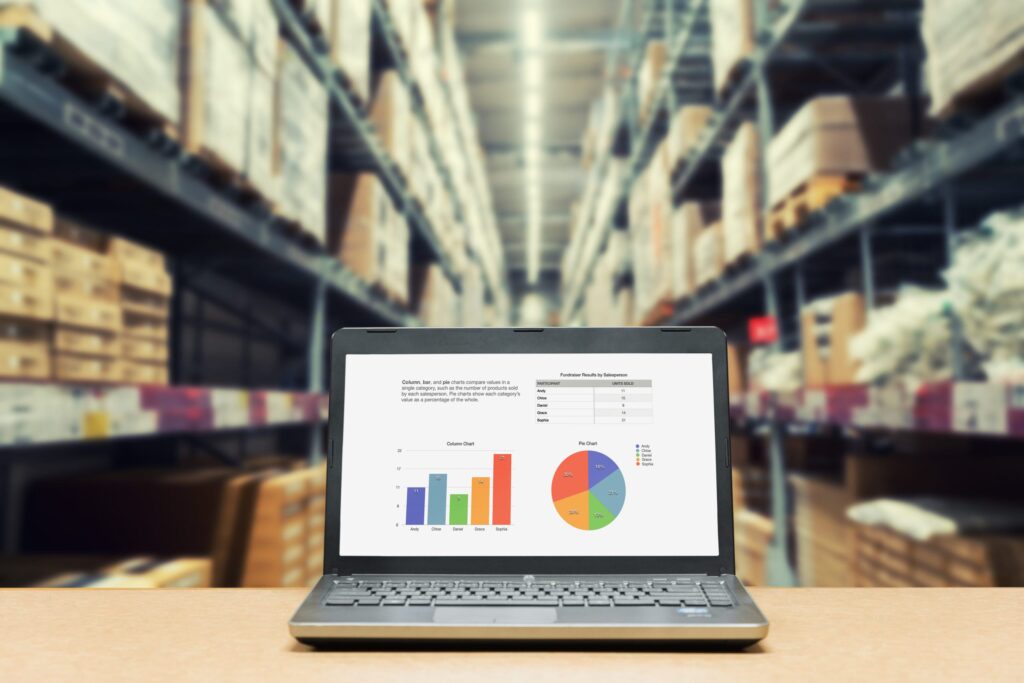
Laptop with analysis of sales onscreen, on a table with blurred warehouse cargo in the background.
ERP-Web Integration

10 Reasons to Integrate your ERP with your Web Platform

One of Treefrog’s special sauces is our experience and skill integrating ERPs with web technologies. We have experience with numerous ERPs (for example, SAP, Epicor, SYSPRO, etc.) and many web platforms (for example, Magento, Shopify, WordPress, etc.).

What benefits to closing the gap between your ERP data and your web platform look like?

Here are some examples;

1. Synchronize Inventory

Inventory levels that are accessible to your customers, along with stocking dates for out of stock products, photos and specifications that are always accurate empowers your customers to plan, to make decisions and to take action whenever and however it suits them, whether you’re selling B2C or B2B.  Combine this information with web analytics can help you gain visibility into what products your customers are browsing, what items they’re purchasing together and what products they’re searching for that you don’t yet have.

2. Synchronize Pricing

Synchronizing your web information with your ERP data means making pricing changes once and only once.  Customer-specific pricing, even on a product-by-product level, becomes much more manageable through customer portals and logins.  Pricing levels can even be time-based for a specific category of customer for the duration of a marketing campaign or seasonal promotion. 

3. Ditch Data Entry 

Are your users manually re-entering web data into your ERP?  Sales Orders? Quotes requests?  Your manual processes, wherever they exist, are completely unnecessary!  They are compensating for the inability of your systems to move data between them.  This makes room for error, is an unproductive use of your people’s time and makes it difficult to capture customer information and track sales analytics.  Every company we work with is finding it harder to fill key positions.  Why not leverage the time of your best people toward high-value activities?  By automating those that don’t require their judgment and intellect, you free up capacity and make their work experience more fulfilling.

4. Know What’s Happened (Revenue analytics) 

Capturing your web data and ERP data in one place means more visibility into monthly, quarterly and annual revenues, quoting activity and browsing activity.  Not only does integration enable more accurate and detailed revenue reports, you can now combine this revenue data with other customer data to help you understand what your customers are thinking and doing.  Now, you can understand what’s working for your customers and what isn’t, enabling to you respond.

5. Know What’s Coming (Revenue Forecasting)

When a customer requests a quote from you today, where does that information go?  More importantly, when a customer sends a quote to their customer for one of your products, do you even know about it?  Our ERP-web integrations bring visibility to the entire sales channel, not just the first link in the chain (your direct customer).  When you know what kind of activity your customers are up to with their customers, you can more reliably anticipate what’s coming for your business.  

6. Notify Customers

If you asked your customers what they’d like to be notified of in real-time what would they say?  In-stock notifications? Shipping notifications?  Price changes? Quote responses? New products?  Notifications can significantly impact the experience of your customers, and with web-ERP integration, you have options.  You can notify them on almost any change in data that you choose, as long as it exists in either your web data or your ERP data. 

7. Help your Customers Help their Customers

In the B2B world, the most impactful difference you can make in the life of your customer is enabling them to positively impact their customers.  What if your B2B customer could take a quote you’ve given them and convert it into a quote for their customer, by adding their own materials, labour and markup?  Simplifying the quoting process for your customers means faster turnaround for their customers.  What if you could directly tie-in to the distribution systems of your customers?

8. Support Growth

Once you’ve automated processes and put key information directly in the hands of your customers, you’ve created an infrastructure that enables growth without creating additional demands on your people – to answer questions, enter orders or pull together data from multiple sources to answer key questions.  

9. Be Flexible

With the integration of your ERP and web data, you create flexibility.  Your have the flexibility to add new online or traditional sales channels, add new product lines, new markets (local or international) or any combination of these three opportunities without sacrificing operational efficiency or overall performance.

10. Be Future Ready

Technology is changing at an increasing pace.  Creating the infrastructure for your front-end and back-end data to work together enables you to leverage other emerging technologies for even more opportunities – with IoT, big data predictive analytics, AI, VR.  Once a central reservoir is in place, capturing all your key data, we can leverage that data to make use of other forms of technology.

11. Leverage your Legacy ERP

ERP upgrades are hard.  Hard on cash flow, hard on your people, and hard on your customers and suppliers.  They are the change that every business dreads, but cannot avoid.  Integrating data between your web and ERP can buy you time by putting the data you already have to work for you…while you plan for the upgrade you know you ultimately need.

If you are unsure where to start with integrating your ERP into your digital platform, we would love to chat. We have helped several organizations identify gaps and solve major issues in your company’s efficiency and growth opportunities. Contact us today. We’d love to chat!

Scroll to Top