Branding & Identity

branding
Brand Strategy

Brand Identity: More Than Skin-Deep

Brand Identity Design

It’s tempting to think that (successful) brands are only skin-deep. After all, aren’t colours and logos important? Visual branding is essential, but the ultimate goal is to establish a strong brand identity, combining both Branding Elements (logos, colours, shapes, imagery) and a Brand Persona (values, ethos, personality and traits).

While most brands have a handle on basic branding, few brands can claim they have an ‘identity without a Brand Persona. A Brand Persona is what ‘humanizes’ a brand, making it primed to interact with us on a deeper, intellectual and emotional level. Just like it sounds, a Brand Persona is not dissimilar to a person, having a unique ideology, character traits, values, ethos and culture. These aspects make it possible to develop a more profound emotional experience and build a relationship – potentially lasting a lifetime.

As humans, our lives and our relationships are incredibly diverse and complex. At a basic level, though, Maslov described that all humans have the exact fundamental physical and emotional needs to fill. These needs are “physiological,” “safety,” “belonging,” “esteem,” and “self-actualization.” They directly influence our behaviours, manifesting as desires, impulses and decisions. We never make a decision that is not linked in some way back to one of these core needs. We might not always be aware of this, but brands knowingly work hard to leverage this fact and use our emotions – as a gateway to selling us things. Targeting certain desired emotions has long been the specialty of good branding. It was initially used to reduce our anxiety about making buying decisions (thus leading to more significant profit for those companies who branded their products). Branding today still offers to show us what feelings or experiences we can expect: to feel happy, imaginative, loved, sexy, in control, witty, healthy, secure, prepared, strong, etc.

Brand Personas emerged to take things a step further by looking to our rational brain and psychology. They are designed to reach our deepest intellectual thoughts, principles, judgements and beliefs. To illustrate this, consider for a moment that on an interpersonal level, we will rarely develop a connection with people that we find nothing in common with; yet as soon as we discover common ground on something, we feel closer to them and take a greater interest in them.

This concept underpins the development of a Brand “Tribe”; defined as a group of people who align themselves with a Brand Identity as a true reflection
of themselves. Psychologically speaking, Brand Identities are fully developed in mind, just like people. These brands exhibit a detailed ideology and philosophy – they share a world perspective, outlining their values, speaking in a unique voice and showing off their personality. This level of complexity naturally mirrors the complexities we hold within ourselves, both attracting us and deepening our connection.

This is both how and why strong Brand Identities shape our lives, our experiences and eventually come to receive mass-market traction across the world. Far from being a negative situation, the inherent potential for brand identities to positively influence people’s lives and bring commonalities (bridging divides) gives designers around the world their hope and challenge for the future.

Branding Experts

Are you ready to strengthen your brand and build your business? At Treefrog, we can help you develop your brand strategy. Whether it’s logo design, logo maturation, corporate identity or graphic design services, we’re your business branding experts.

Give us a call at 905-836-4442; our team of branding experts are ready to help!

Brand Strategy

A Brand Is Just a Logo, Right? Think Again

So you think you know Branding?

Today, it’s common to think of a “brand” as another word for a logo; after all, many people believe that branding is a term coined from branded livestock on cattle farms. However, the real history of branding goes back much further. The recorded practice of branding began as early as the Babylonian era when leaving a mark on an object was meant to signify ownership or a legacy of that property. It was a way of safeguarding its use against others. The actual term ‘brand’ used today was developed with a new desired purpose. Our intention now is to put a ‘reputation’ onto something for it to be sought-out and ideally stand out from its competitors.

Suppose modern branding aims to suggest a reputation. In that case, the psychology of modern branding is to help quell the anxiety of the consumer. Let’s consider how many choices we face in our daily lives. We can appreciate how this bombardment might affect how easy it is to make decisions.

Despite our vast technological advances and our ever-increasing knowledge, our brains’ decisions are still based upon a reptilian system rooted in a fight or flight mode. What we rationalize in front of us is not the same as what we perceive in this part of our brain, which is why not having a straightforward or easy choice can often make us feel uneasy and exhausted.

Understanding and working around this dilemma is what branding does best. Using visuals to tell an audience what to expect and what desired experience they will have even before their choice is made.

At the end of it all, the uncomfortable truth about branding is that it’s never in the hands of the makers. Those who decide what kind of brand is formed are actually the consumers; it is in their minds where a brand reputation is actually created and propagated.

Since the consumer gets to decide whether the brand reputation has true merit or not, branding must balance what is true and idealized. The promise vis-a-vie the packaging or other touch-points and interactions must all be delivered upon. This is how the brand earns its ‘reputation,’ albeit a positive or negative one. It is vitally important that every business understands that their brand is constantly being branded, either for better or worse. Although it is put out by companies, it is ultimately cemented by the experience of the customer.

Where art thou, logo?

Where does a logo fit in the experience of branding, and how important is it really? If we can think of branding like a person (we are all our own personal brand already). In that case, a logo is its face, a means of recognizing and remembering a unique identity and experience among the crowd. At its core, a logo’s purpose is to take a complex emotional experience across many different interactions and to distill it into something simple and easy to remember, like a single name and/or shape.

Business Branding Experts

Are you ready to strengthen your brand and build your business? At Treefrog, we take a top-down approach to helping you develop your brand strategy. Whether it’s logo design, logo maturation, corporate identity or graphic design services, we’re your business branding experts.

Give us a call at 905-836-4442; our team of graphic design and branding experts are ready to help!

Brand Strategy

Four Signs Your Company Needs a Rebrand

All companies go through periods of growth, and in these growth stages, not every brand can endure the growing pains that may or may not require changes to your brand. Many companies believe that a brand is just your name and logo when in reality, it’s so much more than that, it’s your entire brand identity.

This is why many companies put off rebranding their business. However, by rebranding sooner rather than later, you can save yourself a lot of trouble in the long run. If you’re unsure whether or not you should rebrand, we’ve compiled a list of sure signs it’s time to rebrand. Keep in mind that just by searching for this blog, you already might know the answer you’re looking for.

1. It’s Been More Than Five Years Since You Branded

When was the last time you branded or rebranded your company? If you can’t remember, it’s probably time to start considering a rebrand. A lot can change in a year, which means your brand is becoming more outdated and irrelevant with each passing year. Remember, branding is not all about mood boards and logos, it’s also about your buyer personas. So rebranding is critical to keep updated with your brand’s aspects, not just your design elements.

2. Your Company is Switching Gears

If your company is beginning to expand into other markets or switching gears entirely, it’s time to consider a rebrand. The rebranding will help your new target market resonate and relate to your brand. Consider this; you’re a jewelry business. Suddenly you decided to expand into clothing. Your current brand might not reflect this new aspect of your business. If that’s the case, it’s likely time that you begin the process of rebranding.

3. Poor Reputation

All companies can go through a period of negative reputation, and some companies come out of it more robust. In contrast, others can feel the effects for years to come. If you’re still feeling the results of a poor reputation that you can’t shake, it’s time for a rebrand. Rebranding your company can help consumers see you in a positive light, especially if it’s done correctly.

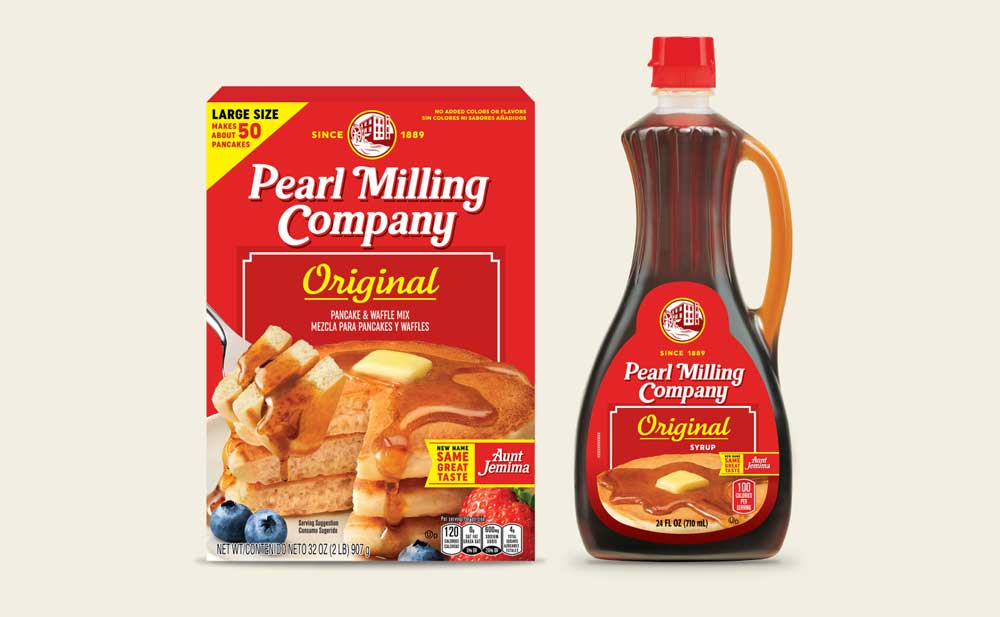
Image source: https://fortune.com/2021/02/11/aunt-jemima-new-name-pearl-milling-company/

4. Competitors are Starting to Look the Same

The Red Ocean is a huge problem with companies today. Suppose your company has a generic logo, name and brand colours. In that case, you’re not standing out, you’re blending in, and its negativity is affecting your brand. The quickest way to stand out and start rebuilding is an overhaul and rebrand of your business. This will help you showcase why your company is different and better from your competitors.

Business Branding Experts

Are you ready to strengthen your brand and build your business? At Treefrog, we take a top-down approach to helping you develop your brand strategy. Whether it’s logo design, logo maturation, corporate identity or graphic design services, we’re your business branding experts.

Give us a call at 905-836-4442; our team of graphic design and branding experts are ready to help!

Female executive talking to coworkers at a corporate briefing, sitting at a conference table in a boardroom
Brand Strategy

The Power Of A Strong Brand

A brand is a promise.

Every business wants to connect, to make an impact, and to grow. To do so, a brand must be so closely identified with the industry’s defining characteristic that they become known for it.

There is a very precise science to creating a strong brand and maintaining that strength. As humans, we are bombarded with so many stimuli every second that our brain creates a filter – known as sensory gating – to only take in the information that is deemed valuable. This may seem like an exaggerated statement at first, but think about your morning routine today. You most likely turned off the alarm on your phone, scrolled through social media, showered, ate breakfast, and drove to work. In every single one of these steps, despite your brain’s best efforts to block out all the promotional noise, your choices were affected by the power of strong brands.

So how do you ensure that your brand gets through the filter?

5 Basic Branding Barriers

A strong brand must satisfy the needs and wants of the target audience to last through the ages. Consider the list of characteristics below and see how many boxes your brand checks:

  • Emotive: consumers today are more driven by emotion than necessity, and a brand is the visual conveyance of a feeling that is most closely related to the target audience’s decision-making process.
  • Memorable: 50 per cent of consumers are more likely to click on a particular brand name if that brand name shows up more than once in a search engine. A strong SEO presence is essential.
  • Identifiable: a brand should be visually appealing and streamlined across all platforms. A simple yet powerful logo design can help with this.
  • Accessible: even with a brick and mortar storefront, studies show that 82 per cent of consumers will use their phone to help them make an in-store purchase. Without a digital presence, a brand will suffer.
  • Results-Driven: consumers will not return to a brand that has let them down in the past. Your clients’ success is your success.

The need to get past these “barriers” is what makes graphic design so important. At Treefrog, we have spent years studying the exact science of what makes or breaks a brand. The business world looks very different today than it did 20 years ago. Before digital marketing was ever an option – or even existed – companies were built on recommendations from friends and family. Now, this word-of-mouth has gone digital, and instead of close relations, consumers can get recommendations from millions of people at the click of a button.

Building Brand Recognition

Consumers are far more likely to choose a brand that they recognize over something unfamiliar, even if they don’t know a great deal about the company at the time. This means that even if a consumer has not made up their mind about a brand – and 90 per cent of searchers fall into this category – they are more likely to use a business simply because they know it. Consider the following benefits that come from a powerful, easily recognized brand:

  • Customer recognition
  • Competitive edge in the market
  • Easy introduction of new products
  • Customer loyalty and shared values
  • Enhanced credibility

Business Branding Experts

Are you ready to strengthen your brand and build your business? At Treefrog, we take a top-down approach to helping you develop your brand strategy. Whether it’s logo design, logo maturation, corporate identity or graphic design services, we’re your business branding experts.

Give us a call at 905-836-4442; our team of graphic design and branding experts are ready to help!

Top down view of designers brainstorming a brand around a wooden table
Brand Strategy

4 Signs You Need A Brand Overhaul

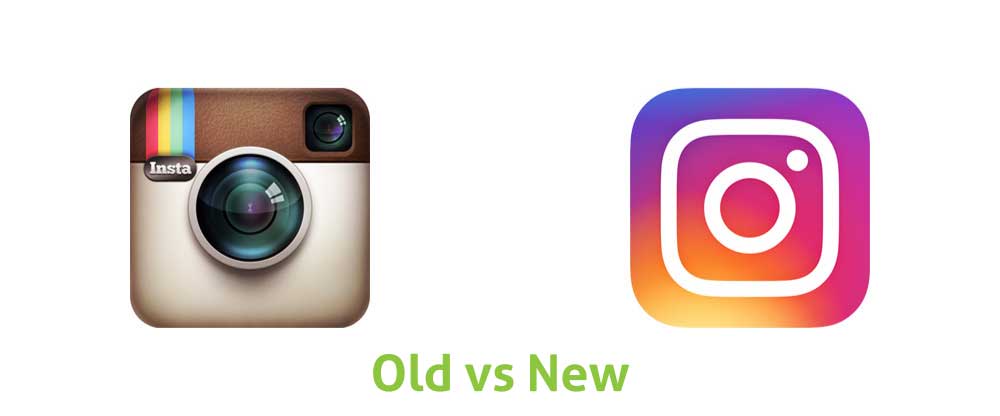
Great brands resonate with customers through the strategic execution of look and feel, reputation management, and by telling a great story. And while some brands like Pepsi and Instagram can take things to the next level by making small adjustments to their brand, other companies may require a full brand overhaul to revitalize their presence.

How do they do it?

They hire professionals who can help to identify when their brand identity is becoming stagnant and mature their logo, website, packaging, and messaging – seamlessly and according to trends identified in the marketplace.

How do you know when it’s time to contact the professionals?

1. You’re Making Too Many Excuses

Are you at the point where you’re making up excuses for updating your branding? You know, saying things like, “We’ve just been too busy,” “It’s not that bad,” and, “Maybe next year”?

If this sounds like you, it’s time to take the necessary steps towards a brand overhaul. Think about it, if you, (a person who is biased towards your brand) is noticing that you’re falling behind, imagine what your potential customers and clients are thinking.

We know your brand may have sentimental value, but it’s important that over time, it still appeals to your audience. Revitalize your business by contacting a digital marketing agency that can begin to strategize and action your creative and innovative comeback.

2. You’re In Need Of Reputation Management

If your business is looking for ways to overcome a series of bad reviews or some sort of scandal; a brand overhaul and reputation management may be able to save your company from losing momentum. Re-branding is the perfect way to articulate that improvement and change are being made to rectify the concerns of your customers.

Creative re-branding is also helpful in distracting customers from the ‘bad’ and getting people excited about the ‘good’ that’s to come as you turn a new leaf. Take fast food giant McDonald’s for example:

When American filmmaker Morgan Spurlock released his documentary Supersize Me, McDonald’s, unsurprisingly, panicked. While customers knew that McDonald’s wasn’t necessarily healthy, the negative press and shocking results of the documentary turned into a massive scandal for the brand.

To minimize the hit, McDonald’s quickly went to the drawing board to try to change the way people were thinking about their food. Since then, McDonald’s has re-designed their restaurants, ordering experience, and promotes sophisticated McCafe coffee and smoothies, Happy Meal apple slices, salads, snack wraps, Angus burgers, and shows no signs of slowing down – a brand overhaul well done.

3. Your Business Is Growing Rapidly

Start-ups typically launch with one service or product, but as they develop a following and identify consumer interests and needs, they are likely to expand their offerings – potentially changing their target market and brand messaging. Therefore, when growth develops outside of the scope of an original business plan, a brand overhaul may be necessary – to target and appeal to a wider audience.

In the beginning days of a start-up, it’s also not uncommon to try to save money by building your own basic website, designing your own print materials, and crafting your own logo. However, as your business begins to grow, you may want to consider consulting print, web, design, and content professionals who can mature the logo and promotional materials you started with, making them more sophisticated, versatile, and professional.

4. Your Brand Is Losing Interest & Customers

Over time, audience preferences change, and it’s your responsibility to keep up. This is especially true for brands that have been around for decades and must launch new campaigns to remain fresh and relevant with changing trends and target markets. Take men’s deodorant brand Old Spice for example:

Before launching their 2010 campaign featuring athlete Isaiah Mustafa, Old Spice had become stagnant, dated, and boring. However, through their successful commercial campaign, Old Spice rebranded with humour, connected with a younger demographic, and became a key creative player in the marketplace. They even went viral with ‘The Man Your Man Could Smell Like’.

Other successful re-brands include Keds partnership with Taylor Swift, Burberry’s innovative use of technology and personalization, and The Bay’s shift back to their original name, ‘Hudson’s Bay’.

How Treefrog Can Help

Need professional guidance on how to execute your brand overhaul or logo maturation? That’s our specialty. Our Treefrog team of content marketers, social media gurus, kick ass designers, and programmers, can help to deliver a brand refresh that will keep your business moving forward.

Contact us today at 905.836.4442 to learn more.

Close up of clock gears
Brand Strategy

7 Ways to Audit Your Brand

Is it time for a brand refresh?

Your logo is one of the most critical parts of your branding. It is the visual manifestation of your business, voice, messaging and values. It multitasks, acting as your signpost, your calling card, your signature. It ties together every aspect of your marketing efforts and customer experience, from your website and signage to your invoices and receipts.

Your brand, however, is so much more than just your logo. It is your company’s personality and reputation. More importantly, it affects your customers’ recognition and positive impression of these elements. The most memorable and enduring logos stem from strong brand identities. Think of Nike, or Coca-Cola. Understanding your brand is the foundation for the visuals of your corporate character.

As with any part of your business, it is important to stay up to date with your branding.

How do you know that your brand needs an update? Here are seven important considerations.

1. You’ve recently changed your business

If you have acquired a new company, grown your business, or if you’ve started offering new services, it is a perfect time to update your brand. Your brand must speak to your marketing and consumers. If your business changes, your brand should adapt to reflect those changes.

2. There is inconsistency between branches of your business

We see this all too often with companies who have extensive, divided sectors of their organization. These sectors should compliment one another to promote a concise, consolidated brand.

3. You cringe or apologize when you show someone your logo or website

If this is you, stop reading right now and call Treefrog. You should be proud of your brand, your logo and your website. If you aren’t, your customers will know it.

4. Your competitors have updated their brands

We don’t mean this in a “keeping up with the Joneses” sort of way, but if your competitors are updating their brands, it means that they are going after new potential clients. That means, your potential clients. If they have a sexy new look that better represents their company, then something needs to be done about it.

5. It’s been 10 years since you updated your branding

A decade is a long time. Look at the differences in time between the 1990s to now. Your brand should keep up with how you do business. At no point should someone look at your logo and think “That looks so 1999!” Changing your brand does not mean losing sight of who you are. In fact, it means the opposite. Updating your brand carefully shapes your business while maintaining the authenticity, history and evolution of your company.

6. Your previous logo was not designed by a professional

If you used clip-art or a stock company to create your logo, you have not invested in your brand. Creating a brand should be a thoughtful, thought-provoking exercise that takes into account all the aspects of your company. It should be an investment into the identity of your organization.

7. You have lost your voice, audience or identity

If your current marketing is not working for you, it’s time to re-evaluate. You cannot expect to continue with your marketing as-is and expect different results. If you are not reaching your audience with the tactics you are using, then it’s time to change the conversation.

Your brand should capture and align with what your ideal customer is looking for. It should stand out from the crowd and invoke an immediate trust in your business.

Treefrog can help you gain new perspective on the perception of what your brand is, and what its potential could be. We can also help you understand your customers’ opinions and incorporate this into your messaging. Once we’ve helped you create a brand image that fits, we’ll help you transform the concepts into insightful and imaginative visuals that will make an unforgettable statement.

For more information or to inquire about updating your brand, contact us today.

The word "brand" decoratively drawn in a notebook
Brand Strategy

What is Corporate Identity?

…and Why is it Important?

The concept of corporate identity is akin to what we refer to when we talk about our own identity, the specifics that differentiate us from others. It is our personality and character that maintains our individuality, which we express through how we behave, speak, and even what we wear.

Similarly, a business makes itself distinct through the image that it presents to the world, through collateral like business cards, letterheads, brochures and other options. It is a physical expression of the company’s brand, an extension of the culture that is already expressed through communication style and behaviour exhibited to maintain the image of the business.

Corporate Identity expresses your business’s brand personality and sets you apart from the competition.

The Importance of Corporate Identity

In a fast-paced and competitive world where the consumer has innumerable options available to them, a company needs a strategy to establish a solid presence in the marketplace. There are strong reasons to believe that the right corporate identity helps achieve this business objective.

Building Corporate Persona: When we meet a person, it is the first impression that has the most impact. We tend to gather cues from what we see and feel, interpreting our observations to form our opinion about the person. This is also how we treat products and companies. To stand out from their competitors, every company needs to have a good brand image, to create a niche in the client’s mind by having a unique, pleasing appearance and identity.

Consumer Loyalty: The consistent design of a corporate identity, in accordance with objectives set for the business, uphold and reflect the ethos, culture, principles, future ambitions, or visionary goals of the business. Customers who find this to be in accordance with their philosophy and liking feel connected to this image and are more likely to develop loyalty to the business.

Business Enhancement: Personal experiences with a corporate identity influence consumers and their purchasing decisions. A corporate identity with a strong and positive impact creates a favorable mental image of the business in a consumer’s mind. A strategically planned identity gives a good return in terms of referrals and repeat business.

Businesses may occasionally need to update their corporate identity, if there is an ideological change in the target audience over time and as the world changes. Design professionals can help with attention grabbing logos, impressive business cards, elegant letterheads, inviting envelopes, stunning brochures and other identity elements. Invest in your corporate identity to develop trust, a sense of value, and a lasting connection with your customer base.

Design process of a logo graphic
Brand Strategy

What’s in a logo

Logo design, and for that matter brand design, are not cookie-cutter solutions.

Sure, an agency can state that they have stock imagery that gets “close” to a logo design that captures the essence of your business. That’s like trying to be authentic by hanging a box-store piece of art in your living room, knowing that somewhere out there, thousands of other living rooms are donning the same badge of “authenticity”.

At Treefrog, we’re very passionate about design. It’s what makes us unique. Our attention to artistic creativity and visual impact is what sets us apart from other agencies.

We are also passionate about defending the work that goes into good design.

There’s been an emergence of online stock design companies recently. These companies create tension in the market because it makes people think that a brand is something you can just choose and move on. As if you could pick your corporate identity off a shelf and carry it to the checkout line.

Why You Should Invest In Your Logo

What’s in a logo, really? It’s just a graphic that identifies your company brand. What’s so complicated about that? Anyone can create a logo. Right?

Some may think so, but then you have to ask yourself why so many high profile companies spend so much on logo design.

What makes a powerful company logo? Why do some logos stick out from others? What makes us remember them? If they’re so simple that just anyone could do them, then why doesn’t every company have an unforgettable logo?

Consider that your logo is a tactical piece of a brand. A logo is not a brand. If a company comes to Treefrog asking for a new brand, expecting only a new logo, we’ll challenge their thinking.

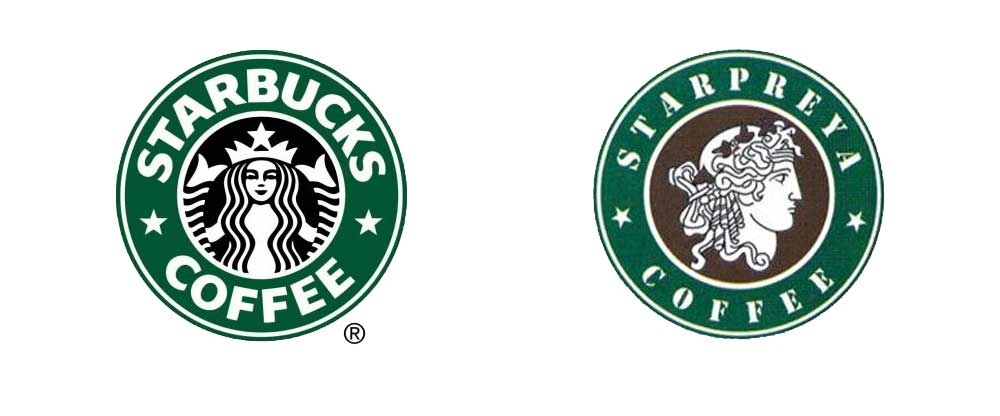
The fact is, if your company is in need of a brand revamp, you’re not going to fix the problem with a logo. Don’t confuse an iconic symbol of your business as being the entirety of your brand identity. There’s far more to the concept of brand than a logo.

That is not to say that a logo is not an important part of your brand; quite the contrary. This is partly because of the fact that people can immediately tell a shoddy logo from one that’s quality. Your logo can immediately cause people to identify your company as either slapdash, or serious. That’s a pretty powerful sentiment to leave people with as a first impression.

Ideally, the logo will convey a feeling. Maybe it’s powerful enough to spark a memory. It needs the depth of meaning in order to foster an emotional attachment with people.

Keep in mind that a brand encapsulates all the pieces that a company uses to communicate with the world; from business cards, letterhead, brochures, colour uses, typography and image choice. A logo is just the tip of the iceberg when it comes to establishing a brand.

The Potato Factor

Gaby Hart, a faculty member at Georgian College for design, summed up logo design succinctly by saying: “A logo is a mark that a company can be remembered by; it should be so simple that you could draw it in the sand with a stick.”

In a similar vein, at Treefrog, we say that you should be able to cut your logo out of a potato. Think of all the things you want to do with your logo—feature it on print pages, your website, have it emblazoned on T-shirts and display it on trade show booth signs that need to be visible from hundreds of yards away. Who knows, you may actually want to have your logo in potato form.

Your logo should be able to stand out in a group of other logos listed on a partner webpage. It should be clear, definitive, and identifiable. There’s a lot of thinking that goes into the development of a logo, word mark or brand identity.

One of the many things we pride ourselves on as an agency is our personal touch. We want to spend time with you to understand your business and how you operate. Is the cost going to be higher than simply picking a logo off a shelf of dozens more like it? Sure. But you get the benefit of a team of experienced designers working with you on your brand rejuvenation.

We want to show off your logo as an emblem of our successful partnership. After all, the best logo designs are derived from collaboration, and a deep understanding of what makes your company unique.

Online Agencies: The Bargain Bin of Logo Design

Some wonder why there are agencies who charge premium amounts for logo design, when there are companies on the web kicking them out for a hundred bucks a piece. The question usually gets around to: what are you actually paying for in a logo design?

First of all, your business has its own unique identity, something that gives people the perception of character. You’ve put time and energy into your business and your brand. Would you really want to hire a stock logo company to shoehorn a look into your corporate identity? Think of it this way: who would you rather have write your autobiography, someone you know, or someone you just found online?

When your company wants a new logo, you have a few options.

1) You can go to a stock logo company.

Right away, the terms, conditions and deliverables are likely going to be different for each one you find. These companies often offer a fast turn around, and a handful of concepts for you to choose from. They may also allow you to make a number of revisions, depending on the price level you choose. Once approved, your logo may be sent to you in a variety of file formats that you will need for printing.

Where you may run into trouble: these are often online companies, i.e. they may not be locally based, so you can’t pop over to discuss your concept with the designer. They may even be in a completely different country, and there may be a language barrier. Discussing logos can often be a very abstract process and be quite an emotional experience. Email often doesn’t work when conveying emotion. Clients often cannot easily verbalize what is bugging them about a concept. A face-to-face meeting with a designer who can help you through the design jargon to focus in on the key areas can be very useful. Furthermore, with an online stock logo company, once you’ve maxed out your number of revisions, that’s it. If you’re not happy, then you have to pay for more revisions.

2) You can use a competitive design website.

These are sites where a client can post their project and the specifications and state how much they want to pay the designer. Designers then can “bid” on the job and post their ideas. After a predefined amount of time, the client then chooses which design they like most, pay the designer and the logo file is supplied.

Again, there are problems inherent in this method. This puts a lot of responsibility in the client’s hand, they have to be able to cohesively communicate the requirements of the project to a broad audience. A lot of people aren’t creatively minded, nor do they really know how to communicate what they really want. What you put in the brief will be taken literally by the designers on the site. If you’re not clear on what you want, then it’s highly likely that you won’t get what you want.

Also, since graphic design is not currently regulated by an authoritative body that checks that designers are at a particular level, ANYONE can post a design on a competitive design website. There is no regulation for quality or skill level. You may have to scroll through thousands of sub-par designs in the hope of finding your new logo. What if no one submits a design in response to your brief? That logo you desperately need will not get done until a designer, wherever they may be in the world, decides to do it.

As for revisions, it all depends on whether they were negotiated when you submitted the brief. The designer may provide the logo “as is” in which case you’d better be happy with what you got. Who knows whether the artwork file will even be constructed properly for a printer?

Here’s an analogy: imagine having a plumbing issue in your house. You know what’s wrong, but you don’t know the source of the problem. You describe the issue to the best of your ability on a website, say how much you’re willing to pay, and hit “submit”. Then you sit and wait for a plumber to come fix your problem. When (or more accurately if) that plumber arrives, you have no idea of their skill level, whether they are a legitimate plumber (maybe they do it part-time, maybe they’re a student!), whether they have any work experience and if they even know what they’re doing. The end result? Your plumbing issue might be fixed, or it might not, and you may have just flooded your house and be down $500.

3) You work with Treefrog or another Graphic Design/Branding company.

First off, you can go look at our website, get to know us, look at our portfolio of work, come meet with us and check that we’re real human beings. If you’re then happy to partner with us, you’ll soon be sitting down with our Art Director and a Designer to discuss your new logo, and the goals of your project. This is usually an in-person meeting and can be an hour or more of in-depth discussion about your company, your long term and short term goals, your likes and dislikes as well as your target market and applications.

After this meeting our designers will work on your logo. We have a team of designers and we will often work collaboratively on a project to refine ideas and come up with a wide range of concepts. Our designers have all had at minimum four years of Graphic Design training prior to working with Treefrog, and are all Graduates of recognized educational institutions. Our designers also have a wide range of skills, with backgrounds in illustration, fashion design, and editorial design—not to mention being skilled web designers. Our Art Director will work with the design team to refine your logo concepts until we’re sure they’re at the level of excellence that we aspire to here at Treefrog. These concepts will take into account your target market, the goals and future extensibility of the brand as well as adaptations for alternative printing techniques (such an embroidering on a T-shirt).

After presenting you with the concepts, we will plan another meeting, sometimes over the phone or in person (your choice) to discuss your thoughts on the presented ideas. We will then work closely with you to refine the logo concept to the final piece, until you are 100% happy. After the logo is approved we will save out a wide range of file formats and colour options to suit most, if not all possible ways that you may need the logo in the future. If you lose these files, we’ll always have backups to send to you if you need them.

At Treefrog, personality is very important. We know your company has a story, and we’d love to help you tell it. We also know that budget is a factor. But the good thing about working with an actual agency, is that we can work with you directly, and not expect you to have to conform to a rigid price structure or process for what should be a rewarding creative experience.

The point is, a brand and a logo are made up of so much more than just a stock image or your company name in a font.

What’s in a logo? You are.

Scroll to Top